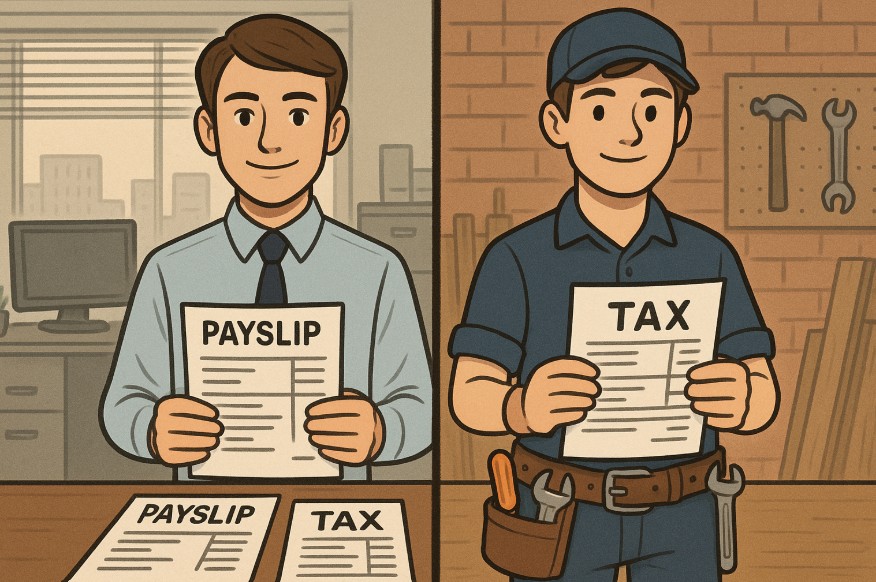
Many people starting apprenticeships are unsure about how taxation works during their training. Are apprentices treated like regular employees when it comes to paying tax and National Insurance? The answer depends on several factors, including income levels and working hours.
This guide explains how tax obligations apply to UK apprentices in 2024, covering income tax, National Insurance, and available benefits or exemptions that may ease the financial burden during the early stages of a career.
Do Apprentices Have To Pay Income Tax Like Full-Time Workers?

Apprentices are legally recognised as employees. This means they are required to pay income tax if their annual income exceeds the personal allowance threshold, which is £12,570 for the 2024/2025 tax year in the UK. The tax is automatically deducted from their wages by their employer using the PAYE (Pay As You Earn) system.
The income tax system in the UK is progressive. This means that individuals pay a certain percentage of tax based on how much they earn above the personal allowance. For apprentices who typically earn less than £25,000 a year, the basic income tax rate of 20% is the most relevant.
For instance, if an apprentice earns £14,000 annually, only £1,430 of their income is subject to taxation. That portion is taxed at 20%, resulting in an annual tax of £286.
The following table illustrates how income tax applies to an apprentice’s earnings:
| Annual Income | Taxable Income (Over £12,570) | Income Tax Rate | Estimated Annual Tax |
| £11,000 | £0 | 0% | £0 |
| £13,000 | £430 | 20% | £86 |
| £15,000 | £2,430 | 20% | £486 |
| £20,000 | £7,430 | 20% | £1,486 |
Income tax liability is calculated only on the amount that exceeds the personal allowance. Therefore, many apprentices who earn below the threshold do not pay any tax at all.
Do Apprentices Need To Pay National Insurance?
In addition to income tax, apprentices are also responsible for paying National Insurance Contributions (NICs) if their income exceeds a weekly threshold.
For the 2024/2025 tax year, employees, including apprentices, begin paying Class 1 NICs if they earn more than £242 per week.
National Insurance payments are used to fund essential public services like healthcare, unemployment benefits, and the state pension.
NICs are deducted directly from the apprentice’s pay through the PAYE system. The contribution rate for earnings between the lower and upper thresholds is 12%.
For example:
- An apprentice earning £230 per week will not pay National Insurance.
- An apprentice earning £260 per week will pay NICs on £18, which is the difference between £260 and £242. At 12%, the weekly NIC would be approximately £2.16.
The table below summarises National Insurance payments for apprentices based on weekly earnings:
| Weekly Earnings | NIC Threshold | NIC Rate | NIC Deducted Weekly |
| £200 | Below | 0% | £0 |
| £242 | Threshold | 0% | £0 |
| £260 | Above | 12% | £2.16 |
| £300 | Above | 12% | £6.96 |
These deductions are important to note as they reduce take-home pay, even for apprentices earning modest salaries.
Are Part-Time Apprentices Required To Pay Tax?
Part-time apprentices are taxed under the same rules as full-time apprentices. The determining factor is income, not hours worked.
Therefore, if a part-time apprentice earns above the annual personal allowance or weekly NIC threshold, they are liable to pay tax and National Insurance.
In many cases, part-time apprenticeships do not lead to earnings above the threshold, which means they may not owe income tax or NICs. However, if the hourly rate or the number of hours worked increases, these liabilities may apply.
Key considerations include:
- A part-time apprentice earning £200 per week is exempt from both income tax and NICs.
- A part-time apprentice earning £250 per week must pay NICs but may still avoid income tax if their total annual income is below £12,570.
Even though the work hours are reduced, apprentices should regularly check their payslips to ensure they are not being overtaxed or misclassified.
Can Apprentices Be Exempt From Paying Council Tax?
Apprentices may qualify for a reduction in council tax or be exempt altogether, depending on specific criteria.
The apprentice must meet both employment and education-related conditions set by their local authority.
To be eligible for a council tax discount, the apprentice must:
- Be earning no more than £195 per week
- Be in a programme that leads to a government-recognised qualification
- Possess a formal declaration from their employer confirming their status
If these conditions are met, the apprentice is not counted as an adult for council tax purposes. In a shared household, this can significantly reduce the overall bill, as fewer adults are counted for council tax liability.
In some cases, if all occupants of a home are disregarded individuals (e.g. students or qualifying apprentices), the property may be entirely exempt from council tax.
Do Apprentices Under 18 Pay Tax And National Insurance?
Apprentices under the age of 18 are treated the same as adults when it comes to taxation and NICs. There are no special exemptions based on age. The only factors considered are income and employment status.
If a 17-year-old apprentice earns more than £12,570 in a year or £242 in a week, they are obligated to pay income tax and NICs just like any other employee. Employers are required to include all apprentices, regardless of age, in their PAYE system.
This can come as a surprise to younger apprentices and their families, who might assume that age provides some form of tax protection. However, tax thresholds are income-based, not age-based.
Are Apprentices Eligible For Working Tax Credits?

Apprentices may qualify for Working Tax Credits (WTC), though the conditions are strict and apply only in specific situations.
The key requirement is that the apprenticeship is recognised as remunerative work by HMRC.
To be eligible for WTC, the apprentice must:
- Have a formal contract of employment
- Receive pay that is taxed and subject to National Insurance contributions
Apprentices who are only provided with expenses or untaxed allowances will not qualify for WTC. The reasoning is that these forms of income do not count as earnings under HMRC guidelines.
Since Universal Credit has largely replaced Working Tax Credits for new applicants, many apprentices now apply under the Universal Credit system, which has a broader eligibility scope.
Can Apprentices Apply For Universal Credit Or Other Benefits?
Universal Credit is available to apprentices in certain situations, particularly those on low incomes.
This benefit is designed to support individuals who are either in work or looking for work, and apprenticeships fall under the category of employment for the purposes of eligibility.
To apply for Universal Credit, apprentices must:
- Be enrolled in a recognised apprenticeship programme
- Work with a registered training provider
- Pursue a qualification approved by government educational standards
- Receive at least the minimum wage for apprentices
This benefit can provide financial assistance for housing, childcare, and daily living expenses.
Apprentices who are under 18 may face more stringent criteria, but exceptions are available in cases of hardship or when the individual is not living with their parents.
Apprentices may also be eligible for additional benefits such as housing benefit or council tax reduction, depending on their circumstances.
What Tax-Deductible Expenses Can Apprentices Claim?

Although apprentices typically earn lower wages compared to fully qualified professionals, they may still incur work-related costs that are eligible for tax relief.
Claiming allowable expenses can reduce the amount of taxable income and, in some cases, result in a tax refund. Understanding which expenses qualify is key to making the most of these financial benefits.
Eligibility for Claiming Expenses
To claim tax relief on work-related expenses, the apprentice must meet certain criteria:
- The expense must be directly related to the job or training
- The cost must not be reimbursed by the employer
- Adequate records, such as receipts or payment proof, should be maintained
- The expense must be essential, not optional or for personal use
HMRC allows employees, including apprentices, to claim specific types of expenses incurred while performing their duties or attending mandatory training.
Common Tax-Deductible Expenses for Apprentices
Apprentices can claim tax relief on several types of expenses, particularly if these costs are necessary for their apprenticeship and are not covered by their employer.
1. Travel and Mileage Costs
While daily commuting between home and the regular workplace is not tax-deductible, apprentices may be eligible to claim relief for:
- Travel to temporary work locations
- Journeys between different job sites
- Trips to training venues not located at the primary workplace
If using a personal vehicle for these journeys, apprentices can claim mileage at HMRC’s approved rates:
- 45p per mile for the first 10,000 miles in a tax year
- 25p per mile thereafter
Alternatively, public transport costs such as bus, train, or underground fares can be claimed if receipts or records are available.
2. Uniforms and Protective Clothing
If an apprentice is required to wear a uniform or protective clothing specific to the job role and pays for its cleaning or replacement out of pocket, tax relief may be claimed. Qualifying clothing includes:
- Industry-standard uniforms with a company logo
- Protective gear such as steel-toe boots, overalls, gloves, or goggles
HMRC typically offers a flat rate deduction for these types of expenses, which varies depending on the sector. For instance, apprentices working in construction or engineering may be eligible for a flat rate expense allowance of £60 to £120 per year.
3. Tools and Equipment
Some apprenticeships require apprentices to purchase their own tools or equipment, especially in trades such as plumbing, carpentry, automotive repair, and electrical work. If the employer does not reimburse the apprentice for these purchases, tax relief may be available.
Examples include:
- Spanners, wrenches, screwdrivers, drills
- Measuring instruments or testing kits
- Toolboxes and specialist kits for assessments
Apprentices must retain invoices and ensure the tools are used solely for work purposes in order to qualify.
4. Professional Subscriptions
If the apprentice is required to join a professional body or trade organisation as part of their training or employment, the membership fee may be deductible. However, the organisation must be approved by HMRC and included in the list of allowable professional bodies.
Examples include:
- The Institute of Engineering and Technology (IET)
- The Chartered Institute of Plumbing and Heating Engineering (CIPHE)
These fees are only claimable if paid personally by the apprentice and not refunded by the employer.
Conclusion
Apprentices in the UK are subject to the same tax laws as other employees, with income tax and National Insurance applying once earnings exceed set thresholds. While many apprentices may fall below these limits, understanding how deductions work is essential.
From council tax discounts to tax-deductible expenses, apprentices have options to manage their financial responsibilities. Staying informed ensures compliance with HMRC rules while helping apprentices make the most of their pay and benefits during their training journey.
FAQs about Apprentice Taxation
What happens if an apprentice earns below the tax threshold?
They won’t pay income tax or National Insurance. Any earnings under £12,570 per year are tax-free.
Do apprentices need to file a tax return?
Most apprentices do not need to file a tax return as their taxes are handled through PAYE. However, if they have additional income or are self-employed on the side, they may need to.
Can apprentices get a tax refund?
Yes. If too much tax has been deducted or if the apprentice only worked part of the tax year, they may be eligible for a refund.
Are student apprentices taxed the same as work-based apprentices?
Yes. As long as the apprentice is classified as an employee and earns above the thresholds, they are taxed the same way, regardless of their learning environment.
Is apprentice pay always taxable?
No. If the pay remains under the income tax and NIC thresholds, it is not taxed. However, once it exceeds those levels, deductions will apply.
Can apprentices avoid PAYE deductions?
No. If the earnings qualify for PAYE, the employer is legally required to deduct tax and NICs.
How can apprentices check their tax code?
They can log into their HMRC Personal Tax Account online or check their payslip, where the tax code will be listed. If it seems incorrect, they should contact HMRC.