When it comes to rewarding staff and boosting morale during the festive season, a Christmas party can be a highly effective gesture.
But for UK employers, understanding the HMRC Christmas party allowance is crucial to ensuring tax compliance while still enjoying the benefits of staff entertainment.
This guide explains the current rules, limits and tax benefits associated with hosting staff events under HMRC’s guidelines, helping employers avoid unexpected liabilities and make the most of available tax relief.
What Is The HMRC Christmas Party Allowance And Why Does It Matter?

The HMRC Christmas Party Allowance is a tax exemption scheme that allows UK employers to provide annual social events for staff without creating a taxable benefit.
It is designed to support employee wellbeing and engagement, while also offering a degree of financial relief to businesses.
The exemption permits businesses to spend up to £150 per person, per tax year, on annual events like Christmas parties without needing to report the cost to HMRC or pay National Insurance contributions. Importantly, if any conditions are breached, the entire cost becomes taxable, not just the excess.
This allowance helps companies show appreciation to their staff and improve morale in a tax-efficient way.
With careful planning, employers can provide valuable employee benefits without additional administrative or financial burdens.
Who Qualifies For The Annual Event Tax Exemption?
To qualify for the exemption, the event must meet all of the following HMRC conditions:
- It must be an annual event.
- It must be open to all employees or all staff at a particular location.
- The cost per head must not exceed £150, including VAT.
The exemption applies regardless of whether the event is held physically or virtually. Virtual parties were formally recognised during the COVID-19 pandemic and remain within the scope of the exemption, provided they satisfy the same criteria.
Employers can also organise different parties for various departments or locations, as long as every employee is able to attend one of the available events. This ensures inclusivity while accommodating larger organisations with dispersed teams.
What Are The Key HMRC Rules For Claiming Christmas Party Expenses?

To apply the HMRC Christmas party allowance correctly, employers must understand the specific rules that determine whether an event qualifies for tax exemption.
These rules ensure that the allowance is used fairly across businesses and employees while preventing misuse of staff entertainment benefits. Each rule must be satisfied for the exemption to apply, and if any requirement is not met, the full cost of the event becomes taxable.
The following criteria are the core HMRC conditions:
The Event Must Be Annual
HMRC defines the exemption as applying only to annual events such as a Christmas party, a summer outing or any other recurring celebration. This means the event must be part of a yearly tradition rather than a one-off gathering.
For example, hosting a spontaneous dinner to celebrate a company milestone would not qualify unless the same type of celebration occurs every year. The annual requirement ensures consistency and prevents businesses from trying to claim ad hoc events as exempt.
The Event Must Be Open To All Employees
Inclusivity is another essential rule under HMRC guidelines. Every employee in the organisation must be invited to the event, regardless of their role, department or seniority.
This rule applies even if:
- The company operates across multiple locations
- Employees work remotely or part-time
- Events are held in different branches or departments
In these cases, HMRC allows separate events for different locations or teams, provided that each employee has the opportunity to attend one qualifying event. If the event is limited to a specific group, such as only directors or one department, the exemption cannot be used.
The Total Cost Must Not Exceed £150 Per Person
The £150 per head limit is at the centre of the HMRC Christmas party allowance. This limit is not an allowance to be used in part; instead, it is a threshold that must not be exceeded for the exemption to apply.
If the cost per head exceeds £150, even by a small amount, the entire amount becomes taxable.
The calculation must include:
- Venue hire
- Food and drink
- Entertainment or activities
- Transport to and from the event
- Accommodation provided for the night
- VAT
- Any gifts or extras provided during the event
Costs should be divided by the total number of attendees, including any non‑employees such as guests or partners. For example, if an employee brings a guest, both individuals count towards the headcount, increasing the denominator and potentially reducing the cost per head.
All Costs Must Be Considered In Full
HMRC expects employers to include every cost associated with the event when calculating the overall per‑person total. This includes minor or indirect expenses such as tips, booking fees, service charges or decorations.
Failing to include costs accurately could result in the exemption being applied incorrectly, which can lead to penalties or additional National Insurance liabilities during an HMRC review.
The Exemption Is Applied On An “All Or Nothing” Basis
One important rule is that HMRC does not allow partial exemption. If the event costs £151 per person, the entire cost becomes taxable, not just the excess above £150.
This approach reinforces the need for precise budgeting and cost tracking throughout the planning process.
Virtual Events Must Follow The Same Rules
The rules apply equally to virtual Christmas parties or online celebrations. Employers must still calculate a per‑head cost for any items provided to employees, such as:
- Delivered meal kits
- Hampers
- Online entertainment
- Gift boxes
As long as the event is annual, inclusive and within the £150 per person budget, virtual gatherings are treated the same as traditional in‑person events.
Directors Must Follow The Same Rules As Employees
If directors are on the company payroll and the event is open to all staff, they qualify for the exemption just like any other employee. However, if an event is limited only to directors and excludes other staff, the exemption does not apply.
Accurate Records Must Be Maintained
HMRC requires employers to retain documentation that verifies:
- Total event costs
- Number of attendees
- Calculation of cost per head
- Event purpose and date
- Invitations demonstrating inclusivity
Good record‑keeping helps employers avoid disputes and ensures compliance if HMRC requests verification.
Can Employers Claim Tax Relief On Multiple Annual Events?
Employers are permitted to hold more than one annual event each year, such as a summer get-together and a Christmas celebration.
However, the combined cost of all these events must remain within the £150 per head threshold to qualify for the exemption.
For example, if a business hosts two events costing £75 per head each, they are both exempt. But if the combined cost exceeds £150 per person, the business must choose one event to apply the exemption to. The remaining events become taxable benefits in full, regardless of their individual costs.
Example Of Multiple Events And Tax Treatment
| Event | Cost Per Person | Cumulative Cost | Exempt? |
| Summer BBQ | £60 | £60 | Yes |
| Christmas Party | £95 | £155 | Only one exempt |
| Chosen for Exemption | – | – | Christmas Party |
| Summer BBQ Taxable? | – | – | Yes |
Employers must carefully track the cumulative spend on each employee across multiple events to ensure compliance. Failing to do so may result in unplanned tax liabilities.
Are Directors And Part-Time Employees Included In The HMRC Exemption?
The HMRC exemption is designed to cover all employees, which includes:
- Full-time and part-time staff
- Temporary and contract employees
- Company directors who are on payroll
- Remote workers or those based in satellite offices
If separate events are held for different departments or locations, the exemption still applies provided that every employee has the opportunity to attend one of the available events.
The goal is to offer fair and inclusive access to these staff benefits across the organisation. Employers must ensure that no groups are excluded, or the exemption could be denied by HMRC.
What Expenses Are Covered Under The Christmas Party Allowance?
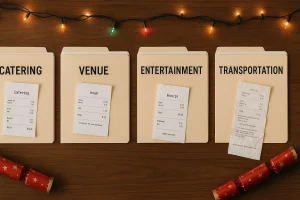
The scope of expenses that fall under the £150 per person exemption is broad. It covers almost all reasonable costs associated with organising a staff social event.
Included expenses:
- Hire of the venue
- Food and drink for attendees
- Live entertainment or music
- Decorations or party props
- Return transport to and from the venue
- Overnight accommodation if provided by the employer
- Digital entertainment for virtual events
Costs not typically included:
- Business gifts unrelated to the event
- Client or supplier entertainment
- Professional development or training days
HMRC requires that businesses account for all costs associated with the event, including those for non-employees such as guests. The total cost is divided by the number of attendees to determine the cost per head.
How Do Salary Sacrifice Arrangements Affect The Christmas Party Allowance?
Where an employee opts into a salary sacrifice arrangement to receive benefits, including events, employers must calculate the benefit based on the higher of:
- The salary given up
- The cost of the benefit provided
If the cost of the event is less than the salary sacrificed, the higher value (salary) must be reported to HMRC. These rules apply to all arrangements entered into after 6 April 2017.
Employers need to be cautious when including events within wider salary sacrifice schemes. If the correct figure is not reported, HMRC could pursue additional liabilities.
For example, if an employee sacrifices £200 of salary to attend a party that only costs £140 per head, the full £200 must be reported as a benefit in kind. The Christmas party exemption does not override this rule.
What Must Be Reported To HMRC If The Party Isn’t Exempt?
If any event fails to meet the exemption criteria, employers are required to:
- Report the cost of the benefit on each affected employee’s P11D form
- Pay Class 1A National Insurance contributions on the total cost of the benefit
- Maintain accurate records and itemised breakdowns of event costs
No partial exemption is allowed. Once the £150 threshold is breached or the event is not open to all employees, the full cost becomes taxable.
It is the employer’s responsibility to determine whether each event qualifies for the exemption and ensure proper reporting. HMRC may request supporting documents, including invoices, guest lists, and per-head cost calculations.
How Can Employers Ensure Compliance With HMRC Rules On Staff Events?

To stay compliant with HMRC’s rules for employee entertainment, employers should follow these key steps:
- Plan Early: Estimate headcount and expected costs before confirming venues and suppliers.
- Keep Clear Records: Document all expenses, including receipts, invoices, and contracts.
- Include All Costs: Ensure that VAT, transportation, and any extras are included in your cost calculations.
- Monitor Cumulative Spend: Track spending across all annual events to avoid exceeding the exemption limit.
- Educate HR and Finance Teams: Ensure relevant staff understand the exemption rules and reporting obligations.
Even small breaches can result in significant administrative work, especially if multiple employees are affected. A proactive approach to record-keeping and budgeting helps reduce this risk.
Conclusion
To make the most of the HMRC Christmas party allowance, UK employers must approach staff events with a clear understanding of eligibility rules, reporting obligations, and cost thresholds.
When planned correctly, annual events like Christmas parties can be both morale-boosting and cost-effective. Staying within the £150 per head limit and ensuring all employees are invited will allow businesses to take full advantage of the tax exemption — avoiding the pitfalls of non-compliance and creating memorable experiences for their teams.
Frequently Asked Questions
Can a company claim tax relief on a virtual Christmas party?
Yes. Virtual parties are treated the same as in-person events, provided they are annual, open to all staff, and cost no more than £150 per person.
What happens if a company exceeds the £150 per head limit?
The entire cost of the event becomes taxable and must be reported to HMRC. No partial exemption is allowed.
Are guests or partners of employees included in the exemption limit?
Yes, guests are included in the per-head cost. For example, an employee and their guest count as two people when calculating cost per head.
Do companies need to report exempt Christmas parties to HMRC?
No. If the event qualifies under the exemption criteria, there is no requirement to report it. However, employers should retain records for audit purposes.
Can a business have a Christmas party for just one department?
Yes, as long as every employee has the opportunity to attend a similar event in their department or location.
What is the deadline for submitting P11D forms for staff entertainment?
P11D forms must be submitted by 6 July following the end of the relevant tax year. Class 1A NIC must be paid by 22 July (19 July if by post).
Is VAT reclaimable on staff entertainment costs?
VAT is generally reclaimable for staff entertainment, including parties, but not for costs related to guests, clients, or non-employees.