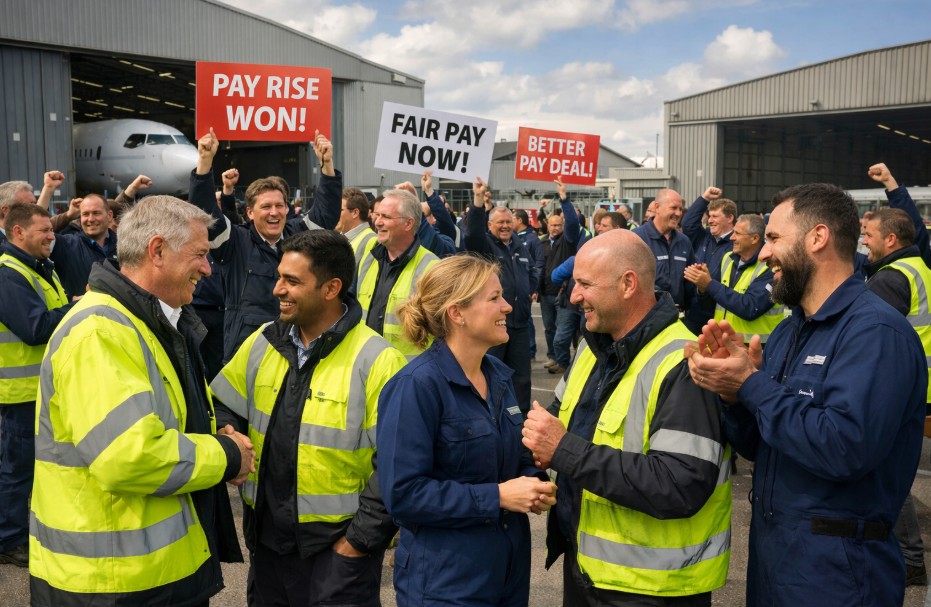
The BAE pay rise has been confirmed after months of industrial action, bringing a 6 percent pay increase and additional workplace benefits for more than 1,000 employees in the United Kingdom.
Workers at BAE Systems facilities in Warton and Samlesbury agreed to the new pay deal following negotiations between the defence company and the Unite trade union.
The agreement includes a salary increase, extra annual leave, a one off payment, and changes to working hours that improve work life balance.
The resolution ends a long running dispute that involved multiple strike actions across several months. Union representatives described the outcome as a major victory for workers who demanded a fair pay settlement.
Key takeaways from the BAE pay rise agreement include:
- A total pay rise worth around 6 percent for eligible employees
- A pay increase of 4.8 percent backdated to January
- A further 0.75 percent increase scheduled for October
- Extra annual leave and a one off £500 payment
- A permanent 30 minute earlier finish each working day
What Is the Latest Update on the BAE Pay Rise in the UK?
The latest update on the BAE pay rise confirms that workers at BAE Systems in Lancashire have accepted a new pay agreement following months of negotiations and industrial action. The deal applies to more than 1,000 employees working primarily in professional services roles at the company’s Warton and Samlesbury facilities.
The agreement was reached after members of the Unite trade union voted to accept the improved offer, which includes a combined pay increase close to six percent along with several additional benefits. This settlement brings an end to a dispute that had led to repeated strike actions between late 2025 and early 2026.
The new arrangement also includes improvements beyond salary. Employees will receive extra annual leave, a one off payment, and a permanent reduction in the length of their working day. According to union representatives, the outcome reflects the determination of workers who organised industrial action to secure what they considered a fair pay award.
Why Did BAE Systems Workers Go on Strike?
The BAE pay rise dispute began when employees argued that their original salary increase offer did not reflect their responsibilities or the company’s strong financial performance.
Many workers felt the proposed 3.6 percent rise was significantly below expectations and lower than the increases offered to other groups within the company.
Employees working in professional services roles believed the difference created a pay imbalance within the organisation. This frustration eventually led to a ballot for industrial action organised by the Unite trade union.
Several key factors triggered the strike action:
- Workers believed their pay offer was unfair compared with colleagues in other departments
- The initial proposal of 3.6 percent was considered too low by many staff members
- Employees pointed to the company’s reported profits of around £3 billion in 2024
- Union representatives argued that workers deserved a pay award reflecting their skills and responsibilities
- Attempts by the company to prevent strike action through legal proceedings increased tensions
Industrial action started after union members voted in favour of strikes in October. Walkouts began in November and continued intermittently through December and January. Further strikes were scheduled in February before the final agreement was reached.
The dispute highlighted broader concerns about pay fairness in highly skilled engineering and defence roles. Workers argued that competitive wages are necessary to attract and retain talent in a sector that supports the United Kingdom’s defence capabilities.
Which Employees Were Involved in the Industrial Action?
The industrial action mainly involved workers employed in the professional services divisions of BAE Systems at its Lancashire facilities.
This group included a range of highly skilled roles such as:
- Aerospace engineers
- Technical specialists working in safety critical roles
- Design and engineering support staff
- Professional services employees supporting defence programmes
Many of these workers contribute directly to projects linked to combat aircraft and other advanced defence technologies. Because of their specialised expertise, union representatives argued that fair compensation was essential to maintain stability within the workforce.
More than 1,000 employees participated in the dispute across the Warton and Samlesbury sites, making it one of the most significant industrial actions involving skilled aerospace staff in the region.
How Much Is the BAE Pay Rise and When Does It Take Effect?

The BAE pay rise agreed between the company and the Unite union delivers a combined salary increase that totals around six percent overall. The increase is structured in stages rather than being applied as a single adjustment.
The agreement includes:
- A 4.8 percent pay increase applied retroactively from 1 January
- A further 0.75 percent increase scheduled to take effect from 1 October
- Additional benefits that raise the overall value of the package
Backdating the initial increase means employees will receive additional pay covering the months before the agreement was finalised. This approach ensures that workers benefit from the pay rise from the beginning of the year.
Although the numerical increases appear modest individually, the combination of salary adjustments and added benefits brings the overall package to around six percent in total value. The settlement therefore represents a notable improvement compared with the original 3.6 percent proposal that sparked the dispute.
Union representatives emphasised that the agreement reflects the collective bargaining power of workers who organised strikes to secure improved pay conditions. The phased structure also allows the company to implement the increases while maintaining operational stability within its defence manufacturing programmes.
What Additional Benefits Are Included in the BAE Pay Deal?
In addition to the BAE pay rise, the final agreement includes several workplace benefits designed to improve employee wellbeing and job satisfaction. These benefits were an important part of negotiations between the company and the Unite union.
The deal provides employees with additional leave, a one off payment, and a reduction in daily working hours. These changes add significant value to the overall compensation package and reflect the outcome of negotiations following the industrial dispute.
Workers will also receive practical improvements to their working schedule. A permanent reduction in the working day allows employees to finish work earlier, which can help improve work life balance. Union representatives have described these changes as an important step towards recognising the contribution made by skilled staff.
The key elements of the benefits package are summarised below:
| Benefit | Details |
| Pay increase | 4.8% backdated + 0.75% later increase |
| One-off payment | £500 for employees |
| Extra annual leave | 1 extra day for all staff |
| Additional leave for union members | Extra one-off day |
| Working hours change | 30-minute earlier finish each day |
These benefits complement the salary increase and highlight how negotiations expanded beyond basic pay. The combination of financial rewards and improved working conditions helped create a settlement that both the union and the company could accept.
How Did the Strike Action Influence the BAE Pay Rise Agreement?
The strike action played a decisive role in securing the improved BAE pay rise agreement. Workers organised several rounds of industrial action that disrupted operations at the Lancashire sites over a period of months.
The strikes demonstrated the determination of employees who believed the original pay offer was insufficient. By organising repeated walkouts, workers increased pressure on the company to return to negotiations with the union.
The industrial action took place intermittently between November and February. During this time, the dispute attracted attention across the aerospace sector and highlighted concerns about pay fairness in highly skilled engineering roles.
Union representatives argued that collective action was necessary to achieve a meaningful improvement to the offer. Eventually, negotiations resulted in a revised package that included higher pay, additional leave, and other benefits.
The resolution of the dispute illustrates how organised labour negotiations can influence pay settlements in large industrial organisations.
What Have Unite Union and BAE Systems Said About the Pay Deal?
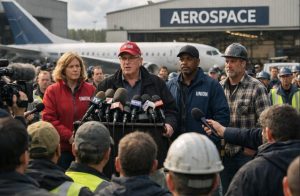
Both the Unite trade union and BAE Systems issued statements following the agreement, highlighting different perspectives on the outcome of the BAE pay rise negotiations. While union leaders emphasised the role of worker solidarity, the company focused on reaching a constructive resolution.
Unite Union Response
Union representatives described the agreement as a significant victory for employees who had taken industrial action to demand a fair settlement.
Unite general secretary Sharon Graham praised the determination shown by workers during the dispute. She said;
It has taken a courageous stance from our workers on a picket line to win this award. They should be congratulated for standing together and winning a pay rise they truly deserve.
Union officials emphasised that the result demonstrated the power of collective bargaining.
Key points highlighted by the union included:
- Workers organised and maintained strike action for several months
- Employees stood together to demand a better pay offer
- The final agreement improved significantly on the original proposal
- The deal included benefits beyond salary increases
Unite regional officer Ross Quinn also commented on the negotiations. He said;
This has been a hard fought victory against an employer that tried every trick in the book to avoid paying our members what they deserved.
He also emphasised the importance of unity among workers across the aerospace sector. According to Quinn;
This win shows the power in a union and that when our reps and workers across the aerospace industry and across Lancashire stand together they can win against even the biggest employers.
BAE Systems Official Response
BAE Systems welcomed the agreement and expressed satisfaction that a settlement had been reached with the union. A company spokesperson confirmed that the negotiations had resulted in a mutually acceptable outcome.
The spokesperson said;
We are pleased to have reached an agreement with this trade union group.
The company also highlighted the importance of its workforce in maintaining the United Kingdom’s defence capabilities.
The spokesperson added;
As the UK’s sovereign provider of combat air capability, our people continue to play a crucial role in supporting the UK Armed Forces and its allies.
From the company’s perspective, the resolution of the dispute allows operations to continue without disruption while recognising the contribution of its skilled employees.
What Does the BAE Pay Rise Mean for UK Employees?
The BAE pay rise has important implications for employees working in the aerospace and defence sectors across the United Kingdom. For workers directly involved in the agreement, the deal provides improved pay and better working conditions.
The settlement may also boost morale among employees who felt their previous pay offer did not reflect their contributions. By securing additional benefits and a higher salary increase, workers demonstrated the impact of collective negotiation.
For skilled engineers and technical specialists, competitive compensation is essential for maintaining career stability. The improved pay package may also help BAE Systems retain experienced staff working on complex defence programmes.
In a broader context, the agreement highlights the importance of fair pay structures within industries that rely on highly specialised technical expertise.
Could the BAE Pay Rise Influence Other UK Defence Industry Pay Deals?

The outcome of the BAE pay rise dispute could influence future negotiations across the UK defence and aerospace sector. Because BAE Systems is one of the country’s largest defence contractors, its pay agreements are often closely watched by other companies and unions.
Successful negotiations may encourage employees in similar industries to review their own pay arrangements. Trade unions could also use the agreement as a reference point during discussions with other employers in engineering and manufacturing.
At the same time, companies across the defence sector must balance competitive wages with operational costs and long term project commitments.
The agreement, therefore, highlights the growing importance of constructive dialogue between employers and workers in industries that depend on highly skilled labour.
Conclusion
The BAE pay rise agreement represents a significant development for workers at the company’s Lancashire facilities and for the wider aerospace sector. After months of negotiations and industrial action, employees secured a pay increase worth around six percent along with several additional benefits.
The settlement includes backdated pay increases, extra annual leave, a one off payment, and a shorter working day. These improvements highlight the impact of collective bargaining and the determination of workers who sought a fair pay award.
For BAE Systems, the agreement restores stability following a prolonged dispute and recognises the importance of its skilled workforce.
More broadly, the deal demonstrates how negotiations between unions and employers can shape pay conditions in industries that play a crucial role in the United Kingdom’s defence and manufacturing economy.
FAQs
What is the confirmed BAE pay rise for UK workers?
The BAE pay rise provides a combined increase of around 6 percent for eligible employees. It includes a 4.8 percent increase from January and a further 0.75 percent rise from October.
When will the BAE Systems pay increase take effect?
The first part of the pay rise is backdated to 1 January. The second increase will take effect from 1 October.
Why did BAE employees go on strike?
Employees went on strike because they believed the original 3.6 percent pay offer was too low. Workers also argued that colleagues in other areas of the business received higher pay increases.
How many workers are affected by the BAE pay rise?
More than 1,000 employees at BAE Systems sites in Warton and Samlesbury are affected. Most of them work in professional services roles such as engineering and technical support.
Will all BAE Systems staff receive additional annual leave?
All staff covered by the agreement will receive one additional day of annual leave. Unite union members will receive an extra one off day as part of the settlement.
What was included in the final BAE pay agreement?
The agreement includes pay increases, a £500 one off payment, extra leave, and a 30 minute reduction in the working day. These benefits increase the overall value of the compensation package.
Which BAE Systems locations were involved in the dispute?
The dispute involved workers at the Warton and Samlesbury facilities in Lancashire. These sites employ many aerospace engineers and technical specialists working on defence programmes.