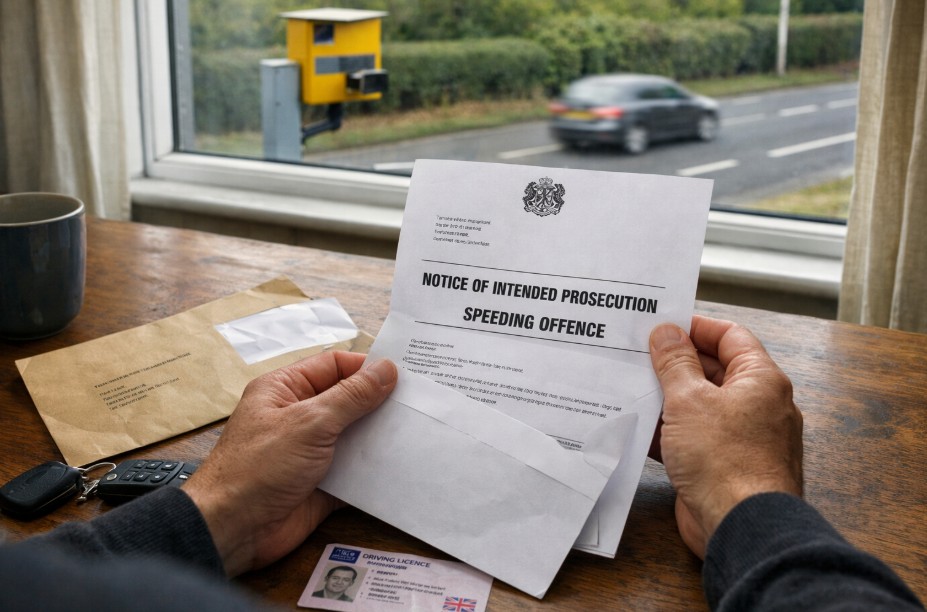
If you are wondering how long it takes for a speeding fine to come through in the UK, the answer is usually within 14 days after the offence. In most cases, the police must send a Notice of Intended Prosecution (NIP) to the registered keeper of the vehicle within this time.
This notice informs you that your vehicle may have been involved in a speeding offence and asks you to confirm who was driving. After you respond, the authorities may issue a Fixed Penalty Notice, offer a speed awareness course, or refer the case to court depending on the situation.
Key things you should know:
- Most speeding notices arrive within 14 days of the offence
- The letter is sent to the registered keeper listed with the DVLA
- You must respond to the Section 172 notice within 28 days
- Ignoring the notice can lead to court action or higher penalties
- The minimum penalty for speeding is £100 and 3 penalty points
Understanding the process helps you respond correctly and avoid further legal trouble.
How Long Does It Take for a Speeding Fine to Come Through?
If your vehicle is caught speeding in the UK, the police usually send the first notice within 14 days of the offence. This notice is known as a Notice of Intended Prosecution (NIP) and is typically delivered by post to the person registered as the vehicle owner with the DVLA.
In many situations, drivers become concerned after seeing a speed camera flash and start wondering when the letter will arrive. The law requires the authorities to issue the first notice within the 14 day window.
However, this does not always mean you personally receive it within that timeframe. The notice only needs to be sent to the registered keeper listed on DVLA records.
Certain circumstances can affect how quickly the notice reaches the driver:
- If the vehicle is leased or rented, the first notice may go to the leasing company
- If the car is registered to a business, the company receives the letter first
- If the vehicle has recently changed ownership, delays can happen
- Incorrect or outdated DVLA registration details may also cause delays
Another important point is the legal time limit. If the NIP arrives after 14 days, it may not be valid in some cases. However, this rule usually applies only to the first notice sent to the registered keeper.
Drivers should understand the general process and timing:
| Stage | What Happens | Typical Time |
| Speed camera detects speeding | Camera records the vehicle | Immediately |
| Notice of Intended Prosecution (NIP) sent | Police send notice to registered keeper | Within 14 days |
| Section 172 notice response | Driver must confirm who was driving | Within 28 days |
| Fixed Penalty Notice issued | Police issue fine or court notice | After response |
Knowing this timeline helps you understand what to expect after a potential speeding offence.
What Happens After Your Car Is Caught by a Speed Camera?
When a speed camera records a vehicle exceeding the speed limit, a clear legal process begins. The system captures the vehicle registration number, time, location and speed recorded at the moment of the offence. Authorities then use this information to identify the registered keeper through DVLA records.
The first step is issuing the Notice of Intended Prosecution (NIP). This document informs the registered keeper that their vehicle may have been involved in a speeding offence. It is usually sent by post within 14 days.
Along with the NIP, you will receive a Section 172 notice asking you to confirm who was driving the vehicle at the time. This is a legal requirement and must be completed honestly. After receiving the notice, you must take action quickly.
Important steps usually include:
- Carefully reading the details of the alleged offence
- Checking the date, time and location listed in the notice
- Identifying the driver responsible for the vehicle at that time
- Completing and returning the Section 172 form within 28 days
Failure to respond to this request can lead to a separate offence for not providing driver information. This offence can carry additional penalty points and fines.
Once the police receive the completed notice, they review the information and decide the next step. Depending on the circumstances, you may receive a Fixed Penalty Notice, an invitation to attend a speed awareness course, or instructions to attend court.
This structured process ensures that the correct driver is identified and that the case is handled according to UK traffic laws.
What Is a Notice of Intended Prosecution (NIP)?
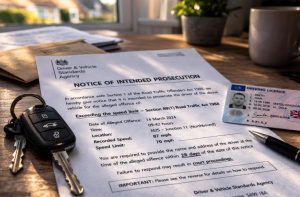
A Notice of Intended Prosecution, often called a NIP, is an official letter issued by the police to inform you that your vehicle may have been involved in a speeding offence. It is usually the first communication drivers receive after a speed camera records a potential violation.
The main purpose of the NIP is to notify the registered keeper of the vehicle that the authorities intend to investigate or prosecute a traffic offence. It also allows the police to request information about who was driving at the time.
A typical NIP includes several important details:
- The date and time of the alleged offence
- The location where the speeding was recorded
- The vehicle registration number
- The speed limit and the speed detected
The notice is usually accompanied by a Section 172 request, which legally requires you to identify the driver.
It is important to respond promptly and accurately. Ignoring the notice or providing incorrect information could result in further legal consequences and additional penalties.
What Happens After You Return the Section 172 Notice?
After you complete and return the Section 172 notice, the police review the information to confirm who was driving the vehicle during the alleged speeding offence. Once the driver has been identified, the authorities decide how the case should proceed.
The outcome often depends on factors such as the speed recorded and whether the driver has previous offences.
Common outcomes include:
- A Fixed Penalty Notice (FPN) with a fine and penalty points
- An offer to attend a speed awareness course
- A court summons for more serious cases
A speed awareness course may be offered if the offence falls within a certain range above the speed limit and the driver has not taken the course within the past three years. Completing the course can help drivers avoid penalty points.
If the case goes to court, the judge will decide the final penalty. This could include higher fines or additional points on your licence.
Responding correctly to the Section 172 notice is essential because it allows the process to move forward and prevents further legal issues.
What Is the Penalty for Speeding in the UK?
Speeding penalties in the UK are designed to discourage unsafe driving and reduce road accidents. The minimum penalty for most speeding offences is a £100 fine and 3 penalty points added to your driving licence.
In many cases, drivers receive a Fixed Penalty Notice. This allows the matter to be resolved quickly without attending court. However, more serious offences may result in stronger penalties.
The exact punishment depends on several factors, including how far above the speed limit the driver was travelling and the circumstances of the offence.
Possible penalties include:
- Monetary fines
- Penalty points added to your licence
- Driving disqualification in serious cases
- Court appearances for major offences
Drivers who accumulate 12 or more penalty points within three years may be disqualified from driving.
Below is a simple overview of potential outcomes:
| Offence Outcome | Possible Penalty |
| Fixed Penalty Notice | £100 fine and 3 penalty points |
| Speed awareness course | Educational course instead of points in some cases |
| Court conviction | Higher fine based on weekly income |
| Serious offences | Driving ban or licence suspension |
Court fines can reach £1,000 for most roads and up to £2,500 for motorway offences. The exact amount often depends on your weekly income and the severity of the offence.
What Are the Official Speed Limits in the UK?
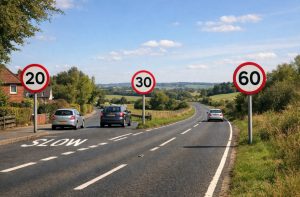
The UK has strict national speed limits that apply to different types of roads and vehicles. These limits represent the maximum legal speed allowed, but they do not always mean it is safe to drive at that speed in every situation.
Drivers must adjust their speed based on conditions such as weather, traffic and road hazards. Exceeding the speed limit can result in penalties including fines and licence points.
Key points about UK speed limits include:
- Speed limits vary depending on the type of road
- Vehicle category can affect the maximum permitted speed
- Some areas have locally set speed restrictions
- Speed limits must always be followed, even when roads appear clear
Local councils may introduce special speed restrictions in certain areas. These limits are usually clearly marked with road signs.
Examples include:
- 20 mph zones near schools
- Reduced limits on dangerous bends
- Temporary restrictions during roadworks
Following official speed limits helps maintain road safety and reduces the likelihood of receiving a speeding fine.
What Are the Speed Limits in Built-Up Areas in the UK?
Speed limits in built up areas are designed to protect pedestrians, cyclists and other road users. These areas usually include towns, cities and residential streets where traffic is heavier and the risk of accidents is higher.
In England, Scotland and Northern Ireland, the typical speed limit in built up areas is 30 miles per hour unless road signs indicate otherwise. In Wales, many built up areas now operate with a 20 miles per hour speed limit.
Drivers should always pay attention to road signs because local authorities may introduce lower speed limits in certain locations. For example, areas near schools, hospitals or busy pedestrian zones may have additional restrictions to improve safety.
Different types of vehicles must also follow specific rules depending on their weight and classification. However, many vehicles share the same speed limit when driving in built up environments.
Below is the official table outlining speed limits for different vehicles in built up areas.
Speed Limits in Built-Up Areas
| Vehicle Type | Built-up Areas mph (km/h) in England, Scotland and Northern Ireland | Built-up Areas mph (km/h) in Wales |
| Cars, motorcycles, car-derived vans and dual-purpose vehicles | 30 (48) | 20 (32) |
| Cars, motorcycles, car-derived vans and dual-purpose vehicles when towing caravans or trailers | 30 (48) | 20 (32) |
| Motorhomes or motor caravans (not more than 3.05 tonnes maximum unladen weight) | 30 (48) | 20 (32) |
| Motorhomes or motor caravans (more than 3.05 tonnes maximum unladen weight) | 30 (48) | 20 (32) |
| Buses, coaches and minibuses (not more than 12 metres overall length) | 30 (48) | 20 (32) |
| Buses, coaches and minibuses (more than 12 metres overall length) | 30 (48) | 20 (32) |
| Goods vehicles (not more than 7.5 tonnes maximum laden weight) | 30 (48) | 20 (32) |
| Goods vehicles (more than 7.5 tonnes maximum laden weight) | 30 (48) | 20 (32) |
Understanding these limits is important because exceeding them can result in speeding penalties and additional licence points.
What Are the Speed Limits on Single and Dual Carriageways and Motorways?
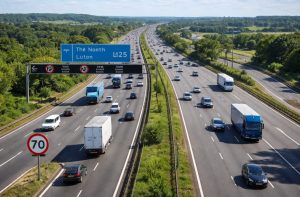
Speed limits on UK roads depend on the type of road and the vehicle being driven. While many drivers know the motorway limit is 70 mph, limits can vary for vehicles such as motorhomes, buses and goods vehicles.
Single carriageways have one lane in each direction without a central barrier, while dual carriageways have a central divider separating traffic. Motorways are designed for faster travel and generally allow the highest speed limits.
Lighter vehicles like cars and motorcycles usually have higher limits than heavier vehicles. Vehicles that are towing caravans or trailers must follow lower speed limits for safety.
It is also important to remember that speed limits are the maximum allowed speed, not always the safest speed. Factors like weather, traffic and road conditions may require you to drive slower.
Speed Limits on Single and Dual Carriageways and Motorways
| Vehicle Type | Single Carriageway mph (km/h) | Dual Carriageway mph (km/h) | Motorway mph (km/h) |
| Cars, motorcycles, car-derived vans and dual-purpose vehicles | 60 (96) | 70 (112) | 70 (112) |
| Cars, motorcycles, car-derived vans and dual-purpose vehicles when towing caravans or trailers | 50 (80) | 60 (96) | 60 (96) |
| Motorhomes or motor caravans not more than 3.05 tonnes | 60 (96) | 70 (112) | 70 (112) |
| Motorhomes or motor caravans more than 3.05 tonnes | 50 (80) | 60 (96) | 70 (112) |
| Buses, coaches and minibuses not more than 12 metres | 50 (80) | 60 (96) | 70 (112) |
| Buses, coaches and minibuses more than 12 metres | 50 (80) | 60 (96) | 60 (96) |
| Goods vehicles not more than 7.5 tonnes | 50 (80) | 60 (96) | 70 (112) |
| Goods vehicles more than 7.5 tonnes in England and Wales | 50 (80) | 60 (96) | 60 (96) |
| Goods vehicles more than 7.5 tonnes in Scotland | 40 (64) | 50 (80) | 60 (96) |
These limits help maintain safe driving conditions while ensuring traffic flows efficiently across the UK road network.
What Should You Do If You Receive a Speeding Ticket?
Receiving a speeding ticket can feel stressful, but taking the correct steps helps you handle the situation properly. The most important thing is to respond promptly and follow the instructions provided in the notice.
When you receive a Notice of Intended Prosecution or Fixed Penalty Notice, you should carefully read all the details before taking action.
Important steps include:
- Check the date, time and location of the alleged offence
- Confirm whether you were the driver at that time
- Complete and return the Section 172 notice within 28 days
- Follow the instructions regarding payment or further action
If you accept the offence, you may be able to pay the fixed penalty and receive the standard penalty points. In some cases, drivers are offered a speed awareness course, which can prevent points being added to the licence.
If you believe the notice is incorrect, you may choose to challenge it in court. However, you should consider seeking legal advice before doing so. Responding quickly ensures you avoid additional penalties.
Can a Speeding Fine Arrive After 14 Days?

In most situations, the first Notice of Intended Prosecution must be issued within 14 days of the alleged speeding offence. This rule is designed to ensure drivers are notified quickly so they can recall the circumstances of the event.
However, there are several situations where the notice may arrive later and still be valid.
For example, if the vehicle is leased, rented or owned by a company, the first notice is sent to the registered keeper rather than the person driving the car. The leasing company or business must then identify the driver, which can extend the process.
Delays may also occur if the DVLA records are outdated or incorrect. If the registered keeper recently changed address or purchased the vehicle, the notice could take longer to reach the correct person.
Because of these factors, receiving a speeding notice after 14 days does not automatically mean it is invalid.
What Happens If You Ignore a Speeding Ticket?
Ignoring a speeding ticket can lead to serious consequences. When you receive a Notice of Intended Prosecution or Section 172 request, you are legally required to respond within the specified time.
Failing to reply can result in a separate offence for not providing driver information. This offence may carry additional penalty points and financial penalties.
Possible consequences of ignoring a speeding notice include:
- A court summons
- Higher fines imposed by the court
- Additional penalty points on your licence
- Possible driving disqualification
Courts treat failure to respond seriously because it prevents authorities from identifying the driver responsible for the offence. In many cases, the penalty for ignoring the notice can be more severe than the original speeding offence.
To avoid these complications, drivers should complete and return the required forms as soon as possible. Even if you disagree with the allegation, responding to the notice ensures you maintain your legal rights and avoid further penalties.
What Happens to New Drivers Who Get a Speeding Fine?
New drivers in the UK face stricter rules during the first two years after passing their driving test. These rules are designed to encourage safe driving habits and reduce the risk of accidents among inexperienced drivers.
If a new driver receives penalty points during this probation period, the consequences can be more serious than for experienced drivers.
Key points new drivers should understand include:
- Accumulating 6 or more penalty points within two years results in licence revocation
- The driver must apply for a new provisional licence
- Both the theory and practical driving tests must be retaken
Because the minimum speeding penalty is usually 3 points, receiving two separate offences within the probation period could lead to losing the licence.
New drivers should therefore pay close attention to speed limits and road conditions. Staying within the legal speed limit helps avoid penalties and ensures that new drivers maintain their licence during this important early driving period.
Conclusion
Understanding how long it takes for a speeding fine to come through in the UK can help drivers respond correctly and avoid additional penalties. In most cases, the first notice arrives within 14 days in the form of a Notice of Intended Prosecution sent to the registered keeper of the vehicle.
After receiving the notice, you must confirm the driver by returning the Section 172 form within 28 days. Depending on the circumstances, the authorities may issue a Fixed Penalty Notice, offer a speed awareness course or refer the case to court.
Speeding penalties usually include a £100 fine and 3 penalty points, although more serious offences may result in higher fines or disqualification.
Following UK speed limits and responding quickly to official notices helps drivers avoid legal problems and ensures road safety for everyone.
FAQs
How soon after speeding do you receive a ticket in the UK?
Most drivers receive a Notice of Intended Prosecution within 14 days of the offence. The notice is sent to the registered keeper listed with the DVLA.
What if a speeding ticket arrives after 14 days?
The first notice must usually be issued within 14 days to the registered keeper. However, delays can occur if the vehicle is leased, rented or recently purchased.
Do all speed camera flashes result in a fine?
Not every camera flash results in a penalty notice. Authorities review the recorded evidence before deciding whether to issue a speeding ticket.
Can you check if you have a speeding ticket online in the UK?
Most speeding notices are sent by post rather than online systems. If you believe you may have an offence, you may need to contact the relevant police authority.
Can you avoid points for speeding in the UK?
Some drivers may be offered a speed awareness course instead of penalty points. This option usually depends on the severity of the offence and previous driving history.
How many points lead to a driving ban in the UK?
Drivers who accumulate 12 or more penalty points within three years can face a driving disqualification. Courts decide the length of the ban based on the circumstances.
How long do speeding points stay on your licence?
Speeding endorsement codes usually remain on your driving record for four years. However, the points are typically counted for disqualification purposes for three years.