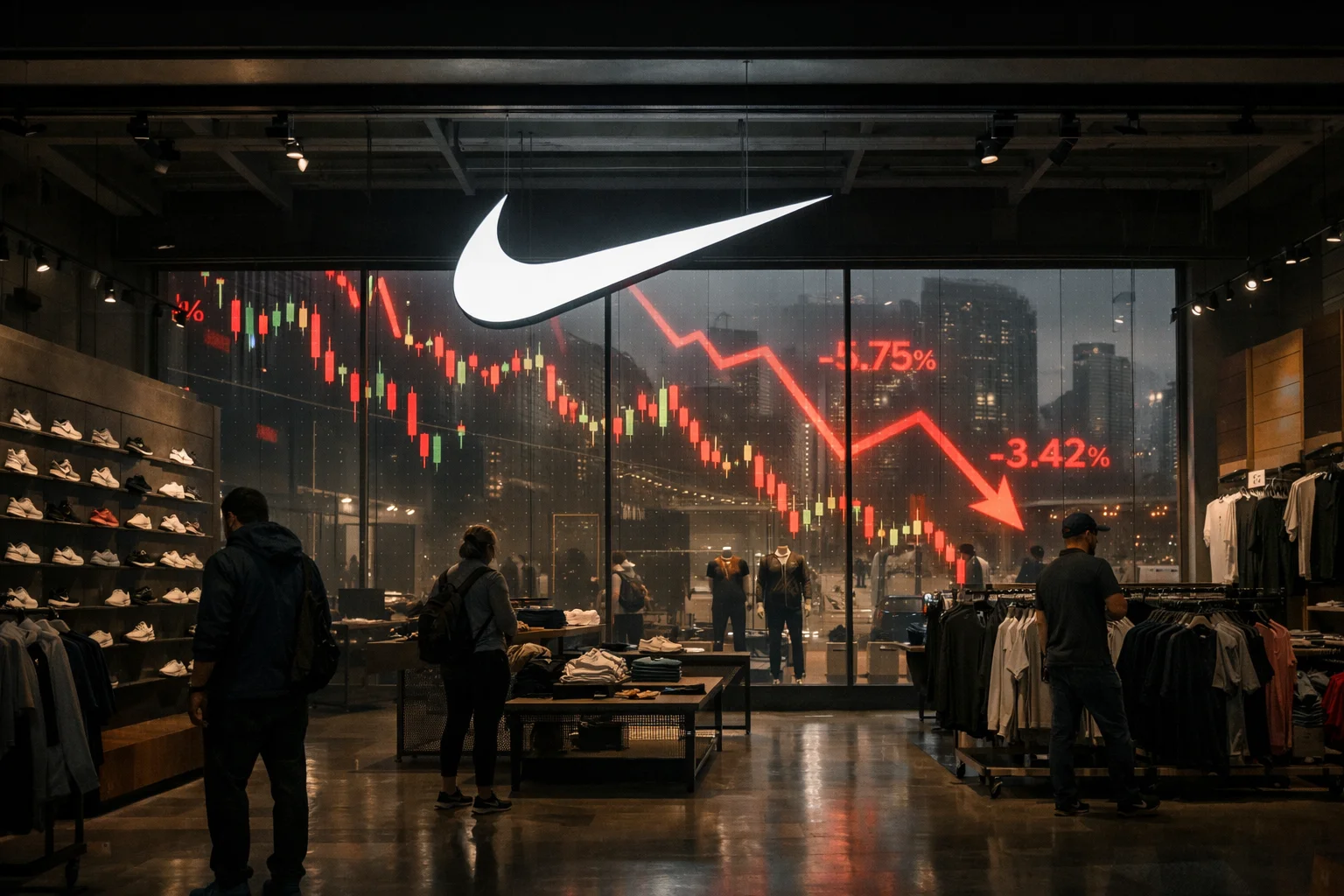
The direct answer is no. Nike is not going out of business, but it is going through a challenging period marked by declining sales, weaker demand in key markets, and a slower than expected turnaround strategy. Despite these setbacks, the company remains a powerful global brand with strong financial foundations and a clear plan to recover.
Key Takeaways:
- Nike is experiencing a temporary slowdown, not a business failure
- Sales are projected to decline by 2% to 4% in the current period
- Stock prices have dropped to near a ten year low, raising concerns
- Demand has weakened, especially in China and lifestyle segments
- Competition from Adidas and emerging brands is increasing
- Nike is restructuring through its “Win Now” turnaround strategy
- The brand remains financially strong with long term recovery potential
Why Are Concerns Growing About Nike’s Business in 2026?

The question “is Nike going out of business” has surged in online searches throughout 2026, largely driven by a mix of financial headlines, investor reactions, and shifting consumer sentiment.
While Nike remains a globally dominant brand, the visibility of its recent struggles has created a perception that the company may be in deeper trouble than it actually is.
One of the biggest triggers for this concern is Nike’s stock performance. In April 2026, shares dropped close to a ten year low, raising alarm among both institutional and retail investors.
Stock declines of this magnitude often lead to speculation about a company’s long term viability, even when the underlying business remains strong.
Another contributing factor is media coverage. Financial news outlets have highlighted slowing sales, weakened demand in China, and delays in Nike’s turnaround strategy. These reports, while accurate in isolation, often lack the broader context of Nike’s market position and long term resilience.
Public perception is also shaped by comparison. When consumers see competitors gaining attention, particularly brands that appear more culturally relevant or innovative, they may assume that Nike is losing its edge entirely.
A market observer described this sentiment clearly: “People tend to equate a falling stock price with a failing company, but in reality, large brands like Nike often go through correction phases without being anywhere near collapse.”
This combination of financial signals, media narratives, and consumer behaviour has amplified the question, even though the fundamentals of Nike’s business remain intact.
How Is Nike Performing Financially in 2025 to 2026?
Nike’s financial performance during this period reflects a company under pressure but not one in decline beyond recovery. The projected sales drop of 2% to 4% indicates a slowdown rather than a collapse, yet it is significant enough to impact investor confidence.
The following table outlines key financial indicators:
| Financial Metric | 2024 | 2025 | 2026 |
| Revenue Growth | Strong | Moderate | Slowing |
| Quarterly Sales | Stable | Slight Dip | Declining |
| Net Profit | High | Slight Drop | Under Pressure |
| Stock Price Trend | Stable | Declining | Near 10 Year Low |
A major area of concern is regional performance. China, once a strong growth engine for Nike, has seen weakening demand. This has been attributed to both economic conditions and increased competition from local and international brands.
Another factor affecting financial performance is product mix. Nike’s lifestyle and casual apparel segments have not performed as well as expected, leading to excess inventory. This has forced the company to rely on discounts, which in turn affects profit margins.
The relationship between sales and inventory can be seen below:
| Category | Demand Level | Inventory Status | Impact on Business |
| Performance Wear | Moderate | Balanced | Stable Revenue |
| Lifestyle Apparel | Weak | Excess | Margin Pressure |
| Footwear | Mixed | Slight Excess | Discounting Needed |
Despite these challenges, Nike continues to generate billions in revenue and maintains a strong balance sheet, which gives it the ability to invest in recovery strategies.
What Challenges Are Impacting Nike’s Growth Right Now?
Nike’s current slowdown is the result of multiple overlapping challenges rather than a single issue. These challenges span across market trends, internal strategy, and competitive dynamics, creating a situation where growth has become harder to sustain.
How Are Consumer Trends and Competition Affecting Nike?
One of the most pressing challenges is the shift in consumer preferences. Modern consumers are increasingly drawn to brands that feel fresh, authentic, and aligned with cultural movements.
While Nike continues to benefit from strong brand recognition, it has faced criticism for being too predictable in certain product categories, particularly in lifestyle apparel.
At the same time, competition has intensified. Adidas has regained relevance through collaborations and design-led collections, while emerging brands are capturing niche audiences by focusing on sustainability, exclusivity, and identity-driven branding.
| Factor | Nike Status | Competitors Status |
| Brand Recognition | Very high | Growing |
| Trend Adaptability | Moderate | High |
| Product Innovation | Strong | Competitive |
| Cultural Relevance | Slightly declining | Increasing |
This shift has reduced Nike’s dominance in trend-sensitive segments, even though it remains a market leader overall.
How Are Inventory and Strategy Decisions Slowing Growth?
Inventory management has become a major operational challenge. Excess stock, particularly in lifestyle categories, has forced Nike into frequent discounting. This not only impacts profit margins but also weakens the brand’s premium positioning.
| Product Category | Demand Level | Inventory Status | Business Impact |
| Performance Wear | Stable | Balanced | Consistent revenue |
| Lifestyle Apparel | Weak | Excess | Margin pressure |
| Footwear | Mixed | Slight excess | Increased promotions |
In addition, Nike’s earlier shift towards a direct to consumer model created unintended consequences. While it improved margins initially, it reduced Nike’s presence in multi brand retail stores, limiting exposure to everyday consumers.
A retail consultant explained this clearly: “Nike leaned heavily into its own channels and, in doing so, lost some of the everyday visibility that wholesale partnerships provide. Rebuilding that balance takes time.”
These combined challenges highlight that Nike is not failing as a business, but it is under pressure to adapt quickly to remain competitive in a changing market.
What Is Behind Nike’s “Win Now” Turnaround Plan?
Nike’s “Win Now” turnaround plan is a strategic response designed to stabilise the business and reposition it for sustainable growth. The plan focuses on correcting past imbalances while aligning the company with current market expectations.
How Is Nike Fixing Its Distribution and Inventory Strategy?
A major part of the turnaround involves reversing the over-reliance on direct to consumer sales. Nike is now rebuilding relationships with wholesale partners such as Foot Locker and JD Sports to improve accessibility and regain market presence.
| Strategy Area | Previous Approach | Current Adjustment | Business Impact |
| Distribution | Direct focus | Balanced model | Wider reach |
| Retail Partnerships | Reduced presence | Active rebuilding | Increased visibility |
| Inventory Management | Reactive | Planned and controlled | Margin protection |
| Customer Access | Limited channels | Multi channel approach | Improved engagement |
At the same time, inventory reduction is a key priority. Nike is improving demand forecasting and supply chain efficiency to better align production with consumer demand and reduce the need for discounting.
| Focus Area | Current Issue | Turnaround Action | Expected Result |
| Inventory Levels | Excess stock | Supply chain optimisation | Reduced discounting |
| Demand Forecasting | Inaccurate planning | Data driven insights | Better stock control |
| Product Flow | Overproduction | Controlled releases | Improved margins |
These changes are aimed at restoring both profitability and operational balance.
How Is Nike Rebuilding Its Brand and Product Strategy?
Nike is also redefining its brand identity by returning to its core focus on sport and performance. This includes increased investment in athlete partnerships, innovation, and storytelling that connects emotionally with consumers.
A former Nike executive explained this transition clearly: “The brand lost some of its emotional connection with consumers. The current strategy is about rebuilding that connection through sport, not just style.”
Product innovation is another key pillar. Nike is shifting towards more performance driven designs while reducing reliance on repetitive lifestyle products. This is intended to create stronger differentiation and renew consumer interest.
| Innovation Area | Previous State | Current Direction | Expected Impact |
| Product Design | Repetitive styles | Performance driven | Higher demand |
| Technology Use | Incremental updates | Advanced innovation | Competitive edge |
| Product Launches | Frequent releases | Strategic launches | Increased engagement |
Although the strategy is well structured, results have taken longer to materialise. Investors expected faster improvements, particularly in sales and stock performance.
Nike’s recovery will depend on how effectively it executes these changes while adapting to ongoing market shifts.
Is Nike Facing a Temporary Slump or Long Term Decline?

Understanding whether Nike is experiencing a temporary slowdown or a long term decline is essential for evaluating its future. Current evidence strongly suggests that the company is going through a cyclical slump rather than a structural breakdown.
Large global brands often experience periods of adjustment as markets evolve. These cycles are influenced by changing consumer preferences, economic conditions, and competitive pressures. Nike’s current challenges fit within this pattern rather than indicating permanent decline.
One of the clearest indicators is the company’s continued strength in key areas such as brand recognition and global reach. Nike remains one of the most recognisable brands in the world, with a presence across multiple markets and product categories.
The company still holds several core strengths:
- A globally recognised and trusted brand
- Strong financial resources and cash flow
- Deep expertise in design and innovation
These strengths act as a buffer during periods of weaker performance and provide the foundation for recovery.
| Indicator | Nike Status | Implication |
| Brand Strength | Extremely strong | Sustained consumer trust |
| Global Presence | Extensive | Market resilience |
| Financial Stability | Strong | Ability to invest in recovery |
| Innovation | High | Long term competitiveness |
Another important factor is adaptability. Nike has historically demonstrated the ability to evolve its strategies in response to market changes. While the current adjustment phase is slower than expected, it does not indicate an inability to recover.
Short term pressures such as declining sales and inventory issues are real, but they are not uncommon for companies undergoing strategic shifts. The key question is how effectively Nike can execute its recovery plan.
Ultimately, Nike’s position suggests a temporary slowdown driven by external and internal adjustments rather than a long term deterioration of its business model.
How Strong Is Nike Compared to Competitors in 2026?
Nike continues to hold a leading position in the global sportswear market, but the competitive landscape has become more dynamic and challenging. While Nike remains the dominant player in terms of scale and recognition, competitors have made significant progress in narrowing the gap.
Adidas has strengthened its position through collaborations, design innovation, and a stronger presence in lifestyle segments. At the same time, emerging brands have captured niche markets by focusing on sustainability, exclusivity, and cultural relevance.
The competitive landscape can be analysed as follows:
| Brand | Strengths | Weaknesses | Market Position |
| Nike | Global scale, innovation, brand power | Slower trend adaptation | Market leader |
| Adidas | Design, collaborations, agility | Slightly lower global reach | Strong competitor |
| Emerging Brands | Niche appeal, sustainability focus | Limited scale and distribution | Fast growing |
Nike’s biggest advantage remains its scale. The company operates in nearly every major market and benefits from a vast distribution network. This allows it to maintain high visibility and consistent revenue streams even during slower periods.
However, competitors have shown greater agility in responding to trends. This includes faster product cycles, more experimental designs, and stronger engagement with younger audiences.
| Competitive Factor | Nike Performance | Competitor Performance |
| Innovation Speed | Moderate | High |
| Cultural Relevance | Stable | Increasing |
| Market Reach | Very high | Growing |
| Product Differentiation | Strong | Increasingly strong |
This shift has forced Nike to reconsider its approach, particularly in areas such as product development and brand storytelling. The company is now placing greater emphasis on innovation and responsiveness to regain its competitive edge.
Despite increased competition, Nike’s overall position remains strong. Its ability to combine scale with innovation will determine how effectively it can maintain its leadership.
What Can Be Expected From Nike’s Future Strategy?
Nike’s future strategy is focused on long term growth, with a clear emphasis on innovation, digital expansion, and deeper consumer engagement. The company is not only addressing its current challenges but also preparing for the next phase of market evolution.
Digital transformation is expected to play a central role. Nike is investing heavily in its e commerce platforms, mobile applications, and data driven personalisation to create a more direct and tailored customer experience.
Sustainability is another major priority. As consumer expectations shift towards environmentally responsible products, Nike is working to integrate sustainable materials and practices into its supply chain.
The company’s strategic priorities include:
- Expanding digital sales and direct engagement
- Investing in sustainable product development
- Accelerating innovation in performance wear
- Strengthening its presence in emerging markets
The expected impact of these initiatives can be summarised below:
| Strategic Focus | Current Challenge | Action Plan | Expected Outcome |
| Digital Expansion | Limited personalisation | Advanced data integration | Higher conversion rates |
| Sustainability | Rising consumer demand | Eco friendly materials | Improved brand trust |
| Innovation Investment | Product fatigue | New product development | Stronger demand |
| Market Expansion | Slowing growth regions | Entry into emerging markets | Revenue growth |
Nike is also expected to continue refining its product strategy by balancing performance and lifestyle offerings. This includes introducing more innovative designs while maintaining its core identity as a sports performance leader.
While challenges remain, particularly in execution speed and competitive pressure, Nike is well positioned to adapt. Its financial strength, global presence, and strategic focus provide a strong platform for long term recovery and growth.
Conclusion
Nike is not going out of business in 2026. While the company is facing a challenging period marked by declining sales and strategic adjustments, it remains a dominant force in the global sportswear industry.
The concerns surrounding Nike are rooted in short-term performance issues rather than long-term viability. With a strong brand, global presence, and ongoing restructuring efforts, Nike is positioning itself for recovery rather than closure.
FAQs
Is Nike losing money in 2026?
Nike is not necessarily losing money overall, but it is experiencing slower revenue growth and pressure on profit margins due to declining sales and increased competition.
Why is Nike’s stock price dropping?
The drop in Nike’s stock price is linked to weaker sales forecasts, investor concerns about its turnaround strategy, and slowing demand in key markets.
Is Nike still the biggest sportswear brand?
Yes, Nike remains the largest sportswear brand globally, although competitors like Adidas are narrowing the gap in certain segments.
What problems is Nike currently facing?
Nike is dealing with declining sales, inventory issues, changing consumer preferences, and increased competition.
Will Nike recover from its current slump?
Most analysts believe Nike will recover, but the process may take time due to the scale of its restructuring efforts.
Is Nike struggling more in certain regions?
Yes, Nike has faced particularly weak demand in China, which has impacted its overall performance.
Is Nike a good long-term company?
Despite short-term challenges, Nike is still considered a strong long-term company due to its brand value, innovation, and global reach.