London Underground tube strikes are expected to disrupt travel across London as train drivers plan a series of 24 hour walkouts over a dispute about working patterns. The RMT union announced strike dates after drivers rejected a proposal to introduce a voluntary four day working week for Bakerloo line drivers.
The union says the plan raises concerns about fatigue, safety and work life balance, while Transport for London argues it would improve flexibility and reliability without reducing working hours.
Key Takeaways
- Several strike dates are scheduled between March and May.
• The dispute focuses on a proposed four-day working week.
• The RMT union cites fatigue and safety concerns.
• TfL says the changes would be voluntary.
• Commuters could face major travel disruption.
What Are the London Underground Tube Strikes and Why Are Drivers Planning a Walkout?

The London Underground tube strikes are part of an ongoing industrial dispute between Transport for London and members of the Rail, Maritime and Transport union. The dispute focuses mainly on proposed changes to working patterns for train drivers, particularly a plan that could allow drivers to work their weekly hours over four days instead of the traditional five-day schedule.
London Underground is one of the busiest metro systems in the world and carries millions of passengers each week. Any disruption caused by industrial action can therefore have widespread consequences for commuters, businesses and the wider London economy. When drivers announce strike action, it often leads to reduced services across the network and significant travel disruption.
The current dispute centres on working conditions and operational flexibility. Transport authorities argue that adapting working patterns could help modernise the system and improve reliability. Union representatives, however, believe the proposal could negatively affect driver welfare and long-term safety standards.
The Dispute Over the Proposed Four-Day Working Week
Transport for London proposed a compressed working schedule for train drivers on the Bakerloo line. Under this system, drivers would complete their weekly contractual hours across four working days instead of five. The proposal is designed to offer an alternative work arrangement rather than replace the existing structure.
TfL believes this approach could improve operational efficiency and help the organisation manage driver availability more effectively. In large public transport networks, workforce scheduling plays a critical role in maintaining consistent services. A compressed working week can sometimes make it easier for managers to allocate staff to peak periods.
The proposal also aims to provide greater flexibility for employees who prefer longer shifts with additional days off. In theory, this type of arrangement could appeal to some workers who value extended rest periods during the week.
However, union members rejected the proposal through a referendum, indicating that a majority of drivers were not comfortable with the suggested changes.
The following table summarises the main differences between the current working pattern and the proposed four day schedule.
| Aspect | Current Schedule | Proposed Four Day Schedule |
| Working days | Five days per week | Four days per week |
| Daily shift length | Standard shift duration | Longer daily shifts |
| Weekly hours | Fixed contractual hours | Same contractual hours |
| Participation | Mandatory schedule | Proposed as voluntary |
| Implementation | Existing system | Trial proposal for Bakerloo line |
From the perspective of workforce management, compressed schedules can offer benefits. However, they also require careful planning to ensure fatigue levels remain manageable and operational safety is maintained.
Concerns Raised by the RMT Union About Safety and Working Hours
The RMT union has raised several concerns regarding the potential effects of longer working days for train drivers. Union leaders argue that extended shifts could increase fatigue, particularly in safety critical roles such as operating underground trains.
Driver fatigue is a key issue in transport systems worldwide. Train drivers must maintain constant attention while operating services, monitoring signals and responding to unexpected situations on the track. Even small increases in fatigue can raise concerns about safety and performance.
Union representatives believe the proposed compressed schedule may create risks in areas such as:
- Longer working shifts could lead to increased tiredness
• Changes to driver allocation and scheduling procedures
• Uncertainty around shift transfers and role assignments
• Potential disruption to existing work-life balance
RMT general secretary Eddie Dempsey has emphasised that drivers had already rejected the proposal and that union members expect their concerns to be taken seriously during negotiations.
In industrial disputes involving public transport systems, worker safety and passenger safety often become central topics of discussion. These debates can sometimes extend beyond operational policies and involve wider questions about labour rights, working conditions and long term workforce planning.
When Will the London Underground Tube Strikes Take Place?
The strike action announced by the RMT union will occur on several dates across three months. Each strike period is planned to last approximately 24 hours, starting at midday and continuing until late morning the following day.
Staggered strike dates are commonly used in transport disputes. By spreading industrial action across multiple days, unions aim to apply sustained pressure on employers while maintaining momentum in negotiations.
The confirmed strike schedule is outlined in the following table.
| Strike Period | Start Time | End Time | Month |
| 24 March to 25 March | 12:00 pm Tuesday | 11:59 am Wednesday | March |
| 26 March to 27 March | 12:00 pm Thursday | 11:59 am Friday | March |
| 21 April to 22 April | 12:00 pm Tuesday | 11:59 am Wednesday | April |
| 23 April to 24 April | 12:00 pm Thursday | 11:59 am Friday | April |
| 19 May to 20 May | 12:00 pm Tuesday | 11:59 am Wednesday | May |
| 21 May to 22 May | 12:00 pm Thursday | 11:59 am Friday | May |
These dates could significantly affect travel patterns across London. Many commuters rely on the Underground system during morning and evening peak periods, so any reduction in services may cause overcrowding and delays.
How the 24 Hour Strike Schedule Will Affect Services?
Although each strike officially lasts 24 hours, disruption often extends beyond that timeframe. Transport systems require careful coordination between drivers, control centres and station staff. Once services stop, it can take time for the network to return to normal operations.
Several operational factors contribute to extended disruption:
- Train positioning and scheduling adjustments
• Staff availability across different stations
• Maintenance and safety checks before restarting services
The following table outlines how strike action typically affects the transport network before, during and after the official strike window.
| Phase | Typical Impact |
| Pre strike period | Reduced evening services as staff prepare for walkout |
| During strike | Severe service reductions or temporary line closures |
| Immediate recovery | Limited services while trains and crews reposition |
| Full recovery | Normal timetable gradually restored |
Because of these factors, commuters may experience disruption for up to two days around each strike period.
How Will the London Underground Tube Strikes Affect London Commuters?

London Underground plays a central role in the daily movement of workers, students and visitors across the city. The network connects major business districts, residential areas and tourist destinations.
When strike action takes place, the immediate impact is often felt during peak commuting hours. Reduced train frequency and possible line closures can lead to overcrowded platforms and longer waiting times.
Many commuters may need to adjust their daily routines by leaving home earlier, working remotely or choosing alternative routes.
Common commuter challenges during strike periods include:
- Longer journey times due to reduced services
• Increased congestion on buses and overground trains
• Higher road traffic levels across central London
• Difficulty reaching workplaces located near Underground stations
Public transport disruptions can also affect sectors such as retail, hospitality and tourism. Businesses located in areas that depend heavily on Underground access may experience lower customer numbers during strike periods.
“I follow London transport developments closely and from my perspective the Underground network functions like the backbone of the city’s mobility system. When services slow down even slightly, the effects spread quickly across buses, rail lines and road traffic. That interconnected nature is why strike action on the Tube can influence the entire city.”
The ripple effect of disruptions often extends beyond commuters themselves. Delivery schedules, business meetings and service appointments can all be delayed when transport networks operate at reduced capacity.
What Is the RMT Union Saying About the London Underground Tube Strikes?
The RMT union has maintained a firm position regarding the dispute. Union leaders argue that their primary objective is to protect workers from changes that could negatively affect safety and working conditions.
Industrial action is typically used as a final measure after negotiations fail to produce an agreement. According to union statements, discussions with London Underground have been ongoing for several months.
The union believes the proposed changes could introduce uncertainty into driver scheduling and create longer shifts that might increase fatigue levels.
The RMT also emphasises that drivers already rejected the proposal during an internal vote. From the union’s perspective, the referendum result should play a significant role in determining the outcome of negotiations.
The following table summarises the union’s main concerns:
| Issue Raised | Explanation |
| Fatigue risk | Longer shifts could increase tiredness among drivers |
| Work life balance | Compressed schedules may affect family and personal time |
| Shift allocation | Concerns about how new schedules would be assigned |
| Safety implications | Union fears fatigue could impact operational safety |
Union leaders have stated that they remain open to dialogue and hope that a negotiated settlement can still be reached before the strike dates occur.
How Has Transport for London Responded to the Planned Tube Strikes?
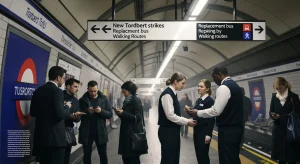
Transport for London has expressed disappointment about the planned strike action. The organisation believes the proposed changes could help modernise the Underground workforce without negatively affecting employees.
TfL has stated that the four day working week would only apply to drivers on the Bakerloo line and that participation would be voluntary.
TfL’s Proposal for a Voluntary Four-Day Working Week
The transport authority introduced the proposal as part of a broader effort to explore modern workforce arrangements within the Underground network.
According to TfL, the compressed schedule would maintain the same number of contractual hours while allowing drivers to work those hours across fewer days.
Potential benefits highlighted by TfL include:
- Improved flexibility in driver scheduling
• Better allocation of staff during peak periods
• No increase in operational costs
• Additional options for drivers who prefer longer shifts
The following table compares TfL’s expected benefits with union concerns.
| TfL Perspective | Union Perspective |
| Improved service reliability | Increased fatigue risk |
| Flexible scheduling for drivers | Longer daily working hours |
| Voluntary participation | Fear of pressure to adopt new schedule |
| More efficient workforce deployment | Potential safety concerns |
TfL’s Concerns About the Impact on Businesses and Commuters
Transport for London has also warned that strike action could significantly affect the capital’s economy. The Underground system supports daily commuting for millions of workers and helps maintain the flow of activity across London’s commercial districts.
A spokesperson for TfL argued that the strikes are unnecessary and could create avoidable disruption.
From a professional transport planning perspective, disputes between operators and unions often involve complex operational considerations.
“I have worked in transport analysis and planning, and in my professional view these disputes highlight the delicate balance between operational efficiency and workforce wellbeing. Public transport networks must maintain high safety standards while also adapting to changing workforce expectations.”
Negotiations in large transport systems often involve detailed discussions about scheduling algorithms, staffing requirements and long term service reliability.
Which London Underground Lines Could Be Most Affected by the Tube Strikes?
Although the dispute relates mainly to the Bakerloo line, the effects of strike action can spread across the wider Underground network.
Train drivers play an essential role in operating services across multiple lines. If a large number of drivers participate in the walkout, the network may struggle to maintain its full timetable.
Possible impacts include:
- Reduced services on the Bakerloo line
• Knock on disruptions affecting connected Underground routes
• Increased passenger loads on alternative lines
The following table shows some lines that could experience increased passenger demand during strike periods.
| Transport Line | Expected Impact During Strikes |
| Bakerloo Line | Potential service suspension or major delays |
| Central Line | Higher passenger numbers due to route overlap |
| Northern Line | Increased congestion at key interchanges |
| London Overground | Alternative route for displaced commuters |
The scale of disruption will depend largely on how many drivers participate in the strike and whether emergency service plans are implemented.
What Travel Alternatives Can Londoners Use During Tube Strikes?

During London Underground tube strikes, commuters often rely on other transport options to complete their journeys.
The capital’s transport system includes several alternatives that can partially compensate for Underground disruptions.
Common travel alternatives include:
- London bus services
• London Overground routes
• National Rail services
• Cycling networks and walking routes
The following table highlights typical alternatives used by commuters during strike periods.
| Alternative Transport | Key Advantage | Possible Limitation |
| Bus services | Wide coverage across London | Slower journey times due to traffic |
| Overground | Reliable rail alternative | Limited route availability |
| National Rail | Faster travel between major stations | Higher passenger demand |
| Cycling | Flexible travel option | Weather and distance challenges |
Planning journeys in advance becomes especially important during strike periods. Commuters are often encouraged to check live updates from Transport for London before travelling.
What Could Happen Next in the London Underground Tube Strike Dispute?
The outcome of the dispute will depend largely on negotiations between the RMT union and Transport for London.
In many previous transport disputes, last minute discussions have sometimes resulted in revised agreements or temporary compromises.
Possible next developments may include:
- Further negotiations between TfL and union representatives
• Adjustments to the proposed working schedule
• Temporary suspension of strike action if progress is made
• Continued industrial action if no agreement is reached
The future of the proposal will likely depend on whether both sides can find a compromise that addresses workforce concerns while maintaining reliable transport services across London.
Public transport systems operate most effectively when labour relations remain stable. For a city as large and economically important as London, maintaining reliable Underground services remains a priority for both transport authorities and commuters.
Conclusion: What Do the London Underground Tube Strikes Mean for London Travel?
The planned London Underground tube strikes highlight an ongoing conflict between transport authorities and drivers over working conditions and operational changes.
With multiple strike dates scheduled between March and May, London commuters may face significant disruption to daily travel across the capital. While the RMT union argues the action is necessary to address safety and work-life balance concerns, Transport for London maintains that its proposed working pattern changes are voluntary and designed to improve service reliability.
Ultimately, the outcome will depend on whether negotiations can produce a compromise that protects both workers’ interests and the reliability of London’s transport network.
FAQ
Why are London Underground drivers going on strike?
London Underground drivers are striking mainly due to concerns about proposed changes to working patterns, including a compressed four-day working week that some drivers believe could increase fatigue and safety risks.
Which union is organising the London Underground tube strikes?
The strikes are being organised by the Rail, Maritime and Transport (RMT) union, which represents many London Underground workers including train drivers.
Will all Tube lines be affected by the strikes?
Not all lines may stop operating completely, but services across several Underground routes could be reduced depending on how many drivers participate in the strike action.
How long will the London Underground strikes last?
Each strike period is planned to last around 24 hours, starting at midday and ending the following morning.
Are the four-day working week changes mandatory for drivers?
Transport for London has stated that the proposed four-day working week would be voluntary and drivers would still be able to continue with a traditional five-day schedule.
How can commuters check live updates during Tube strikes?
Commuters can check updates through the official TfL website, transport apps and live service announcements.
What alternative transport options are available during Tube strikes?
Passengers can use buses, London Overground services, National Rail routes, cycling or ride-sharing services as alternatives during strike periods.