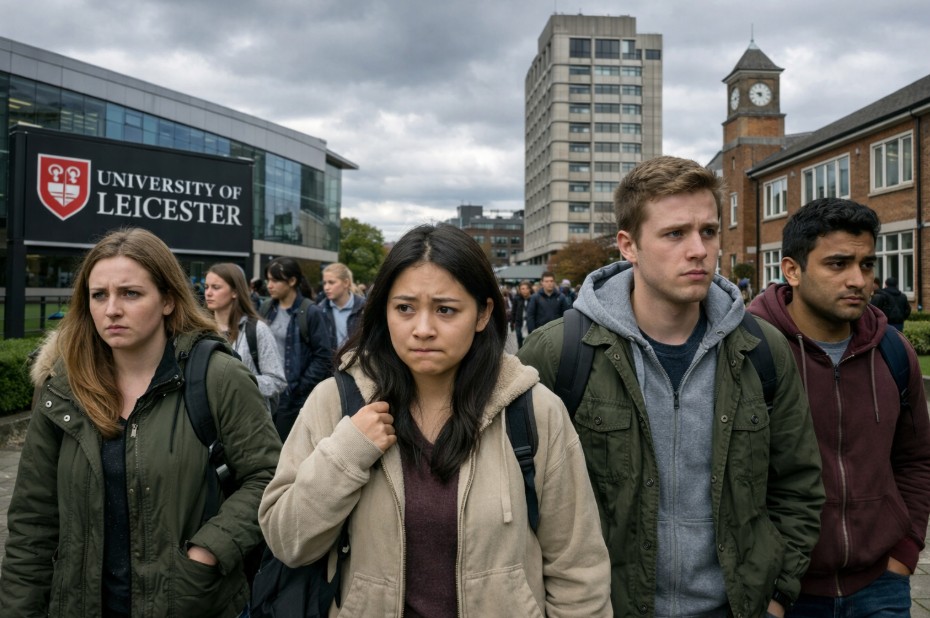
The University of Leicester course closures refer to the confirmed decision to stop new admissions for Film Studies and Modern Languages degrees, with hundreds of students potentially losing their university offers during the UCAS admissions cycle. This situation has raised concerns about student futures, staff job security, and wider changes in UK higher education.
Key takeaways:
- Film Studies and Modern Languages courses are being closed to new applicants
- Around 300 students may have their offers withdrawn based on union estimates
- Current students will continue their studies until 2029
- Around 17 academic roles are expected to be affected
- Students are entitled to guidance and alternative options through UCAS
This article explains what has happened, why it matters, and what affected students can realistically do next.
What Has Happened at the University of Leicester?
The University of Leicester has confirmed that it will close selected degree programmes following a strategic review of its academic structure. This decision primarily affects its College of Social Sciences, Arts and Humanities and comes at a sensitive time during the UCAS admissions cycle.
The closures mean that new students will no longer be accepted onto certain courses starting in 2026. The timing has created uncertainty for applicants who had already received or were considering offers.
Key developments include:
- Film Studies and Modern Languages courses will stop accepting new students
- Some student offers may now be withdrawn
- The decision followed a formal consultation process
- The university aims to improve long term financial sustainability
The university described the process as involving “thoughtful and constructive feedback” from staff. However, the impact on applicants has been immediate, as many had already begun planning accommodation, finances, and relocation.
This situation highlights how institutional decisions can directly affect students during critical application stages, raising questions about timing and communication in higher education planning.
Which Courses Are Being Closed and Why Were They Selected?
The University of Leicester course closures focus on specific subject areas but reflect a broader restructuring strategy within the institution. The decision targets courses that the university believes are no longer sustainable under current conditions.
The main courses affected include:
- Film Studies undergraduate and postgraduate programmes
- Modern Languages degrees across multiple language pathways
In addition to these confirmed closures, other departments are undergoing review, suggesting further changes could follow.
What Reasons Has the University Given for These Closures?
The university has explained that the closures are part of a long term plan to strengthen financial sustainability and ensure future success. The decision follows an internal review process that evaluated course performance, demand, and resource allocation.
Key reasons provided include:
- Financial pressures affecting UK universities
- The need to prioritise viable and high demand courses
- Strategic restructuring to align with future academic goals
- Maintaining institutional competitiveness
The university stated that the review included “a thorough period of pre change engagement and formal consultation,” indicating that staff input was considered before final decisions were made.
However, this reasoning sits within a wider national context. Many UK universities are facing similar challenges due to rising operational costs and static tuition fees. As a result, institutions are reassessing courses that may not attract sufficient enrolment.
Critics argue that the closure of Modern Languages is particularly concerning because of its cultural and educational value. The removal of these programmes could limit access to language education and reduce academic diversity.
Further uncertainty comes from ongoing consultations in departments such as Chemistry and Geography, Geology and the Environment. Decisions in these areas are expected later, suggesting that the current closures may be part of a larger restructuring effort rather than a single isolated action.
How Many Students Are Affected by the Course Closures?
The number of students affected by the University of Leicester course closures has become a central concern. According to the University and College Union, nearly 300 students may have their offers withdrawn as a result of the decision.
These students were expecting to begin their studies in September 2026, making the timing particularly disruptive. The decision was made during the UCAS admissions cycle, which means many applicants had already accepted offers or were in the process of finalising their choices.
Key points include:
- Around 300 students potentially impacted
- Offers may be rescinded mid admissions cycle
- The university has not confirmed exact figures
- Numbers described as “commercially sensitive”
This lack of confirmed data has added to student uncertainty, as applicants are unsure about their individual situations.
Kim Eccleston, head of universities and colleges at UCAS, explained:
“In the event of a course closure mid cycle, universities are required to support affected students in finding a suitable alternative course, either at the same institution or at another provider.”
While support mechanisms exist, the sudden nature of the change has created stress and confusion. Students now face limited time to explore alternative options and secure new placements.
What Happens to Students Whose University Offers Are Withdrawn?

When a university withdraws offers due to course closures, students are not left without options. However, the process requires quick action and clear understanding of available support systems.
The University of Leicester course closures have created a situation where applicants must reassess their plans and make new decisions within a limited timeframe.
What Are Students’ Rights in This Situation?
Students in the UK are protected by admissions guidelines that ensure they are supported if a course is cancelled.
Their rights include:
- Receiving guidance from the university on alternative courses
- Being offered similar programmes where possible
- Accessing UCAS support to find new placements
- The ability to decline unsuitable alternatives
Kim Eccleston stated:
“We therefore encourage any applicant who has concerns about their chosen course to contact the university directly for guidance.”
This reinforces the responsibility universities have to support affected applicants.
Additional protections include:
- Help through UCAS clearing or adjustment
- Access to admissions teams for personalised advice
- Opportunity to reapply or redirect applications
These measures ensure that students are not left without pathways, even in unexpected situations.
What Practical Steps Should Affected Students Take?
Students affected by these closures should take immediate and organised steps to reduce disruption.
Recommended actions include:
- Contact the University of Leicester admissions office
- Ask about alternative courses within the institution
- Reach out to UCAS for assistance
- Explore similar courses at other universities
- Monitor application deadlines carefully
A student affected by the situation shared:
“I had everything planned around Leicester and now I feel like I have to restart the entire process.”
This reflects the emotional and practical challenges students face.
Additional steps students should consider:
- Compare course content before accepting alternatives
- Evaluate location, travel, and living costs
- Seek advice from teachers or academic advisers
Taking early action can significantly improve outcomes. While the situation is challenging, structured support and careful planning can help students secure suitable alternatives without losing a full academic year.
Will Current Students and Postgraduates Be Affected?
Current students at the University of Leicester will not be required to leave their courses despite the closures. The university has confirmed a teach out plan that ensures all enrolled students can complete their studies.
This means that:
- Students already enrolled will continue as planned
- Teaching and supervision will be maintained until 2029
- Postgraduate researchers will receive full academic support
The university has emphasised that its immediate priority is to ensure stability and continuity for current students.
Key assurances include:
- No interruption to degree completion
- Continued access to academic staff
- Maintenance of course standards
However, there may still be indirect impacts, such as:
- Reduced department size over time
- Potential changes in staff availability
- Adjustments in course delivery formats
Despite these possibilities, teach out plans are designed to minimise disruption. They are commonly used across UK universities when courses are phased out.
For most students currently studying, the overall impact will be limited. Their degrees remain valid, and the university has committed to supporting them through to graduation.
How Many Jobs Could Be Lost Due to These Closures?
The University of Leicester course closures are expected to affect academic staff as well as students. According to union estimates, around 17 academic roles may be lost as a result of the decision.
These job losses are directly linked to the closure of entire departments, particularly in Film Studies and Modern Languages.
Key points include:
- Around 17 academic positions at risk
- Some redundancies may be delayed until 2029
- Additional roles may be affected by future restructuring
Staff have expressed concern about limited opportunities within the sector.
One lecturer said:
“I was very upset and sad but not surprised to hear about the closures.”
Another added:
“For many of us, this is likely to be career ending.”
These statements highlight the broader impact of course closures on academic careers.
The university has indicated that some departments will avoid compulsory redundancies, but uncertainty remains for many staff members. With ongoing consultations in other subject areas, the possibility of further job losses cannot be ruled out.
Why Is There Opposition from the University and College Union (UCU)?

The University and College Union has strongly opposed the course closures, arguing that the decision will have long term consequences for both students and the wider education system.
The union has been actively involved in campaigns and discussions surrounding the closures.
What Are the Main Concerns Raised by the Union?
The UCU has raised several key concerns about the impact of the closures.
These include:
- Reduced access to humanities education
- Loss of Modern Languages provision in the region
- Increased inequality in higher education access
A spokesperson stated:
“The cuts contribute to humanities degrees becoming the preserve of a privileged minority.”
Additional concerns include:
- Impact on commuting students who rely on local universities
- Decline in academic diversity
- Potential shortage of language teachers
The union has also warned that the East Midlands could become a “cold spot” for language education.
What Actions Are Being Taken?
In response to the closures, the UCU has organised a series of actions aimed at challenging the decision.
These actions include:
- Planning industrial action
- Organising protests and campaigns
- Engaging with university leadership
Dr Joseph Choonara said:
“This will diminish the chances students have to study these subjects in the East Midlands.”
The union has indicated that further action may follow, depending on how the situation develops. These efforts aim to highlight the broader consequences of course closures and encourage reconsideration or mitigation measures.
What Does This Mean for Higher Education in the UK?

The University of Leicester course closures reflect wider trends affecting universities across the UK.
Many institutions are currently facing:
- Financial pressures
- Changing student demand
- Strategic restructuring
Key developments include:
- Declining enrolment in humanities subjects
- Increased focus on financially sustainable courses
- Rising operational costs
Similar actions at other universities suggest that this is part of a broader shift.
For students, this means:
- Greater competition for certain courses
- Fewer local options
- Increased need for careful planning
The situation highlights the importance of understanding how universities make decisions about course offerings.
Could More Courses Be Closed at Leicester University?
The current University of Leicester course closures may not represent the final stage of changes within the institution. While Film Studies and Modern Languages have already been confirmed for closure, ongoing consultations indicate that additional academic areas are still under review.
This suggests that the university is continuing a broader restructuring process rather than making isolated decisions.
Key subject areas currently under consideration include:
- Chemistry
- Geography, Geology and the Environment
These departments are undergoing evaluation as part of the university’s wider strategy to assess course viability and long term sustainability.
Important developments to note:
- Final decisions on these courses are expected in the coming months
- The review process is still ongoing and subject to change
- Further restructuring measures remain possible
For both students and staff, this creates an ongoing sense of uncertainty. Applicants considering these subject areas may be unsure about future course availability, while staff face concerns about long term job stability.
Overall, this situation indicates that the university is actively reassessing its academic portfolio to align with financial pressures and strategic priorities, meaning further course changes cannot be ruled out.
How Will These Closures Impact the East Midlands Region?
The University of Leicester course closures are expected to have a broader impact beyond the institution itself, particularly across the East Midlands region.
One of the most immediate effects is reduced access to specific subjects, especially Modern Languages, which are already declining across the UK.
Key regional concerns include:
- Reduced availability of Modern Languages degree programmes
- Increased need for students to travel outside the region
- Limited local university options for certain subjects
This shift could place additional financial and logistical pressure on students who prefer to study close to home.
Additional long term effects may include:
- A potential shortage of qualified language teachers in the region
- Reduced academic diversity across local universities
- Disruption to local education pathways from school to higher education
There are also concerns that the East Midlands could become less attractive for students seeking a wide range of academic options.
Overall, these closures may contribute to a gradual reshaping of the regional higher education landscape, with fewer subject choices and increased reliance on institutions outside the area.
What Are the Key Facts vs Claims vs Concerns?

Understanding the University of Leicester course closures requires careful distinction between confirmed facts, reported figures, and broader concerns. This clarity helps students and readers avoid confusion and make informed decisions.
Confirmed Facts
Several key elements of the situation have been officially confirmed by the university and can be treated as factual.
These include:
- Film Studies and Modern Languages courses will no longer accept new students
- The closures follow a completed strategic review process
- Current students will continue their studies under a teach out plan until 2029
- The university has engaged in consultation with staff before making the decision
Additionally, the university has stated that its priority is to ensure stability for current students and support for affected staff.
These confirmed points provide a clear foundation for understanding what has already happened.
Reported / Claimed Figures
Alongside confirmed facts, several important figures have been reported, primarily by the University and College Union. These figures have not been fully confirmed by the university but are widely referenced in media coverage.
Reported figures include:
- Around 300 prospective students may have their offers withdrawn
- Approximately 17 academic jobs could be lost
- Additional departments such as Chemistry and Geography are under review
The university has described some of this information as “commercially sensitive,” which means exact numbers have not been publicly verified.
While these figures are credible and based on union data, they should be understood as estimates rather than confirmed statistics.
Concerns and Predictions
Beyond facts and figures, there are several concerns and predictions raised by unions, staff, and education experts. These reflect potential long term consequences rather than immediate outcomes.
Key concerns include:
- A decline in Modern Languages education within the East Midlands
- Reduced access to humanities subjects for future students
- Increasing inequality in higher education access
There are also broader predictions about the UK education sector, such as:
- Continued closures of low enrolment courses
- Greater focus on financially sustainable subjects
- Ongoing restructuring across universities
Some staff have expressed fears about career impacts and the long term future of their disciplines. These perspectives highlight the human side of institutional decisions.
It is important to recognise that while these concerns are valid, they are not guaranteed outcomes. They represent possible scenarios based on current trends and stakeholder viewpoints.
By separating confirmed facts from reported figures and wider concerns, students can better understand the situation and make informed choices about their education.
What Should Prospective Students Do Now?

Prospective students affected by the University of Leicester course closures should take a proactive and informed approach to protect their academic plans.
The situation may feel uncertain, but there are clear steps students can take to move forward effectively.
Recommended actions include:
- Contact the University of Leicester admissions team to confirm your status
- Ask about alternative courses within the university
- Reach out to UCAS for personalised support and guidance
- Explore similar courses at other universities
It is important for students to act quickly, as timelines within the admissions cycle can be limited.
Additional steps to consider:
- Carefully compare course content before accepting any alternatives
- Check entry requirements and application deadlines for other universities
- Consider practical factors such as location, travel, and living costs
- Speak with teachers, advisers, or career counsellors for guidance
Students should also remain updated through official UCAS communications to avoid missing important deadlines or opportunities.
While the situation may require adjustments, it does not mean losing the chance to attend university. With the right support and timely decisions, students can still secure suitable courses that match their academic goals.
Planning ahead and staying informed will be key to navigating this change successfully.
Conclusion
The University of Leicester course closures highlight a period of change in UK higher education. While the decision aims to address financial challenges, it has created uncertainty for students and staff.
The situation reflects broader trends affecting universities nationwide. Students should stay informed and act quickly to explore alternatives. Clear communication and planning will be key in navigating these changes.
FAQs
Can universities withdraw offers legally in the UK?
Yes, universities can withdraw offers in certain situations such as course closures. They must provide support and alternatives.
What should I do if my course is cancelled?
Contact the university and UCAS immediately. They will guide you through alternative options.
Will I lose my university place completely?
No, you still have options through UCAS and other universities. Support is available to help you secure a place.
Are current students affected?
No, current students can complete their degrees. Teach out plans ensure continuity.
Why are courses being closed?
Closures are often due to financial pressures and low demand. Universities are restructuring to remain sustainable.
Can I switch courses within the same university?
Yes, universities may offer alternative courses. You should discuss options with admissions teams.
Will more closures happen in the UK?
It is possible due to ongoing challenges. Students should research carefully before applying.