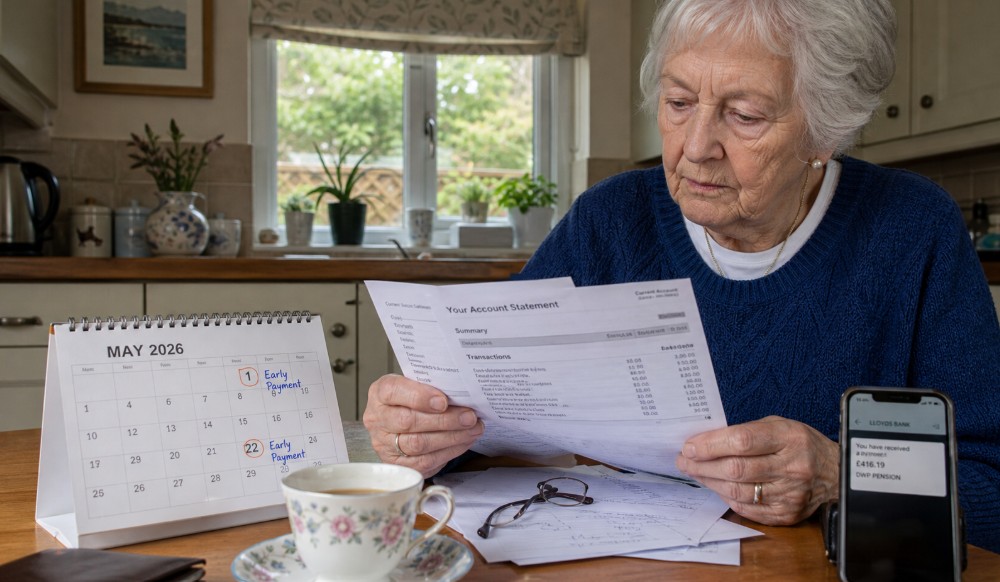
Are you expecting your pension or benefit payment around the May bank holidays in 2026? Yes, your pension or benefit will be paid earlier than usual if it falls on a May bank holiday in 2026. Instead of being delayed, payments are moved forward to ensure you receive your money on time.
Here’s what you need to know:
- Payments due on Monday, 4 May 2026, will be paid on Friday, 1 May 2026
- Payments due on Monday, 25 May 2026, will be paid on Friday, 22 May 2026
- This applies to state pensions, Universal Credit, and other DWP benefits
- You do not need to take any action; changes are automatic
These May bank holiday pension changes are standard practice in the UK, helping ensure you are not financially impacted by public holiday closures.
What Are the May Bank Holiday Pension Changes in 2026?
The May bank holiday pension changes 2026 are part of routine adjustments made by the Department for Work and Pensions (DWP) whenever public holidays disrupt standard payment schedules.
In May 2026, two bank holidays, the Early May Bank Holiday and the Spring Bank Holiday, will shift payment dates for millions across the UK.
Payments that would normally be processed on these Mondays will instead be issued on the preceding Fridays. This ensures that recipients still receive their funds without delay, even though government offices and banks are closed.
A DWP spokesperson confirmed:
“Payments due on bank holidays are issued on the last working day before to ensure claimants receive their money without disruption.”
This approach applies consistently across pensions and most benefits, offering predictability despite calendar changes. It’s important to remember that while the timing changes, the amount you receive remains the same.
Why Do Bank Holidays Change Pension Payment Dates in the UK?
Bank holidays affect pension payments because banks and the Department for Work and Pensions (DWP) are closed. If a payment date falls on a holiday, it cannot be processed.
To avoid delays, payments are issued earlier, usually on the last working day before the holiday, ensuring recipients receive funds on time without disruption.
Bank Closures and Processing Delays
Bank holidays in the UK affect when pension and benefit payments are processed, as banks and Department for Work and Pensions systems are closed.
If a payment date falls on a holiday, it cannot be processed normally. Instead of delaying payments, schedules are adjusted in advance.
This ensures recipients still receive funds on time, typically by moving payments to an earlier working day before the bank holiday.
Why Payments Are Made Earlier?
To avoid disruption, the DWP follows a consistent policy of issuing payments before the bank holiday. Instead of pushing payments back, which could leave claimants waiting, funds are released on the last working day prior, typically the Friday before.
An official familiar with DWP operations explained:
“The priority is to avoid disruption. Issuing payments early ensures people are not financially disadvantaged by bank closures.”
This approach reflects the critical role that pensions and benefits play in supporting everyday living costs.
By ensuring early access to funds, the system protects recipients from unnecessary financial strain and maintains reliability across the UK’s welfare payment structure.
How Do Bank Holidays Affect DWP Pension and Benefit Payments?
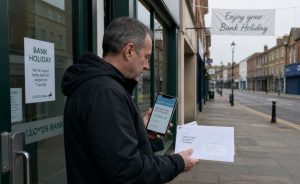
Bank holidays affect a wide range of payments managed by the DWP, but the impact depends on your usual payment schedule. While some people will notice a change, others may see no difference at all.
Payments affected include:
- State Pension
- Universal Credit
- Pension Credit
- Personal Independence Payment (PIP)
- Disability Living Allowance (DLA)
- Attendance Allowance
- Child Benefit
- Carer’s Allowance
Most benefits are paid every four weeks, while some pensions may be paid weekly. Only those whose payment dates fall exactly on the bank holiday Mondays will receive funds earlier.
A government representative noted:
“Claimants do not need to take any action. Adjustments are automatic, and normal payment schedules resume after the holiday period.”
This structured system ensures continuity while minimising disruption. Understanding this can help you determine whether your own payment will be affected.
Will You Receive Your Pension Early in May 2026?
Yes, you will receive your pension early if your usual payment date falls on either Monday 4 May 2026 or Monday 25 May 2026, as both are UK bank holidays.
In these cases, payments are automatically brought forward to the previous working day, which is the Friday before.
This applies to all standard payment schedules, including both weekly and four-weekly pension payments. The system ensures that you are not left waiting for your money due to bank or government office closures.
For example, if your National Insurance number determines that you are normally paid on a Monday, your payment will instead arrive on Friday 1 May or Friday 22 May, depending on which bank holiday affects you.
Real-Life Example from a Claimant
I recently spoke with a pensioner named Martin, who receives his state pension every Monday. He shared his experience from previous bank holiday changes:
“At first, I thought something had gone wrong when the money came in early. But then I realised it was because of the bank holiday. The tricky part is making sure that money lasts longer until the next payment.”
From my perspective, Martin’s experience highlights a key issue, while early payments are helpful, they can create budgeting challenges. Receiving money sooner may feel like a bonus, but it actually needs to stretch over a longer period.
This example shows why awareness of the May bank holiday pension changes 2026 is crucial for financial planning.
What Should You Do If Your Pension Payment Is Delayed?
Although delays are uncommon, there are situations where payments might not appear as expected. If this happens, the first step is to confirm the revised payment date.
Check the following before taking further action:
- Your bank account on the revised payment date
- Your official award notice
- Whether your payment was due on a bank holiday
If the payment still hasn’t arrived after the expected early date, you should contact the DWP or HMRC. In most cases, delays are due to banking processing times rather than system errors.
Taking a calm, step-by-step approach can help resolve issues quickly and avoid unnecessary concern.
How Can You Check Your Updated Pension Payment Dates?
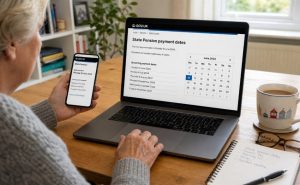
Your State Pension payment date is based on the last two digits of your National Insurance number. This schedule stays the same, but if your usual day falls on a bank holiday, the payment is made earlier.
To stay updated, check your bank statements, review messages from the Department for Work and Pensions, and visit GOV.UK for official updates. Understanding your payment pattern helps you plan ahead during bank holidays.
Understanding Your Payment Schedule
Your state pension payment date is based on the last two digits of your National Insurance (NI) number, and this structure remains consistent throughout the year, even during bank holidays.
What changes is not your assigned day, but when the payment is processed if that day falls on a public holiday.
NI Number Payment Days Table:
| NI Number Ending | Usual Payment Day |
| 00–19 | Monday |
| 20–39 | Tuesday |
| 40–59 | Wednesday |
| 60–79 | Thursday |
| 80–99 | Friday |
This system helps you quickly identify whether your payment might be affected by the May bank holiday pension changes 2026, particularly if your usual day is a Monday.
Ways to Stay Updated
To ensure you always know when your payment will arrive, it’s important to stay informed through reliable sources:
- Check your bank statements regularly to spot early payments
- Review official DWP letters or digital communications
- Visit GOV.UK for the latest updates on benefit and pension schedules
By understanding your usual payment pattern and keeping track of official updates, you can easily anticipate any changes and manage your finances more effectively during bank holiday periods.
What Other Benefits Are Affected by May Bank Holiday Payment Changes?
The May bank holiday pension changes 2026 extend beyond pensions to include a wide range of benefits. These adjustments affect millions of people across the UK.
The key benefits impacted include Universal Credit, disability-related payments, and family support benefits. Because all of these are processed through the same system, they follow identical rules for bank holiday adjustments.
This widespread impact highlights how significant these changes are, particularly during a time of rising living costs and financial pressure on households.
How Can You Prepare for May Bank Holiday Pension Changes?

Planning ahead is essential when dealing with early payments. While receiving money sooner might seem beneficial, it often means a longer wait until the next payment cycle.
To manage this effectively:
- Plan your monthly budget in advance
- Prioritise essential expenses like rent and utilities
- Avoid treating early payments as extra income
A useful strategy is to divide your payment across the extended period it needs to cover. This ensures financial stability until your next scheduled payment arrives.
Being proactive can help you avoid the stress that often comes with shifted payment dates.
Key Dates for May Bank Holiday Pension Payments 2026
Payment adjustments for May 2026 are straightforward but crucial to keep in mind, especially if your usual payment date falls on a bank holiday.
The Department for Work and Pensions (DWP) has confirmed that payments scheduled on these dates will be issued earlier to avoid disruption caused by closures.
May 2026 Payment Adjustment Table:
| Original Payment Date | Adjusted Payment Date | Reason |
| Monday 4 May 2026 | Friday 1 May 2026 | Early May Bank Holiday |
| Monday 25 May 2026 | Friday 22 May 2026 | Spring Bank Holiday |
These changes apply to pensions and most benefits, ensuring payments are made before the holiday closures. Keeping these dates in mind will help you plan your finances more effectively.
Final Thoughts
The May bank holiday pension changes 2026 are a routine but important adjustment that affects millions of people across the UK. While payments will arrive earlier, the overall system remains reliable and consistent.
Understanding when and why these changes happen can make a significant difference in how you manage your finances. With rising living costs and ongoing economic uncertainty, staying informed is more important than ever.
By planning ahead and keeping track of key dates, you can navigate these changes confidently and avoid unnecessary stress.
FAQs About May Bank Holiday Pension Changes 2026
Do pension payments always come early on UK bank holidays?
Yes, payments are typically made on the working day before a bank holiday to avoid delays.
Can DWP payments ever be delayed instead of early?
In most cases, payments are issued early. Delays are rare and usually due to banking issues.
Will my payment amount change due to the bank holiday?
No, the amount remains the same. Only the payment date changes.
What happens if my payment date is not on a bank holiday?
Your payment will be made as usual with no changes.
How will I know if my pension date has changed?
You can check your usual payment schedule and compare it with bank holiday dates.
Are bank holiday payment changes the same every year?
Yes, the principle remains the same, but exact dates vary depending on the calendar.
Can I request a different payment date from DWP?
No, payment dates are fixed based on your benefit type and NI number.