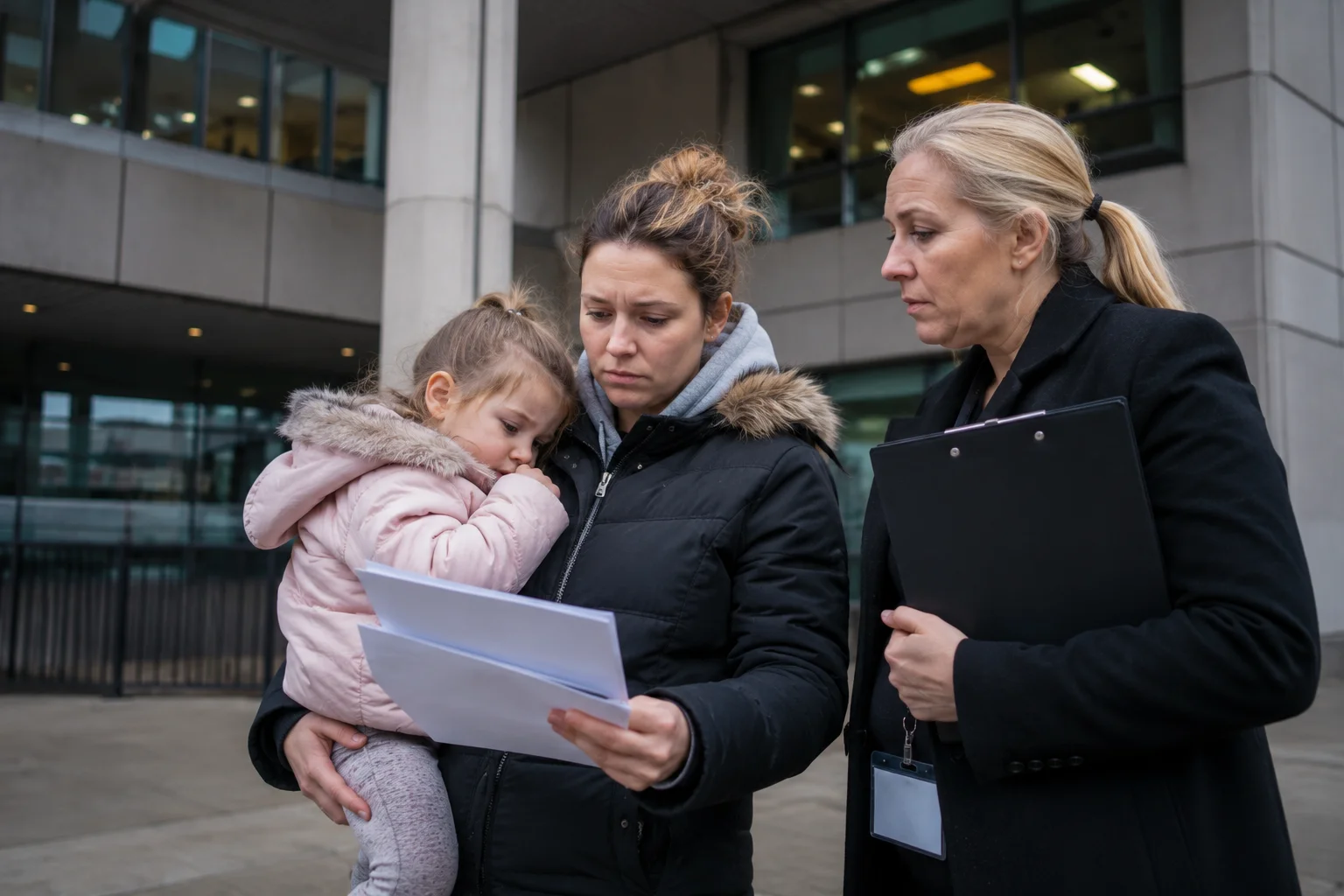
The South Gloucestershire Council’s homelessness failure highlights how a domestic abuse survivor and her child were left homeless after the council wrongly applied local connection rules.
The Ombudsman found that the authority failed to protect a vulnerable family despite clear evidence of serious risk.
This case matters because it shows how homelessness decisions can become dangerous when legal duties, safeguarding concerns and domestic abuse protections are misunderstood.
Key takeaways:
- South Gloucestershire Council refused help despite documented domestic abuse risks.
- The Ombudsman said the council misapplied homelessness law.
- The family was left without safe accommodation.
- The council apologised and agreed to pay compensation.
- The case raises wider concerns for UK councils.
What Happened In The South Gloucestershire Council Homelessness Failure Case?
The South Gloucestershire Council’s homelessness failure has raised serious concerns about how vulnerable people, particularly domestic abuse survivors, are treated when they ask a local authority for urgent housing help.
According to findings reported by the Local Government and Social Care Ombudsman, South Gloucestershire Council left a domestic abuse survivor and her child homeless after “fundamentally misapplying the law designed to protect victims”. The woman had fled domestic abuse in 2023 and moved with her child to a refuge. When she was later told she needed to leave that refuge, she turned to South Gloucestershire Council for homelessness support.
Instead of offering effective protection, the council refused to help on the basis that she did not have a local connection to the area. The Ombudsman found that the council’s approach failed to properly consider the danger she faced and the legal protections available to people escaping domestic abuse.
This case has become more than a single complaint. It has triggered wider legal concern because the Ombudsman suggested the problem may not have been a simple one-off mistake. The decision-making involved managerial awareness, raising questions about whether similar errors could affect other domestic abuse survivors.
Domestic Abuse Survivor Left Without Safe Accommodation
The mother had already taken a major step to protect herself and her child by leaving an abusive situation and entering a refuge. Refuge accommodation is often used by people who are at immediate risk, but it is not usually a permanent housing solution.
When she had to leave the refuge, the council was asked to step in. The case details show that risk information was available and that the danger from her former partner had been clearly documented.
However, the council initially tried to refer her to an area near her family, even though it had been told that her ex-partner had gone there to try to find her. It later sent the case back to the authority where the abuse happened, insisting she would be safe living “three miles” from unsafe addresses.
That decision became central to the criticism. In homelessness cases involving domestic abuse, safety cannot be reduced to distance alone. A few miles can still be dangerously close where an abuser knows the victim’s routines, family links, local services or likely movements.
Ombudsman Findings On Council Decision-Making
The Ombudsman found that the council had turned a vulnerable family away, sent the woman back towards danger and then closed the file. Repeated legal challenges from the woman’s support worker were also dismissed.
The seriousness of the South Gloucestershire Council’s homelessness failure lies not only in the outcome but also in the way the council handled warnings. The risks were said to be clearly documented, yet the authority still refused to accept responsibility for helping her.
A housing law adviser described the issue in plain terms: “I would expect any council dealing with a domestic abuse survivor to start with safety, not bureaucracy. Where risk is clearly evidenced, local connection rules must not be used in a way that pushes someone back towards the very danger they escaped.”
That insight reflects the central legal concern. Homelessness law is not simply an administrative checklist. It exists to prevent people from being left without safe accommodation, especially where the applicant or their child may be at risk.
Why Did The Ombudsman Say The Council Misapplied Homelessness Law?
The Ombudsman’s criticism focused on how the council applied local connection rules and how it handled the woman’s status as a domestic abuse survivor.
Local connection rules can be relevant in homelessness cases. Councils may consider whether an applicant has a connection to their area through residence, employment, family or other special circumstances. However, those rules must be applied within the wider legal framework, including protections for people fleeing violence or abuse.
The Ombudsman found that South Gloucestershire Council had failed to properly apply the law designed to protect domestic abuse victims. The authority’s approach appeared to prioritise local connection over safety.
Local Connection Rules And Domestic Abuse Safeguards
A local authority may sometimes refer a homeless applicant to another council if the person has no local connection to the area where they applied. However, a referral should not be made where the applicant would be at risk of violence or abuse in the area to which they are being referred.
This is where the South Gloucestershire Council’s homelessness failure becomes legally significant. The woman was not simply asking to move by preference. She had fled domestic abuse. The council had evidence suggesting that returning her towards certain areas could expose her to serious danger.
The key issue was whether the council treated local connection as a barrier to help rather than assessing the full safeguarding picture.
| Issue Considered | What Should Be Assessed | Concern In This Case |
| Local connection | Whether the applicant has a lawful link to the area | The council relied on lack of local connection |
| Domestic abuse risk | Whether referral could expose the applicant to danger | The woman’s risk was reportedly clearly documented |
| Suitability of area | Whether the applicant can safely live there | The proposed areas were linked to danger |
| Council duty | Whether emergency or ongoing help should be provided | The case was closed with no clear accommodation route |
Why Referring Victims Back Can Put Lives At Risk?
Domestic abuse often involves patterns of control, stalking, intimidation and repeated attempts to locate the victim. A council may misunderstand risk if it focuses only on geography.
For example, an applicant may be unsafe in an area because:
- The perpetrator lives nearby or regularly visits.
- The perpetrator knows the survivor’s family addresses.
- The survivor’s child attends school nearby.
- The survivor relies on services known to the perpetrator.
- The perpetrator has previously tried to find them after they fled.
In this case, the Ombudsman said no victim of domestic abuse should face the prospect of being referred back to the area they fled. That statement is significant because it highlights the life-and-death consequences of poor homelessness decision-making.
The South Gloucestershire Council’s homelessness failure is therefore not just a procedural issue. It shows how administrative decisions can directly affect personal safety.
How Did The Council Respond To The Homelessness Complaint?

South Gloucestershire Council apologised “unreservedly” for the mistakes and shortcomings in responding to the family. The authority accepted that the situation should never have happened and said it must do better.
The council also agreed to pay £1,000 in compensation. While compensation may recognise distress and injustice, it does not erase the risk the family faced or the wider concerns raised by the Ombudsman.
The authority said it already had a series of actions in place, including additional staff training and oversight of domestic abuse situations. It also confirmed that further work would be undertaken through a detailed action plan to address the Ombudsman’s findings.
| Council Response | Meaning For The Case |
| Unreserved apology | The authority accepted that mistakes were made |
| £1,000 compensation | Financial remedy for the injustice caused |
| Staff training | Intended to improve future decision-making |
| Extra oversight | Focus on domestic abuse-related homelessness cases |
| Detailed action plan | Further work to address the Ombudsman findings |
The public importance of this response lies in implementation. An apology is only meaningful if it leads to better frontline decisions. Training, supervision and policy review must translate into safe outcomes for people approaching the council in crisis.
What Legal Duties Do Councils Have Towards Domestic Abuse Survivors?
Local authorities in England have statutory duties towards people who are homeless or threatened with homelessness. These duties are shaped by housing legislation and guidance, including the Housing Act 1996 and the Homelessness Reduction Act 2017.
Domestic abuse survivors may be owed support depending on their circumstances, including whether they are homeless, eligible for assistance and in priority need. Since domestic abuse can make it unreasonable for someone to continue living in their home, councils must take these cases seriously from the outset.
Homelessness Prevention And Relief Duties
Councils have a prevention duty where someone is threatened with homelessness. They also have a relief duty where someone is already homeless.
In practical terms, this means the council should not simply reject or redirect an applicant without proper assessment. It should look at the facts, identify immediate risk and consider what steps are needed to secure accommodation.
A homelessness caseworker explained the practical concern: “When someone fleeing domestic abuse presents as homeless, I would want officers to record every risk factor carefully. I would not treat a lack of local connection as the end of the conversation, because safety has to come first.”
Priority Need And Safety Considerations
A person may be in priority need if they have dependent children, are pregnant, are vulnerable because of domestic abuse or meet another legal category. A mother with a child approaching a council after leaving a refuge will often require urgent and sensitive assessment.
The council must also consider whether accommodation is suitable. Suitability is not only about the property itself. It includes location, safety, access to support and whether the applicant can realistically live there without serious risk.
Key legal considerations include:
- whether the applicant is homeless or threatened with homelessness;
- whether they are eligible for assistance;
- whether they have a priority need;
- whether they are intentionally homeless;
- whether any referral to another council would be safe and lawful.
The failure to properly weigh these issues can lead to unlawful decisions, severe distress and avoidable danger.
Why Has This Case Raised Wider Concerns About Council Housing Decisions?

The case has raised wider concern because the Ombudsman indicated that the decisions were not made by a single officer acting alone. They were made with managerial awareness.
That matters because a single administrative error may be corrected through individual training. A decision made with managerial awareness may suggest a broader policy, culture or systems problem.
If one council misunderstands how local connection rules apply to domestic abuse survivors, similar errors could be repeated in other cases. Applicants may be turned away without knowing their rights, especially where they are frightened, traumatised or lack legal support.
The South Gloucestershire Council’s homelessness failure also reflects a wider housing pressure across England. Councils are dealing with high demand, limited social housing and rising temporary accommodation costs. However, pressure on resources does not remove legal duties.
| Wider Pressure | Risk For Applicants | Required Council Response |
| Housing shortages | More people left waiting | Lawful assessment and clear communication |
| Rising homelessness | Increased demand on services | Proper triage and urgent safeguarding |
| Limited temporary accommodation | Unsafe placements or delays | Suitability checks and risk management |
| Complex domestic abuse cases | Misunderstood safety risks | Specialist training and supervision |
| Local connection disputes | Wrongful referrals | Careful legal assessment |
The legal alarm comes from the possibility that people may be refused help at the very moment they are most at risk.
What Does This Mean For Vulnerable Families Facing Homelessness In The UK?
For vulnerable families, this case shows why homelessness decisions must be challenged when they appear unsafe or unlawful. Many applicants assume that a council decision is final, but that is not always the case.
A refusal, referral or closure of a case can sometimes be reviewed, complained about or escalated. Where there is risk of harm, urgent legal advice may be needed.
The South Gloucestershire Council’s homelessness failure is particularly important for families because children are directly affected by homelessness decisions. A child who loses safe accommodation may face disruption to schooling, healthcare, emotional well-being, and basic stability.
Families facing homelessness should keep records of:
- all emails and letters from the council.
- names and dates of conversations with officers.
- evidence of domestic abuse or threats.
- police reports or protective orders, where available.
- letters from refuges, charities, schools or support workers.
- medical or safeguarding evidence.
These records can help prove risk and support any review, complaint or legal challenge.
How Can Homeless Applicants Challenge A Council Housing Decision?
People who disagree with a council homelessness decision may have options, depending on the type of decision and stage of the case. These can include asking for a review, making a formal complaint, contacting the Ombudsman or seeking legal advice.
The correct route depends on the facts. Some decisions have strict legal time limits, especially review requests. This is why early advice is important.
Requesting A Review Of A Homelessness Decision
A review can be requested for certain homelessness decisions, including decisions about eligibility, priority need, intentional homelessness, local connection referrals and suitability of accommodation.
The request should usually explain why the decision is wrong and provide supporting evidence. In a domestic abuse case, this may include evidence of threats, stalking, police involvement, refuge support or professional risk assessments.
A review should be clear and focused. It should explain why the applicant cannot safely return to the proposed area and why the council’s decision does not properly address risk.
Complaints, Ombudsman Routes And Legal Advice
Where the problem involves poor handling, delay, failure to consider evidence or maladministration, a complaint may be appropriate. If the council does not resolve the matter, the Local Government and Social Care Ombudsman may investigate.
In urgent cases, legal advice may be needed quickly. A solicitor or housing adviser may consider whether judicial review is possible, especially where a council has failed to provide accommodation or has made a decision that puts someone at risk.
What Lessons Should Local Authorities Learn From This Case?
The main lesson is that safeguarding must sit at the centre of homelessness decision-making. Local connection rules cannot be applied mechanically where domestic abuse risk is present.
Councils should ensure that staff understand the legal framework and the realities of domestic abuse. This includes recognising that danger may follow a survivor beyond the immediate address where abuse took place.
Practical lessons include:
- Domestic abuse evidence must be taken seriously.
- Local connection referrals must be checked against safety risks.
- Managers should review high-risk decisions carefully.
- Case closures should not leave vulnerable people without a clear route to help.
- Staff training must be repeated and tested in real decisions.
The South Gloucestershire Council’s homelessness failure also shows the importance of listening to advocates. Support workers, refuge staff and domestic abuse professionals often hold crucial information about risk. Dismissing their concerns can result in unsafe decisions.
Could Similar Homelessness Failures Be Happening Elsewhere?
The Ombudsman’s comments suggest that this case may point to a wider problem. If a council’s misunderstanding of domestic abuse protections is built into decision-making practice, other survivors could be affected.
This risk is not limited to one local authority. Across England, councils face heavy pressure from homelessness demand and limited housing supply. Under pressure, some authorities may be tempted to rely on narrow interpretations of local connection or eligibility rules.
However, the law is designed to protect people who are homeless, at risk and vulnerable. Domestic abuse survivors should not be pushed between councils while danger escalates.
What Should Domestic Abuse Survivors Know Before Approaching A Council?
A domestic abuse survivor approaching a council for housing help should know that they have the right to be assessed. They should not be dismissed simply because they have come from another area.
Where possible, applicants should explain clearly why they cannot safely return to a particular location. They should provide evidence, but councils should also understand that not every survivor will have full documentation immediately available.
Useful steps may include:
- contacting a domestic abuse service before or during the council approach;
- asking the council to confirm decisions in writing;
- explaining why certain areas are unsafe;
- sharing evidence from police, refuges, social workers or support services;
- asking for a review if the decision seems wrong;
- seeking urgent housing or legal advice where safety is at risk.
The law recognises that domestic abuse can make it unreasonable for someone to remain in or return to accommodation. Survivors should not be treated as though they have created their own housing problem by fleeing danger.
What Are Common Questions About Council Homelessness Duties?
Can a council refuse homelessness help because someone has no local connection?
A council may consider local connection in some homelessness cases, but it cannot apply this rule in a way that puts someone at risk. If an applicant has fled domestic abuse, the council must consider whether referring them elsewhere would expose them to violence or further harm.
What is a local authority’s duty when someone flees domestic abuse?
A local authority must assess the person’s homelessness situation, risk and eligibility for help. Domestic abuse can make it unreasonable for someone to remain in or return to accommodation, so councils must handle these cases with care and urgency.
Can a domestic abuse survivor be sent back to the area they escaped from?
A survivor should not be referred back to an area where they would be at risk of violence, abuse or serious harm. The council must consider safety evidence before making any referral or decision.
What should someone do if a council closes their homelessness case?
They should ask for the decision in writing, seek advice quickly and consider requesting a review or making a complaint. If there is immediate risk, urgent legal advice or help from a housing charity may be needed.
How can a homelessness decision be challenged in the UK?
Depending on the decision, it may be challenged through a statutory review, formal complaint, Ombudsman complaint or legal action. Time limits can apply, so early advice is important.
Can the Local Government Ombudsman order compensation?
The Ombudsman can recommend remedies, including apologies, compensation, service improvements and staff training. Councils usually comply with Ombudsman recommendations.
Where can homeless applicants get urgent housing advice?
Applicants can seek help from Shelter, Citizens Advice, local law centres, domestic abuse charities, housing solicitors and council housing teams. In emergencies, they should also contact police or safeguarding services where there is immediate danger.