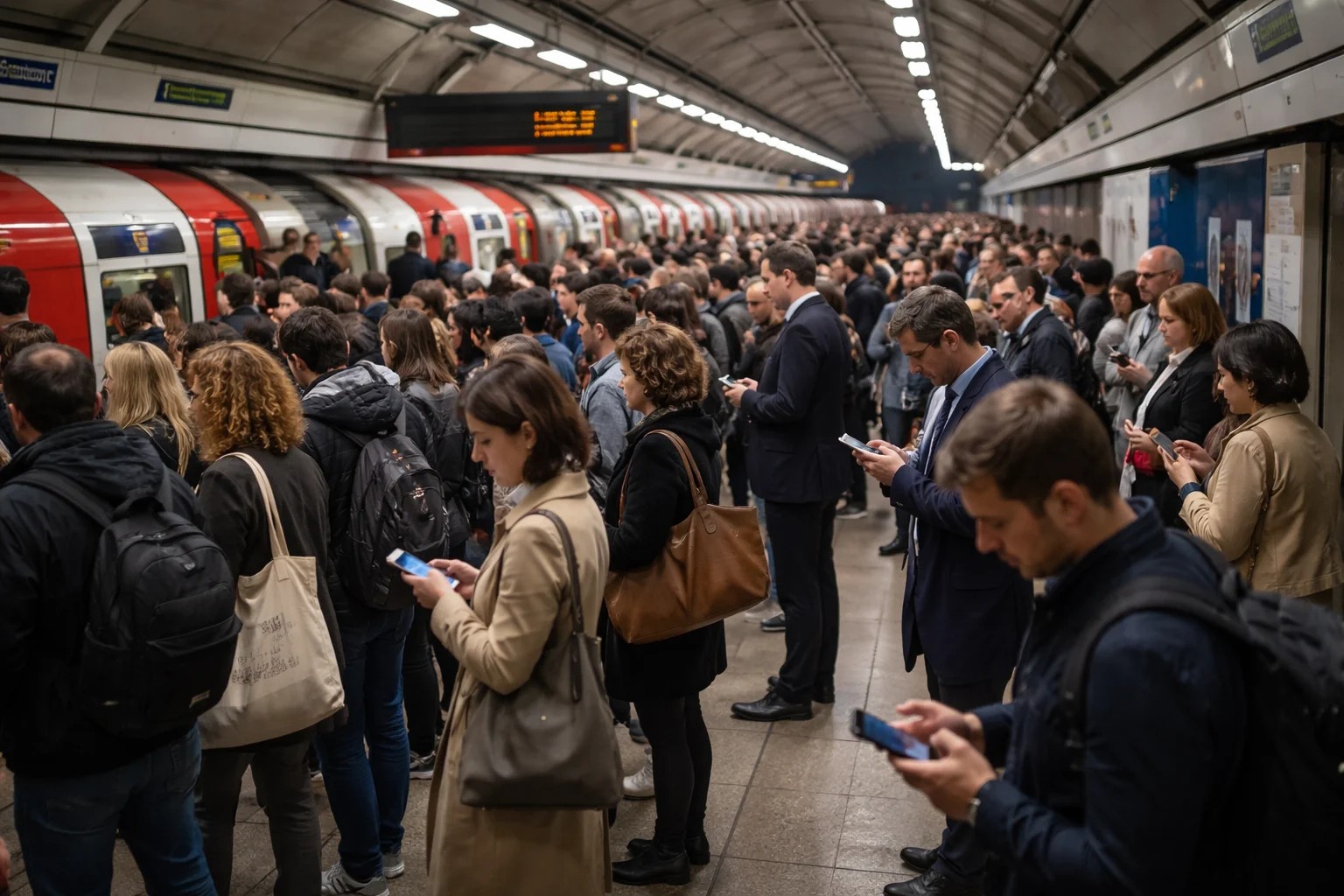
If you are wondering when the next Tube strike in London will be, the next confirmed action begins on Tuesday, 24 March 2026 at midday, with further strikes continuing across April and May. These strikes are planned by Tube drivers and will affect all London Underground lines, causing widespread disruption across multiple days each week.
Here are the key points you need to know:
- The first strike starts on 24 to 25 March, followed by repeated weekly action
- Disruption begins at midday and carries into the next day
- All Tube lines will be affected, though not completely shut down
- Other services like buses and the Elizabeth line will still run
- Expect severe disruption, especially during peak hours
Understanding these strike dates and planning ahead will help you avoid major delays and travel stress.
When Do The Upcoming London Tube Strikes Start And How Long Will They Last?

The next Tube strike in London is scheduled to begin on Tuesday, 24 March 2026, at 12:00 midday, with disruption continuing into Wednesday morning. This is part of a wider series of planned strikes organised by Tube drivers across several months.
You should be aware that this is not a one-off event. Instead, strikes are taking place in a repeated pattern across March, April, and May, typically occurring twice a week. The structure is designed to maximise disruption while limiting continuous full shutdowns.
Key details include:
- The first strike begins 24 to 25 March
- Additional strikes follow on 26 to 27 March
- Similar patterns repeat in April and May
- Each strike starts at midday and continues into the next day
These strikes are expected to impact your daily commute significantly, especially if you rely heavily on the London Underground. Although Transport for London has indicated that disruption may not be as severe as previous large-scale strikes, you should still prepare for delays and limited service availability across the network.
What Are The Confirmed Tube Strike Dates You Need To Know?
If you are planning ahead, knowing the full schedule of confirmed strike dates is essential. These strikes have been announced in advance, giving you time to organise alternative travel arrangements.
The planned Tube strike dates are:
| Month | Dates | Duration |
| March | 24 to 25 March | Midday Tuesday to Wednesday morning |
| March | 26 to 27 March | Midday Thursday to Friday morning |
| April | 21 to 22 April | Midday Tuesday to Wednesday morning |
| April | 23 to 24 April | Midday Thursday to Friday morning |
| May | 19 to 20 May | Midday Tuesday to Wednesday morning |
| May | 21 to 22 May | Midday Thursday to Friday morning |
These dates show a clear pattern of two strike periods per week during selected weeks. This means disruption is likely to stretch across multiple consecutive days, especially when combined with recovery periods.
You should also note:
- Disruption often starts before and after official strike hours
- Services may take time to return to normal
- Peak travel times will be most affected
How Do These Strike Times Work Across Two Days?
The strike timing follows a midday-to-midday structure, which is important for your travel planning. Instead of starting early in the morning, the strikes begin at 12:00 and extend into the following day.
This creates a rolling disruption effect:
- Services run normally until midday on strike start days
- Severe disruption begins from midday onwards
- The following morning remains heavily affected
- Recovery happens gradually throughout the day
Because of this timing, you may face disruption across two full commuting periods, making it more challenging to plan journeys effectively.
Which London Underground Lines Will Be Affected By The Strike?
All London Underground lines are expected to be affected during the planned strike action. This means the disruption will be network-wide rather than limited to specific routes or zones.
However, this does not necessarily mean a complete shutdown. According to Transport for London, some services may still operate depending on staff availability. You may still find limited services running on certain lines, but these will likely be reduced and inconsistent.
Key impacts include:
- All Tube lines will experience disruption
- Some lines may run partial services
- Train frequency will be significantly reduced
- Station access may be limited during peak times
Unlike previous large-scale strikes, there is an expectation that parts of the network may remain operational. This is because the strike involves specific groups of drivers rather than the entire workforce.
You should still expect major inconvenience, especially if your commute depends on interchanges or high-demand routes.
How Severe Will The Tube Disruption Be During Strike Days?
The severity of disruption during Tube strike days will vary depending on the time of day and the availability of staff. While Transport for London has suggested that the impact may be less extreme than past strikes, the disruption will still be significant.
You should prepare for:
- Severe delays across most lines
- Reduced or irregular services
- Overcrowding at stations and platforms
- Longer waiting times for trains
What Happens On Tuesdays And Thursdays During Strike Action?
On strike start days, which fall on Tuesdays and Thursdays, services will operate normally until midday. After that, disruption will escalate quickly.
- Normal service until 11:59
- Severe disruption begins from 12:00
- Fewer trains are available across the network
- Increased congestion during the evening peak
This makes afternoon and evening travel particularly difficult.
What Happens On Wednesdays And Fridays After The Strike Starts?
The following day continues to be affected, especially during the morning commute. Services gradually recover later in the day.
- Severe disruption continues into the morning
- Limited services during peak commuting hours
- Gradual improvement after midday
- Full recovery expected by evening
One worker said they had to leave home nearly two hours earlier because their usual line had no reliable service. They explained that even alternative routes were overcrowded and slow. They added that planning ahead made a big difference after the first day of disruption.
Will Other Transport Services In London Be Running Normally?
During the Tube strike, other Transport for London services will continue to operate. This provides important alternatives for getting around the city, although they are expected to be much busier than usual.
Services that will still run include:
- Elizabeth line
- Docklands Light Railway
- London Overground
- Buses and trams
These options can help you complete your journey, especially if you plan ahead and allow extra travel time.
Will Alternative Transport Be Busier Than Usual?
Yes, alternative transport will experience significantly higher demand during strike days.
- Buses are likely to be overcrowded
- Rail services may have limited space
- Travel times will increase
- Queues may form at major stations
You should consider travelling outside peak hours where possible or combining different modes of transport to reduce delays.
Are There Any Bus Strikes Happening At The Same Time?
Yes, there is also a separate bus strike affecting parts of east London, which may add further disruption to your travel plans. This strike involves routes operated from Bow Bus Garage.
The bus strike is scheduled from:
- 05:00 on Thursday 19 March
- Until 05:00 on Monday 23 March
Affected routes include:
- 8, 25, 205, 425
- Night routes N8, N25, N205
During this period, you may experience:
- Delays on affected routes
- Reduced service frequency
- Possible cancellations
Although all other bus services will run normally, nearby routes may become busier due to increased demand. If you rely on these routes, you should check updates before travelling and consider alternative options where possible.
Why Are Tube Strikes Happening In London?
The Tube strikes are taking place due to an ongoing dispute between the RMT union and Transport for London. The main issue centres around proposed changes to working patterns for Tube drivers.
Transport for London has suggested a voluntary four-day working week. However, the RMT union has raised concerns about how this could impact drivers.
Key concerns include:
- Potential fatigue from longer shifts
- Work life balance issues
- Uncertainty about how changes will be implemented
An RMT union representative said drivers are worried about how longer working days could affect their health and safety. They explained that even if the policy is voluntary, there is concern it could become expected over time. They added that protecting working conditions is the main reason for taking action.
Could The Tube Strikes Still Be Cancelled?
There is still a possibility that the strikes could be called off if negotiations are successful.
- Talks between TfL and RMT are ongoing
- Agreements could be reached at short notice
- Updates are expected closer to strike dates
You should stay informed, as last-minute changes can happen.
How Can You Travel Around London During A Tube Strike?

Travelling during a Tube strike requires careful planning and flexibility. You should prepare your journey in advance and allow extra time to reach your destination.
Helpful strategies include:
- Leaving earlier than usual
- Avoiding peak travel times
- Checking live updates before travelling
What Are The Best Alternatives To The Tube?
There are several alternatives you can use during the strike:
- Buses for short and medium distances
- Cycling using Santander Cycles
- Walking for shorter journeys
- National Rail for longer routes
Combining these options can help you complete your journey more efficiently.
Which Tools Can You Use To Check Live Tube Strike Updates?
Staying informed during a Tube strike is essential if you want to avoid unnecessary delays and confusion. Transport for London provides a range of digital tools that help you monitor service changes in real time and plan your journey more effectively. These tools are especially useful during strike periods when conditions can change quickly throughout the day.
You can rely on several official platforms to stay updated:
- TfL Go app gives you a live Tube map, disruption alerts, and personalised notifications based on your routes
- Journey Planner helps you compare different travel options including walking, cycling, and public transport
- Live service status updates provide real-time information on delays, closures, and partial services across all lines
- Email alerts allow you to receive updates directly in your inbox about major disruptions
Using these tools regularly can help you make quick decisions, adjust your route, and avoid heavily affected areas. If you check updates before leaving and during your journey, you will have a much better chance of reaching your destination on time despite ongoing strike disruptions.
How Can You Avoid Disruption During The Next London Tube Strike?
Avoiding disruption entirely during a Tube strike in London can be difficult, but you can significantly reduce its impact by planning ahead and making smart travel choices. The key is to stay flexible and prepare for changes in service throughout the day.
There are several practical steps you can take to minimise delays:
- Travel before midday on strike start days when services are still running normally
- Work from home if your job allows, especially on peak disruption days
- Choose flexible travel times to avoid overcrowded morning and evening rush hours
- Plan alternative routes using buses, rail services, or walking options
It is also important to check live updates frequently, as conditions may change quickly depending on staff availability and service recovery. Leaving earlier than usual and allowing extra time for your journey can make a noticeable difference.
By staying informed and adapting your routine, you can avoid the worst of the disruption and maintain a more predictable travel experience during the strike period.
What Should You Expect If You’re Commuting During A Tube Strike?

Commuting during a Tube strike can be unpredictable and time-consuming, especially if you depend on the London Underground for your daily travel. Even if some services are running, they are likely to be limited and less reliable than usual.
You should be prepared for several challenges:
- Longer journey times due to reduced services and slower connections
- Overcrowded trains and buses as more people switch to alternative transport
- Delays and service gaps across multiple lines and routes
- Limited availability during peak hours, especially in central London
In addition to these issues, you may also experience queues at stations, difficulty boarding services, and unexpected route changes. Even after the strike officially ends, disruption can continue as the network gradually returns to normal.
To manage your commute more effectively, it is important to stay patient, allow extra time, and remain flexible with your travel plans. Being prepared for these conditions will help you navigate the disruption with less stress and uncertainty.
Conclusion
Knowing when is the next Tube strike in London is helps you stay prepared and avoid unnecessary stress. With confirmed strike dates across March, April, and May 2026, disruption is expected to affect all Tube lines, especially during peak travel times.
Planning ahead is essential. You should check updates regularly, explore alternative transport options, and allow extra time for your journey. While other services like buses and the Elizabeth line will continue running, they will be busier than usual.
By staying informed and adjusting your travel plans, you can minimise delays and navigate London more efficiently during the strike period.
FAQs
How often do Tube strikes happen in London?
Tube strikes occur occasionally and are usually linked to disputes between unions and Transport for London. They can happen multiple times within a short period if issues remain unresolved.
Do Tube strikes affect all lines equally?
Most strikes impact all lines, but the level of disruption can vary depending on staff availability. Some lines may still run limited services.
Can Tube strikes be cancelled at short notice?
Yes, strikes can be cancelled if agreements are reached during negotiations. It is important to check updates regularly before travelling.
Is the Elizabeth line affected by Tube strikes?
The Elizabeth line usually continues to operate during Tube strikes. However, it may be much busier than usual.
What is the best way to travel during a strike in London?
Using a mix of buses, rail services, cycling, and walking is often the best approach. Planning ahead will help you avoid delays.
Are Tube strikes worse during peak hours?
Yes, disruption is typically more severe during peak commuting times. Services are more crowded and delays are longer.
How can I get real-time updates on Tube strikes?
You can use the TfL Go app, Journey Planner, and live status updates. These tools provide accurate and timely travel information.