
Winning the first customers is one of the hardest stages for any new business. A startup may have a strong product, experienced founders and a clear business model, yet potential buyers can still hesitate simply because the company is unfamiliar.
For UK startups, building trust should therefore begin before the first sales campaign. Customers want to know who operates the business, whether it is legitimate, what they will receive, how much they will pay and what happens if something goes wrong.
The most effective approach is to reduce uncertainty throughout the customer journey. Transparent company information, credible founder profiles, clear pricing, genuine proof of expertise and dependable communication can make a young company easier to trust.
Startups do not need to pretend they are established businesses. Instead, they can demonstrate that they are credible, accountable and capable of delivering what they promise.
Why Is Customer Trust Important for UK Startups?

Established companies often benefit from brand recognition, years of customer reviews and an existing reputation. A startup usually begins without those advantages.
When someone discovers a new business, several questions can influence whether they make an enquiry or leave the website.
Potential customers may wonder:
- Is This a genuine business?
- Can This company actually deliver what it promises?
- Who Is behind the startup?
- What Happens if something goes wrong?
- Is The pricing transparent?
- Can The business be contacted easily?
- Are Existing customer reviews genuine?
Every unanswered question can increase perceived risk.
This means customer acquisition is not simply about generating traffic or advertising a product. Startups also need to create enough confidence for potential buyers to take the next step.
Trust becomes particularly important when a business sells expensive services, subscriptions, financial products, professional advice or products requiring customers to provide personal information.
How Can a Startup Show That It Is a Genuine UK Business?
Business transparency is one of the simplest ways to increase customer confidence.
An incorporated company should make its identity easy to verify. Customers can use the official Companies House company information service to check publicly available information about registered UK companies.
Where appropriate, a startup website should clearly display:
- Company Name
- Trading Name
- Registered Company Number
- Contact Details
- Business Or Correspondence Address
- Relevant Regulatory Information
This information should be consistent across the website, social media accounts, invoices and other customer communications.
Inconsistencies can create unnecessary suspicion. For example, a company using several different business names without explaining the relationship between them can make customers uncertain about who they are actually dealing with.
A well-written About page can also help. Rather than relying on generic language about innovation or excellence, it should explain when the company started, what problem it aims to solve and who is responsible for operating it.
Should Startup Founders Be Visible?

Founder visibility can be especially valuable when a business has not yet built a large company reputation.
Show Relevant Experience
A founder may already have years of professional experience even though the startup itself is new.
Founder profiles can highlight relevant industry knowledge, previous roles, specialist experience or professional qualifications where appropriate.
The information should remain factual. Unsupported claims such as “leading industry expert” are less persuasive than specific evidence showing what someone has actually done.
Explain Why the Startup Exists
Customers often respond positively when they understand why a company was created.
A founder story does not need to be dramatic. It can simply explain the problem the founders identified and why they believed a better product or service was needed.
This creates context around the business and makes the startup feel less anonymous.
Make Contact Easier
Startups can also build credibility by providing clear ways to communicate with the company.
An accessible contact form, business email address, telephone number where appropriate and active professional social profiles can all help demonstrate that real people are behind the organisation.
How Can Startups Build Trust Before They Have Reviews?
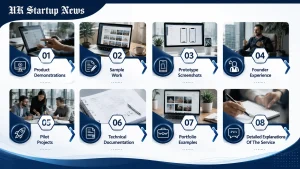
New companies face a common problem: customers want reviews before buying, but the company needs customers before it can generate reviews.
Startups can overcome this by demonstrating other forms of proof.
Depending on the business, this could include:
- Product Demonstrations
- Sample Work
- Prototype Screenshots
- Founder Experience
- Pilot Projects
- Technical Documentation
- Portfolio Examples
- Detailed Explanations Of The Service
A software startup might provide a live demonstration showing how its platform works. A design agency could publish examples of previous work created by its founders. A local service company might use genuine photographs of completed projects.
The principle is simple: evidence is usually more convincing than marketing claims.
As customers begin using the product, startups can gradually develop stronger trust signals through genuine testimonials, reviews and case studies.
How Can Early Customers Create Social Proof?
The first few customers can become valuable sources of credibility.
Instead of focusing immediately on obtaining hundreds of reviews, a startup can concentrate on delivering an excellent experience to a smaller customer group.
After completing the work, the business can ask customers whether they are willing to provide genuine feedback.
Detailed testimonials are generally more informative than short statements.
For example, “Excellent service” provides little context. A testimonial explaining the customer’s original problem, the solution provided and the final outcome gives future customers much more useful information.
Businesses should never invent reviews or publish misleading testimonials. UK consumer protection rules cover fake reviews and misleading commercial practices, so startups should ensure any social proof accurately reflects genuine customer experiences.
Why Does a Professional Startup Website Matter?

For many customers, the website will be the main place where they decide whether a startup looks trustworthy.
It does not need expensive animations or complicated design. It needs clarity.
Visitors should quickly understand:
- What The Business Offers
- Who The Product Or Service Is For
- Why It Is Useful
- Who Operates The Company
- How Much It Costs
- How Customers Can Get Help
A website should also work properly on mobile devices and avoid broken links, placeholder pages, spelling errors or outdated information.
For entrepreneurs looking for broader guidance on running and developing smaller companies, uksmallbusinessblog.co.uk can provide additional perspectives on UK small business topics.
Should UK Startups Publish Their Prices?
Pricing transparency can remove a major source of uncertainty.
Some businesses cannot provide fixed prices because each project is different. Even in those situations, however, they may still be able to provide useful guidance.
Use Clear Pricing Where Possible
If a product has a fixed price, customers should normally be able to find that information without repeatedly contacting the company.
Clear pricing helps customers determine whether the offer suits their budget before entering the sales process.
Explain Bespoke Pricing
Companies providing customised services can instead show information such as:
- Starting Prices
- Typical Price Ranges
- Factors Affecting Costs
- Services Included
- Possible Additional Charges
Consumer-facing startups should also ensure their pricing and sales practices comply with applicable UK consumer protection rules.
The government’s guidance on selling products and services provides information about consumer protection responsibilities.
How Important Is Data Protection for Startup Trust?

Even very small businesses may collect personal information.
This could include customer names, telephone numbers, email addresses, payment details, account information or website analytics.
Data protection should therefore be considered when the business is being built rather than postponed until the company becomes larger.
The Information Commissioner’s Office provides guidance to smaller organisations about UK data protection responsibilities. Its resources explain areas such as privacy notices, personal data management and data security.
A privacy notice should explain what information the company collects, why it collects it, how it uses the information and how long it may be retained.
The ICO also provides a privacy notice generator designed to help organisations create appropriate privacy information.
Clear privacy practices can support customer trust because people are more likely to provide information when they understand how it will be handled.
How Can Useful Content Establish Startup Expertise?
Helpful content gives a startup an opportunity to demonstrate knowledge before asking someone to make a purchase.
A cybersecurity company could explain common security risks. A recruitment startup could provide practical hiring guidance. An accounting platform might publish information about bookkeeping processes.
Effective content should answer real customer questions instead of existing purely to target search keywords.
Useful formats might include:
- Detailed Guides
- Frequently Asked Questions
- Original Research
- Case Studies
- Product Comparisons
- Industry Analysis
Publishing accurate information under identifiable expert authors can also support E-E-A-T signals by making it easier for readers and search systems to understand who created the content and why they may have relevant expertise.
For startups, this creates an important advantage: useful content can demonstrate knowledge even before the company has built widespread brand recognition.
Where Can UK Startups Find Their First Customers?
Trying to market to everyone is rarely the most efficient starting point.
Early-stage companies can often achieve better results by identifying a small, clearly defined customer group with a specific problem.
For example, targeting “UK businesses” is extremely broad. Targeting independent ecommerce companies struggling with a particular fulfilment problem is much more specific.
Potential early customer channels can include:
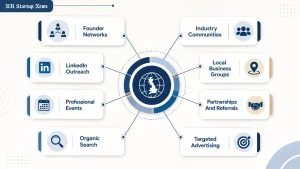
- Founder Networks
- Industry Communities
- LinkedIn Outreach
- Local Business Groups
- Professional Events
- Partnerships And Referrals
- Organic Search
- Targeted Advertising
The most suitable channel depends on where the ideal customers already spend their time.
Early marketing should therefore focus on understanding customer behaviour rather than trying to maintain a presence on every available platform.
Why Can Personal Outreach Work for New Startups?
Personal outreach is particularly valuable during the early stages because it creates direct conversations with potential customers.
Those conversations reveal objections that marketing analytics may not show.
A prospect might like the product but consider the contract too long. Another customer may be concerned about implementation, security or customer support.
This feedback can help startups improve their proposition.
Direct outreach should therefore not be treated purely as a sales activity. It can also function as customer research.
The objective is to understand why potential customers hesitate and determine whether those concerns can realistically be addressed.
How Can Startups Turn First Customers Into Future Growth?
Winning the first customer should not be treated as the end of the acquisition process.
A satisfied customer can create several additional growth opportunities.
They may provide:
- Testimonials For Future Marketing
- Referrals To Other Customers
- Case Studies Demonstrating Results
- Product Feedback
- Repeat Purchases Or Renewals
Startups should therefore give particular attention to onboarding and post-sale support.
Customers should know what happens after buying, who they can contact and when they can expect delivery.
When problems occur, communicating quickly and clearly can sometimes build more trust than pretending problems never happen.
What Common Mistakes Damage Startup Trust?
Many credibility problems come from relatively small details.
Fake reviews, copied website content, exaggerated claims and unclear pricing can quickly damage confidence.
Other warning signs include abandoned social media profiles, missing contact details, unrealistic countdown timers, unclear cancellation terms and claims such as “the UK’s number one provider” without credible evidence.
Startups should avoid trying to look larger or older than they are.
Being a new business is not automatically a disadvantage. Customers may appreciate working directly with founders, receiving more personalised support and influencing how a new product develops.
Transparency is usually more sustainable than creating an artificial impression of size.
Can Startups Build Trust Without a Large Marketing Budget?

Yes. Many powerful trust signals require relatively little financial investment.
A professional website, clear company information, responsive communication, genuine founder profiles, useful content and transparent pricing are largely about attention to detail.
A startup does not need to appear enormous.
It needs to demonstrate three qualities: credibility, competence and accountability.
Customers should understand what the company does, believe that it has the skills to deliver and know that someone will take responsibility if something goes wrong.
Final Thoughts
UK startups can win their first customers by reducing the uncertainty that comes with buying from an unfamiliar company.
Transparent business details, visible founders, clear pricing, genuine evidence, useful content, appropriate privacy information and responsive customer service all contribute to credibility.
The first few customers are especially important because they can generate testimonials, referrals, case studies and practical feedback.
Over time, those early experiences create a track record that makes future customer acquisition easier.
A startup does not need to manufacture the appearance of being an established brand. It needs to consistently demonstrate that it understands its customers, communicates clearly and delivers what it promises.
For an early-stage business, trust is not simply a branding exercise. It is one of the foundations of sustainable customer growth.