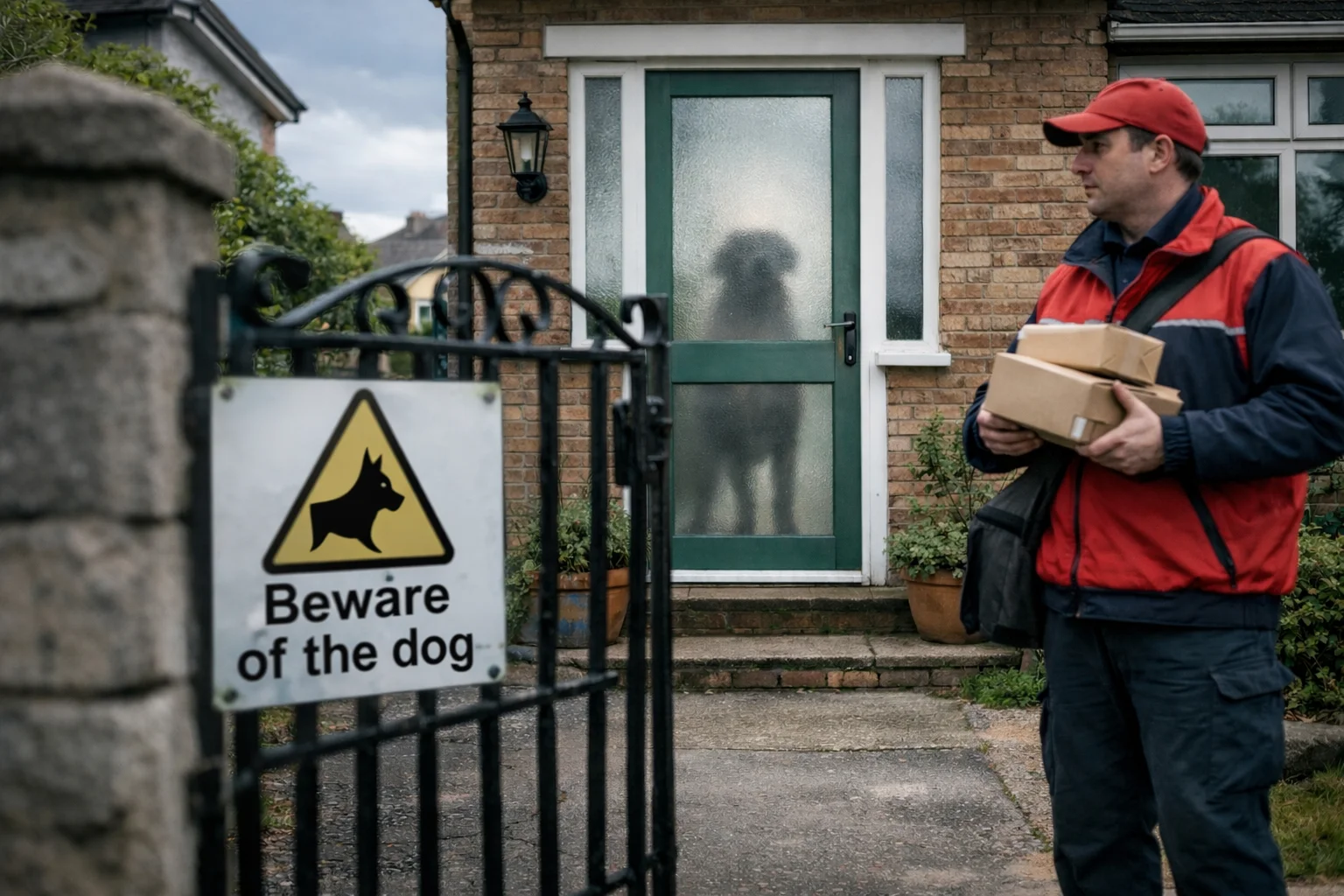
A Royal Mail dog warning sign helps prevent accidents by clearly alerting postal workers that a dog is present, giving them time to act cautiously while prompting homeowners to secure their pet before any delivery takes place.
It is one of the simplest and most effective ways to reduce the risk of dog attacks, missed deliveries, and legal issues.
With thousands of incidents reported each year in the UK, taking early preventive steps is essential for both safety and responsibility.
Key Takeaways
- A dog warning sign reduces unexpected encounters and delivery risks
- Most dog attacks happen at the front door or through letterboxes
- Securing your dog is more effective when combined with visible signage
- UK law holds owners responsible for dog-related injuries
- Simple safety steps can prevent serious physical and emotional harm
What Is a Royal Mail Dog Warning Sign and Why Is It Important?
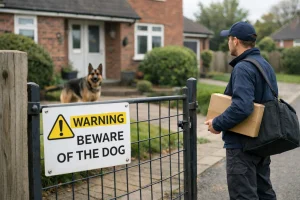
A Royal Mail dog warning sign is a clearly visible notice placed on a property to inform postal workers and delivery drivers that a dog is present.
Its purpose is simple but highly effective. It provides advance warning so that delivery staff can take appropriate precautions before approaching the property.
Dogs are naturally territorial animals. Even well-trained and friendly pets can react unpredictably when they perceive a stranger entering their space.
This is especially true in situations involving door knocks, unexpected movements, or unfamiliar voices. A Royal Mail dog warning sign helps reduce this uncertainty by setting expectations before any interaction occurs.
From a practical standpoint, the sign acts as a communication tool between the homeowner and the delivery worker. It removes guesswork and allows the post person to decide whether to proceed, wait, or request assistance.
Key Functions of a Dog Warning Sign
| Function | Description | Benefit |
| Risk communication | Alerts delivery workers about a dog on the property | Reduces surprise encounters |
| Preventive safety | Encourages caution before entering premises | Lowers chance of attacks |
| Behaviour reminder | Prompts homeowners to secure their dog | Improves responsible ownership |
| Delivery efficiency | Helps avoid failed or delayed deliveries | Maintains consistent service |
In many cases, the presence of a visible warning sign can completely change how a delivery is handled. Instead of approaching directly, a postal worker may pause, observe, or wait for the homeowner. This small adjustment can prevent a potentially dangerous situation.
Why Are Dog Attacks on Royal Mail Workers Still a Serious Issue in the UK?
Dog attacks on postal workers continue to be a widespread issue across the UK. Despite awareness campaigns and safety measures, incidents remain frequent and, in some cases, severe.
Recent reports indicate that thousands of attacks occur annually, with an average of dozens happening each week. These figures highlight that the problem is not isolated but persistent.
UK Dog Attack Statistics Overview
| Category | Data Insight |
| Total annual attacks | Over 2,000 incidents reported |
| Weekly average | Around 40 to 45 attacks |
| Front door incidents | প্রায় 46 percent of cases |
| Garden related attacks | প্রায় 28 percent |
| Letterbox injuries | প্রায় 18 percent |
| Serious injuries | Dozens recorded each year |
These numbers demonstrate that the risk is present in everyday delivery scenarios. The most concerning aspect is that many of these incidents occur in familiar environments where the postal worker has delivered multiple times before.
Where Do Most Dog Attacks Happen?
The location of attacks plays a significant role in understanding how they occur.
The front door is the most common setting. This is where the interaction between the homeowner, the dog, and the postal worker becomes immediate and unpredictable. When a door opens, a dog may instinctively move forward to investigate or defend its territory.
Gardens and driveways also present risks. Dogs that are not securely contained may approach delivery workers without warning. In some cases, access points between back gardens and front entrances allow dogs to move freely and unexpectedly.
Letterboxes create a different type of hazard. When a dog is inside the property and reacts to movement at the door, it may bite through the letterbox opening.
Common Locations and Risk Levels
| Location | Risk Level | Reason |
| Front door | High | Direct interaction during delivery |
| Garden or driveway | Medium to high | Uncontrolled movement of dog |
| Street or pavement | Medium | Escaped or off-lead dogs |
| Letterbox area | High | Close contact with hands |
What Are the Consequences of Dog Attacks?
The consequences extend beyond physical injury. Many postal workers experience long-term effects that impact both their professional and personal lives.
Physical injuries can include deep bites, infections, and in severe cases, permanent damage. Recovery often requires medical treatment and time away from work.
Emotional effects are equally significant. Anxiety, fear, and reduced confidence are common after an attack.
A postal worker shared their experience: “The physical injury healed over time, but the mental side stayed with me. Even now, when I see a dog, I hesitate because I do not know how it will react.”
This highlights the importance of prevention rather than reaction.
How Can a Dog Warning Sign Help Prevent Delivery Problems?
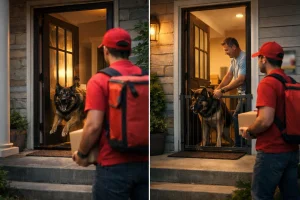
A Royal Mail dog warning sign reduces delivery problems by providing clarity before interaction. Without a sign, a postal worker may approach a property without any awareness of potential risk. This increases the chance of sudden encounters that may trigger defensive behaviour in dogs.
When a sign is present, the delivery worker can adjust their approach. They may choose to wait, make noise to alert the homeowner, or avoid direct entry altogether.
Impact of Warning Signs on Delivery Safety
| Scenario | Without Sign | With Sign |
| Worker approach | Direct and unaware | Cautious and informed |
| Dog reaction | Sudden and defensive | Managed and anticipated |
| Delivery outcome | Higher risk of incident | Reduced risk |
| Homeowner response | Reactive | Proactive |
The presence of a sign also reinforces accountability. It reminds homeowners to take responsibility for securing their pets before answering the door.
What Does Royal Mail Recommend for Dog Safety at Home?
Royal Mail provides clear guidance to reduce the risk of dog-related incidents. The focus is on prevention through awareness and simple behavioural changes.
Dogs respond to stimuli such as sound, movement, and unfamiliar presence. A knock on the door can trigger excitement or defensive behaviour. Managing this response is key to safety.
Key Dog Awareness Advice for Homeowners
- Keep dogs in a separate room before opening the door
- Ensure access points between garden and front entrance are closed
- Avoid opening the door while the dog is nearby
- Use distractions such as toys or food
- Allow time for the delivery to be completed before releasing the dog
A veterinary behaviour specialist explained this clearly: “Owners often assume their dog will stay calm because it is friendly with family. In reality, dogs react to unfamiliar situations, not just familiar people. Securing the dog before opening the door removes that uncertainty entirely.”
These steps are simple but effective when applied consistently.
What Are the Best Practices for Using a Dog Warning Sign Effectively?
Using a Royal Mail dog warning sign effectively requires more than just placing it on a door. Visibility, clarity, and positioning all play important roles.
A poorly placed sign may go unnoticed, reducing its effectiveness. The goal is to ensure that anyone approaching the property can see and understand the warning immediately.
Best Placement Locations
| Location | Effectiveness | Notes |
| Front gate | High | First point of contact |
| Front door | High | Visible during delivery |
| Fence | Medium to high | Useful for enclosed properties |
| Window near entrance | Medium | Backup visibility |
The wording should be clear and direct. Avoid overly complex messages. Simple phrases are more effective in communicating urgency.
Combining signage with physical measures enhances safety. For example, pairing a sign with a secure gate or enclosed area ensures that the warning is supported by action.
What Legal Responsibilities Do Dog Owners Have in the UK?

Dog owners in the UK are legally required to ensure their pets do not pose a danger to others. The Dangerous Dogs Act establishes the framework for accountability in cases of injury.
If a dog attacks a postal worker, the owner may face serious consequences. These can include fines, legal action, or restrictions placed on the dog.
Legal Consequences Overview
| Situation | Possible Outcome |
| Minor injury | Warning or fine |
| Serious injury | Prosecution and compensation |
| Repeated incidents | Stricter legal penalties |
| Severe cases | Potential imprisonment |
One of the most important legal clarifications relates to letterbox incidents. Courts have confirmed that homeowners can be held responsible if their dog bites someone through a letterbox.
This means that preventive measures such as installing a letterbox cage or external mailbox are essential.
How Can Dog Owners Improve Safety Through Awareness and Training?
Improving safety begins with understanding how dogs behave. Training and education allow owners to recognise warning signs and manage situations effectively.
Programmes such as online webinars and training sessions provide practical advice on handling dogs in real-world scenarios. These resources focus on prevention rather than correction.
Benefits of Dog Awareness Training
| Area | Improvement |
| Behaviour understanding | Better recognition of triggers |
| Control techniques | Safer handling during deliveries |
| Confidence | Increased ability to manage situations |
| Prevention | Reduced likelihood of incidents |
These initiatives also promote responsible ownership. By understanding how dogs respond to different situations, owners can take proactive steps to reduce risk.
What Lessons Can Be Learned from Real Dog Attack Cases?
Real-life incidents provide valuable insights into how quickly situations can escalate. Many cases share common factors such as open doors, unsecured dogs, and lack of warning signs.
One postal worker described their experience: “I had delivered to that property before, so I thought I understood the risk. But that day was different. The door was open, and within seconds, the situation changed completely.”
This highlights the unpredictability of dogs in changing environments. Familiarity does not guarantee safety.
Common Factors in Dog Attack Cases
| Factor | Description |
| Open access | Doors or gates left open |
| Lack of warning | No visible signage |
| Previous behaviour | Ignored signs of aggression |
| अचानक interaction | Sudden exposure to delivery worker |
Understanding these patterns helps in developing preventive strategies.
How Can You Make Your Home Safer for Postal Deliveries Today?
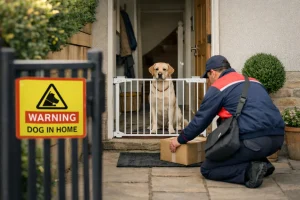
Creating a safer environment does not require complex changes. Simple adjustments can significantly reduce risk.
A combination of awareness, preparation, and physical measures creates a controlled environment where both the dog and the delivery worker are protected.
Practical Safety Measures
- Install a Royal Mail dog warning sign at visible entry points
- Secure the dog before answering the door
- Use an external mailbox where possible
- Add barriers such as gates or partitions
- Maintain calm surroundings during deliveries
Home Safety Setup Comparison
| Setup Type | Risk Level | Description |
| No precautions | High | Uncontrolled environment |
| Sign only | Medium | Awareness without control |
| Sign and containment | Low | Balanced safety approach |
| Full safety setup | Very low | Maximum prevention |
Is a Royal Mail Dog Warning Sign Enough on Its Own?
A Royal Mail dog warning sign is an important safety tool, but it is not sufficient on its own. It provides awareness but does not physically prevent a dog from acting aggressively.
The most effective approach combines multiple measures. Signage should be supported by responsible behaviour and proper containment.
Combined Safety Approach
| Element | Role |
| Warning sign | Provides awareness |
| Secure containment | Prevents physical interaction |
| Owner behaviour | Ensures control |
| Environmental setup | Reduces triggers |
Relying solely on a sign creates a false sense of security. True safety comes from a combination of communication and action.
A safety expert summarised this approach: “A sign is a warning, not a solution. It works best when it is part of a wider system that includes control, awareness, and consistency.”
This reinforces the idea that prevention is always more effective than dealing with consequences after an incident occurs.
Conclusion
A Royal Mail dog warning sign is a simple yet powerful tool that helps prevent avoidable incidents. It communicates risk, encourages caution, and supports safer delivery practices.
However, true prevention goes beyond signage. Securing your dog, understanding its behaviour, and following safety guidance are all essential steps.
Dog attacks can have lasting physical and emotional consequences, but they are largely preventable. Taking action early ensures that both your pet and postal workers remain safe.
FAQs
Are dog warning signs legally required in the UK?
Dog warning signs are not legally required, but they are strongly recommended as part of responsible ownership and can help reduce liability risks.
Where should I place a dog warning sign?
The sign should be placed at entry points such as gates, front doors, or fences where it is clearly visible to anyone approaching.
Can I be prosecuted if my dog bites a postman?
Yes, under UK law, dog owners can face prosecution if their dog injures someone, including postal workers.
Do warning signs actually prevent dog attacks?
They help reduce risk by informing delivery workers, but they must be combined with proper control measures for full effectiveness.
What is the safest way to receive parcels with a dog at home?
Secure your dog in another room or enclosed space before opening the door and wait until the delivery is complete.
Royal Mail Dog Warning Sign: Prevent Problems Before They Start
Yes, a notable number of injuries occur through letterboxes, which is why protective measures like cages are recommended.
What should I do if my dog shows aggressive behaviour?
Seek professional advice, consider training programmes, and take immediate steps to manage the environment and prevent incidents.