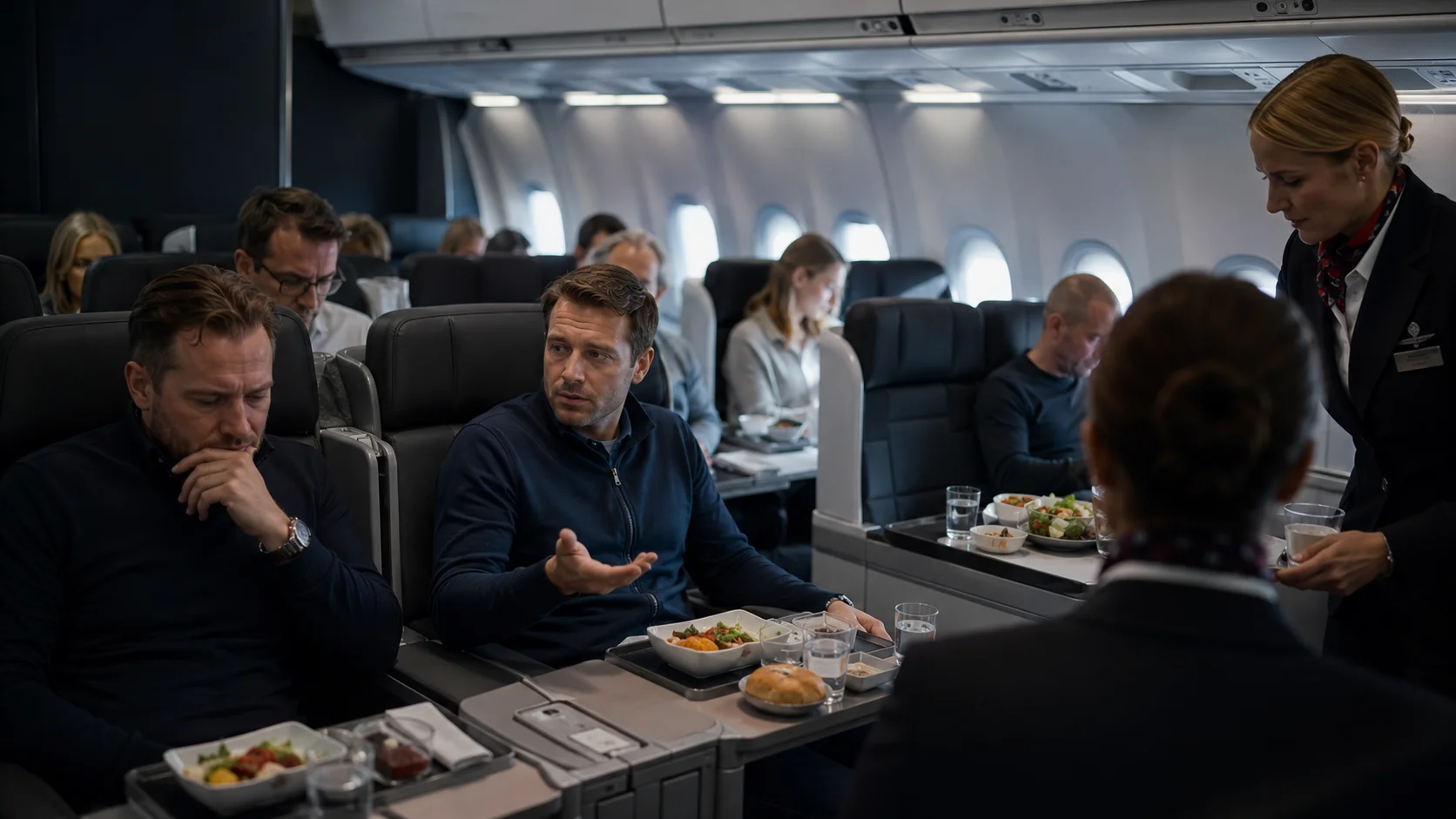
British Airways Club Europe changes are making short-haul business class feel less premium because the airline is removing small cabin details that once helped separate it from economy.
The latest removal of headrest covers may seem minor, but it matters because Club Europe already uses the same basic seat as Euro Traveller, with the middle seat blocked. When visual cues disappear, passengers may question whether the higher fare still feels justified.
Key takeaways:
- British Airways has removed headrest covers from Club Europe seats.
- The change reduces the visual difference between business class and economy.
- Club Europe still offers lounge access, priority services and a blocked middle seat.
- Small cuts can weaken the premium feel over time.
- UK travellers may now judge Club Europe value more carefully.
What Are The Latest British Airways Club Europe Changes?
The latest British Airways Club Europe changes centre on the removal of headrest covers from the Club Europe cabin. British Airways has reportedly explained that the decision is linked to reducing cleaning workload between flights and helping aircraft turn around more quickly.
This may sound like a small operational update, but it has drawn attention because Club Europe depends on small details. Unlike long-haul business class, Club Europe does not usually offer a special seat, extra recline or a private cabin layout.
The airline’s European business class is built around a familiar model: the same row of seats as economy, but with the middle seat blocked and a more premium service wrapped around it.
That makes the cabin’s appearance important. Headrest covers helped signal that the seat belonged to a different cabin. They added a sense of order, cleanliness and preparation. Without them, Club Europe looks more like the economy cabin behind it.
Removal Of Headrest Covers In Club Europe
The removal of headrest covers does not stop passengers from receiving the main Club Europe benefits. They can still expect the blocked middle seat, priority services, lounge access where available, improved food and drink, and enhanced baggage allowance depending on the fare and route.
However, the cabin now loses one more visible marker of difference. In a product where the seat itself is not distinctive, this matters more than it might on a long-haul aircraft.
| Club Europe Detail | Previous Passenger Impression | Impact After Removal |
| Headrest covers | Added a cleaner, prepared and more premium appearance | Cabin looks closer to economy |
| Blocked middle seat | Clear comfort benefit | Still valuable |
| Improved catering | Supported the business class experience | Still important for perceived value |
| Lounge access | Strong ground benefit | Still one of the main selling points |
| Cabin separation | Helped passengers feel they were in a premium space | Less visually obvious |
Why Small Cabin Details Matter?
Small cabin details matter because passengers do not buy business class only for transport. They buy a better journey. That journey includes comfort, time saving, calmness, recognition and the feeling that the airline has taken extra care.
When passengers step into a premium cabin, they quickly judge whether it feels worth the money. Seat presentation, cleanliness, meal quality, crew attention and cabin atmosphere all influence that judgement. A headrest cover may seem insignificant, but it forms part of this wider impression.
For British Airways, the risk is that removing these details makes Club Europe feel less intentional. A premium cabin should not feel like economy with one benefit added. It should feel like a separate product.
Why Does Club Europe Now Feel Less Premium?
Club Europe now feels less premium because several of its most important benefits are either invisible before the journey or not strong enough on their own once passengers are seated. The lounge may be useful before departure, and priority services may save time at the airport, but the onboard experience still needs to feel different.
The difficulty is that once passengers sit down, they are in a seat that looks and feels very similar to economy. The blocked middle seat gives more space, but the cabin does not offer the type of hard-product upgrade many passengers associate with business class.
Same Seat, Fewer Premium Signals
Club Europe has always been a compromise. It gives passengers a better short-haul experience without installing large business class seats. This model is common across many European airlines, but it only works when the surrounding experience is strong.
The problem becomes more visible when premium signals are reduced. If the seat is the same, the legroom is similar, the cabin looks less distinctive and the service feels rushed, passengers may struggle to see why the fare is so much higher.
| Passenger Expectation | Club Europe Reality | Why It Matters |
| A noticeably better seat | Same seat style as economy, middle seat blocked | Comfort improvement is useful but limited |
| Premium cabin appearance | Fewer visual differences after small changes | Cabin may feel less special |
| Better food and drink | Generally improved compared with economy | Catering becomes more important |
| Quieter journey | Forward cabin can feel calmer | Valuable on business trips |
| Higher service standard | Depends heavily on crew and route | Inconsistency affects trust |
The Decline Of Visual Cabin Differentiation
Visual cabin differentiation is important because it tells passengers they are in a premium space before service even begins. If a traveller boards and immediately sees a cabin that looks almost identical to economy, the sense of upgrade is weakened.
A travel industry consultant described the issue clearly:
“I do not think passengers are upset because a headrest cover has disappeared. I think they are reacting because this is another sign that the product is losing small details. When I assess a short-haul business class cabin, I look for visual confidence. If the airline removes too many cues, the cabin starts to feel like an accounting decision rather than a premium product.”
That insight reflects the wider concern. The latest British Airways Club Europe changes are not dramatic in isolation, but they contribute to a perception that BA is becoming less protective of its premium identity.
Are British Airways Club Europe Changes Damaging The Business Class Experience?

British Airways Club Europe changes could damage the business class experience if customers begin to feel that the product no longer matches the price. This is particularly important because Club Europe fares can be significantly higher than economy fares on popular European routes.
Business class passengers often understand that short-haul travel is different from long-haul travel. They do not expect a lie-flat bed on a short flight to Paris, Amsterdam, Geneva or Madrid. However, they do expect an experience that feels smoother, better presented and more comfortable than economy.
The Passenger Perception Problem
The passenger perception problem is simple. Club Europe has benefits, but those benefits are not always equally valuable to every traveller.
A passenger who arrives late at the airport may not use the lounge. A passenger travelling with hand luggage only may not care about baggage allowance. A passenger on a very short flight may barely experience the catering. In those cases, the onboard cabin presentation becomes even more important.
If that presentation is weakened, the product can feel overpriced.
A business travel manager explained this concern in first person:
“I book premium cabins for staff when there is a clear reason, such as flexibility, comfort or a better working journey. But I find it harder to justify a higher fare when the onboard product looks too close to economy. The traveller still needs to feel that the company paid for something meaningful.”
Premium Pricing Versus Reduced Detail
Premium pricing creates premium expectations. When passengers pay more, they become more sensitive to details. They notice the meal tray, the cleanliness of the seat area, the behaviour of the crew and the overall cabin finish.
This does not mean every small feature must be luxurious. It means the product should feel complete. Removing visible details from a cabin that already has limited physical differences can make the experience feel thinner.
Key reasons passengers may question the value include:
- The seat looks similar to economy
- Some benefits are only useful before boarding
- Short flight times reduce the impact of catering
- Small service reductions create a pattern of decline
This is why British Airways must be careful. A single change may save time, but repeated small changes can weaken customer confidence.
Is British Airways Cutting Costs Or Improving Turnaround Times?
British Airways has reportedly connected the removal of headrest covers to turnaround efficiency. On busy short-haul networks, turnaround time is a serious operational issue. Aircraft often fly several sectors per day, and a delay on one flight can affect the rest of the schedule.
From that perspective, reducing the number of items that cleaners must replace or manage could help make the cabin preparation process simpler. If this improves punctuality, some passengers may accept the trade-off.
BA’s Operational Argument
The operational argument is that fewer cabin preparation tasks can reduce pressure on cleaning teams and support faster boarding readiness. At airports such as Heathrow, where slots, connections and aircraft utilisation are all important, small time savings can matter.
| Operational Factor | Why It Matters To BA | Passenger Benefit If It Works |
| Faster cleaning | Helps aircraft become ready sooner | Better punctuality |
| Reduced turnaround pressure | Supports tight short-haul schedules | Fewer knock-on delays |
| Simpler cabin preparation | Less work between sectors | More consistent departure timing |
| Fewer removable items | Easier seat checks | Lower risk of missed preparation tasks |
This argument has logic. Passengers do want flights to leave on time. Most would prefer punctuality over a purely decorative cabin feature. However, the issue is not that passengers reject operational efficiency. The issue is that they do not want efficiency to come at the expense of a product that already feels lightly differentiated.
Why Travellers May See It As Cost-Cutting?
Travellers may see the change as cost-cutting because airlines often remove small benefits using operational language. Even when there is a genuine time reason, passengers may still suspect that savings are part of the decision.
This reaction is understandable. Premium passengers are often highly observant. Frequent flyers know when meals change, when service routines are simplified, when cabin presentation is reduced and when small extras disappear.
The challenge for British Airways is communication. If the airline removes something visible, passengers will look for what has been added in return. If nothing obvious improves, the change feels like a downgrade.
A customer experience specialist put it clearly:
“I accept that airlines need efficient turnarounds, but I would not remove visible premium touches unless I could give passengers something better in another part of the journey. In my view, premium cabins need balance. If one detail disappears, another part of the experience should feel stronger.”
That is the core issue. Passengers may accept practical change, but they want proof that the premium experience is still being protected.
How Does Club Europe Compare With Economy On Short-Haul Flights?
Club Europe still offers meaningful advantages over Euro Traveller, especially when passengers use the full package of benefits. The problem is that the onboard distinction can feel limited once the traveller is seated.
| Feature | Club Europe | Euro Traveller |
| Seat type | Same general short-haul seat style | Standard short-haul economy seat |
| Middle seat | Blocked for extra space | Can be occupied |
| Cabin location | Usually forward rows | Behind Club Europe |
| Lounge access | Usually included where available | Not usually included unless status allows |
| Food and drink | Improved meal and drink service | More limited service |
| Priority boarding | Generally included | Depends on fare or status |
| Baggage allowance | Usually more generous | Depends on ticket type |
| Avios and Tier Points | Higher earning potential | Lower earning potential |
| Cabin appearance | Intended to feel more premium | Standard economy presentation |
This comparison shows why British Airways Club Europe changes are so sensitive. The product’s value comes from the combination of benefits rather than one outstanding onboard feature.
For some travellers, this package remains worthwhile. A passenger starting the day in a lounge, boarding early, sitting in a quieter forward cabin and receiving a better meal may see clear value. Another passenger who arrives just before boarding and flies for under 90 minutes may see a much smaller difference.
That makes consistency essential. British Airways needs every part of Club Europe to work together because the seat alone does not carry the product.
What Do Passengers Still Get With British Airways Club Europe?
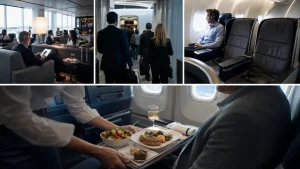
Passengers still get several benefits with British Airways Club Europe, and it is important not to dismiss the cabin entirely. The product remains useful for many UK travellers, especially those who value airport comfort, status earning and convenience.
The strongest Club Europe benefits are still found across the whole journey rather than only in the seat. Lounge access can provide food, drinks, workspace and a calmer airport experience. Priority boarding can help passengers settle early and secure overhead locker space. The blocked middle seat gives more personal space, which can be especially useful on longer European routes.
| Club Europe Benefit | Best For | Value Level |
| Lounge access | Business travellers, early departures, longer waits | High |
| Blocked middle seat | Passengers wanting space and comfort | Medium to high |
| Priority services | Time-sensitive travellers | Medium |
| Better catering | Longer short-haul flights | Medium |
| Extra baggage | Work trips and longer stays | High when needed |
| Avios and Tier Points | Executive Club members | High for frequent flyers |
Club Europe can still work well when the passenger uses several of these benefits together. For example, a business traveller flying from London to Milan may value the lounge, extra space, meal service and Tier Points. In that case, the product may still justify a premium.
However, the value becomes weaker when only one or two benefits are used. A short flight with limited time in the lounge and a high fare difference can make Club Europe feel less convincing.
This is why the latest British Airways Club Europe changes matter. They may not remove the core benefits, but they reduce the emotional sense that the passenger is receiving a polished premium product.
Why Are Small British Airways Business Class Changes So Noticeable?
Small British Airways business class changes are noticeable because frequent flyers build expectations from repeated journeys. They remember how the cabin used to look, how meals were presented, how service felt and how premium cabins compared with rivals.
When one small detail is removed, it may not cause major frustration. But when several small changes happen over time, passengers begin to see a pattern. The latest removal of headrest covers fits into that wider concern.
Death By A Thousand Cuts
The phrase “death by a thousand cuts” is often used when a product declines through many minor reductions rather than one major downgrade. That is how some travellers now view Club Europe.
The issue is not that headrest covers are essential to comfort. The issue is that every small removed feature makes the cabin feel less cared for. A premium product needs visible maintenance. It needs signs that the airline values the experience as much as the passenger does.
| Small Change | Why It Feels Minor | Why It Still Matters |
| Removing headrest covers | Does not affect seat function | Reduces premium appearance |
| Simplifying meals | Passenger still receives food | Lowers perceived quality |
| Less visual branding | Cabin still operates normally | Weakens cabin identity |
| Inconsistent service | Flight still reaches destination | Damages trust in premium fares |
This table shows why small changes should not be dismissed too quickly. Premium cabins are built on accumulation. The total experience matters more than any single detail.
Brand Expectations From British Airways
British Airways is not viewed as a low-cost airline. Many UK passengers expect BA to provide a more polished experience, especially in business class. The airline’s brand carries history, national recognition and premium associations.
That makes small downgrades more visible. A passenger may tolerate a basic product from a budget airline because the price and expectations are different. But from British Airways, especially in Club Europe, travellers expect a clearer sense of quality.
The danger is that British Airways weakens its own brand promise. When passengers pay for business class, they want to feel that BA is offering something better, not simply removing anything that can be removed without changing the fare name.
Does Club Europe Still Offer Good Value For UK Travellers?
Club Europe still offers good value for some UK travellers, but it depends heavily on route, fare, airport, timing and personal priorities. It is not automatically poor value, but it is also not automatically worth the premium.
The product is strongest when the passenger can use lounge access, benefit from baggage allowance, enjoy a longer flight and earn meaningful Avios or Tier Points. It is weaker when the flight is very short, the fare difference is high and the traveller does not need the extra services.
| Travel Scenario | Is Club Europe Likely To Be Worth It? | Reason |
| Early business flight with lounge use | Yes | Better start to the working day |
| Longer European route | Often yes | More time to enjoy space and catering |
| Short hop with high fare difference | Often no | Limited onboard value |
| Avios redemption with good availability | Can be yes | Cash fare may be avoided |
| Traveller needing extra baggage | Yes | Baggage value can be significant |
| Leisure traveller on a budget | Usually no | Economy may be better value |
For many UK business travellers, Club Europe is still useful because it makes the journey smoother. The lounge can provide a quiet place to work. The blocked middle seat can make it easier to use a laptop or relax. Priority services can reduce stress.
For leisure travellers, the calculation is different. Paying a large premium for a short flight may be harder to justify if the onboard product feels too similar to economy.
This is where British Airways Club Europe changes could have a commercial impact. The more the cabin feels like economy, the more passengers will compare the price difference carefully before booking.
What Could British Airways Do To Make Club Europe Feel Premium Again?
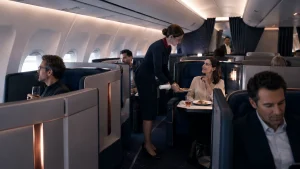
British Airways could make Club Europe feel premium again by improving the parts of the journey passengers can see and feel. It does not need to transform every European aircraft overnight, but it should protect the visible details that support the business class identity.
The airline could focus on consistency. A consistent meal standard, clean cabin presentation, attentive crew service and stronger visual separation from economy would help rebuild confidence.
Simple improvements could include:
- Stronger cabin presentation in the Club Europe rows
- More consistent catering quality across routes
- Better communication around service changes
- Clearer visual distinction between Club Europe and Euro Traveller
The most important point is that British Airways must treat Club Europe as a premium product, not just a fare bundle. Passengers should feel the difference at check-in, in the lounge, during boarding, onboard and when they arrive.
A premium travel adviser explained it well:
“I would tell British Airways to focus on the visible moments. Passengers remember how the cabin looked when they boarded, how the meal was presented and whether the crew made the journey feel calm. I do not think every improvement needs to be expensive, but it does need to feel deliberate.”
That advice is practical. Restoring confidence does not always require major investment. It requires a clear understanding of what passengers value.
Are The Latest British Airways Club Europe Changes A Warning Sign?
The latest British Airways Club Europe changes are a warning sign because they suggest that BA may be underestimating the power of small details in premium travel. A headrest cover is not the foundation of business class, but its removal still changes how the cabin feels.
For passengers, the concern is direction. If one small detail disappears today, what disappears next? If the cabin looks less premium now, will the service feel less premium later? These questions matter because frequent flyers are loyal only when they believe the product remains worth their money or points.
British Airways still has a strong position in the UK market. It benefits from Heathrow access, a large route network, Executive Club loyalty, Avios redemptions and corporate travel demand. But brand strength should not be taken for granted.
Club Europe can remain successful if BA protects the complete experience. That means keeping the cabin polished, the service reliable and the difference from economy clear. Without that, passengers may start to see Club Europe as a convenience upgrade rather than a true business class product.
Conclusion
British Airways Club Europe changes show how small cabin details can shape the whole premium travel experience. While Club Europe still offers useful benefits such as lounge access, priority services and a blocked middle seat, the removal of visual touches like headrest covers makes business class feel less distinctive.
For UK travellers, the value now depends on whether the full journey benefits justify the fare. British Airways must protect these small premium signals if it wants Club Europe to feel genuinely worth it.
FAQs About British Airways Club Europe Changes
What is British Airways Club Europe?
British Airways Club Europe is the airline’s short-haul business class cabin on many European and UK-linked routes. It usually includes a blocked middle seat, lounge access where available, priority services, improved food and drink, and additional baggage benefits compared with standard economy fares.
What has changed in British Airways Club Europe?
One of the latest reported changes is the removal of headrest covers from Club Europe seats on European business class flights. British Airways has reportedly linked the decision to reducing cleaning workload and improving aircraft turnaround times.
Does Club Europe have different seats from economy?
Club Europe usually uses the same basic short-haul seat as economy, but the middle seat is blocked to create more personal space. This is why small visual and service details are important in making the cabin feel different from Euro Traveller.
Is the middle seat still blocked in Club Europe?
Yes, the blocked middle seat remains one of the main features of British Airways Club Europe. It gives passengers more shoulder room and personal space, although it does not provide a larger dedicated business class seat.
Do Club Europe passengers still get lounge access?
Club Europe passengers usually receive lounge access at airports where eligible British Airways or partner lounges are available. Lounge access remains one of the strongest reasons travellers choose Club Europe, especially before longer European flights or business trips.
Is British Airways Club Europe worth it for short flights?
British Airways Club Europe can be worth it when the fare difference is reasonable and the passenger uses the lounge, baggage allowance, priority services or Tier Point benefits. It may feel less valuable on very short flights where there is limited time to enjoy the onboard service.
Why do small business class changes matter to passengers?
Small changes matter because premium cabins are judged by detail. When the seat is similar to economy, passengers rely on presentation, service and comfort cues to feel that the upgrade is worthwhile. Removing those cues can weaken the overall business class experience.
Can Avios be used for British Airways Club Europe flights?
Yes, Avios can usually be used to book British Airways Club Europe reward flights, subject to availability. For some travellers, using Avios for Club Europe can be better value than paying a high cash fare, especially on busy European routes.
How does Club Europe compare with long-haul business class?
Club Europe is much simpler than long-haul business class. It does not normally include a flat bed, private suite or long-haul seat design. Its value comes from short-haul convenience, lounge access, priority services, catering and the blocked middle seat.