If you are wondering how much the state pension is for a woman in the UK, the simple answer is that the full new State Pension is £230.25 per week in the 2025 to 2026 tax year, provided you have enough National Insurance contributions.
However, the exact amount you receive can vary depending on your National Insurance record, qualifying years, and individual circumstances.
Many women receive slightly less or more depending on their employment history, childcare years, and pension credits. Understanding how the system works helps you plan your retirement income more effectively.
Key points to know:
- The full new State Pension is £230.25 per week
- You normally need 35 qualifying National Insurance years for the full amount
- You need at least 10 qualifying years to receive any pension
- The current State Pension age is 66
- Payments are typically made every four weeks
Knowing these rules can help you estimate your future pension and identify ways to increase it.
How Much State Pension Can a Woman Receive in the UK?
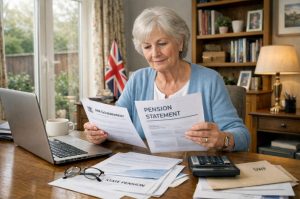
The amount of state pension a woman can receive in the UK depends mainly on her National Insurance (NI) record and the number of qualifying years she has built up during her working life. If you reach State Pension age after April 2016, you fall under the new State Pension system introduced by the UK government.
Under this system, the full weekly State Pension is £230.25 for the 2025 to 2026 tax year. This equals roughly £11,973 per year if you receive the full amount. However, many people receive a different amount depending on their NI record.
According to the UK government guidance, “Your State Pension amount depends on your National Insurance record.” This means the number of years you worked, paid contributions, or received credits directly affects how much you receive.
Key factors affecting your pension include:
- Number of National Insurance qualifying years
- Whether you were contracted out before 2016
- Any Additional State Pension contributions before 2016
- Gaps in employment or contributions
The State Pension is also protected by the triple lock guarantee, which increases payments every year by whichever is highest among earnings growth, inflation, or 2.5 percent.
Current State Pension rates:
| Pension Type | Weekly Amount |
| Full New State Pension | £230.25 |
| Basic State Pension (old system) | £176.45 |
Some women may receive more than the standard amount if they qualify for protected payments from the previous pension system.
At What Age Can a Woman Claim the State Pension?
The age at which you can claim your State Pension is known as the State Pension age. In the UK, the current State Pension age is 66 for both men and women.
Historically, women had a lower pension age than men. However, the government gradually equalised the pension age and increased it to ensure the system remains financially sustainable.
Your exact pension age depends on your date of birth, and the government plans to increase it gradually in the future.
Important age milestones include:
- Current State Pension age is 66
- The age will increase to 67 by 2028
- A further increase to 68 is planned between 2044 and 2046
Women born on or after 6 April 1953 qualify for the new State Pension rules. Those born before this date may receive the basic State Pension under the older system.
The Department for Work and Pensions explains that eligibility depends on birth year and NI record. Officials also emphasise that pension age changes are necessary due to increased life expectancy and longer retirement periods.
You can check your exact pension age using the government’s online State Pension age calculator. Knowing this age helps you plan when you can begin receiving your pension and estimate your retirement income.
How Many National Insurance Years Does a Woman Need for the Full State Pension?

To receive the full new State Pension, you typically need 35 qualifying years of National Insurance contributions.
A qualifying year is a tax year in which you have paid enough National Insurance contributions or received National Insurance credits. These years do not have to be consecutive and can be built up throughout your working life.
According to government guidance, “You’ll need 10 qualifying years on your National Insurance record to get any new State Pension.”
Key requirements include:
- 35 qualifying years for the full pension
- Minimum 10 years to receive any pension
- Less than 10 years normally means no State Pension entitlement
You can gain qualifying years through several routes:
- Working and paying National Insurance contributions
- Receiving National Insurance credits while unemployed or ill
- Receiving credits while caring for children or family members
- Paying voluntary contributions to fill gaps
The amount you receive is calculated proportionally if you have fewer than 35 years.
For example:
| Qualifying Years | Approximate Pension |
| 35 years | Full pension |
| 20 years | Partial pension |
| 10 years | Minimum entitlement |
If your National Insurance record started before April 2016, calculations can be slightly more complex due to the transition from the old system. Checking your NI record regularly helps ensure you are on track for the full pension.
Why Might a Woman Receive Less Than the Full State Pension?
Many women do not receive the full State Pension amount, even if they qualify for it. The main reason is that the amount you receive depends on your National Insurance history.
Career breaks, part time work, or time spent caring for family members can sometimes lead to gaps in National Insurance contributions.
Common reasons for receiving less than the full amount include:
- Not having 35 qualifying National Insurance years
- Being contracted out of the State Pension before 2016
- Periods without employment or NI credits
- Incomplete National Insurance records
The previous pension system allowed some workers to be contracted out through workplace pensions. During those years, lower National Insurance contributions were paid toward the State Pension.
Government guidance explains that “While you were contracted out, you or your employer paid more into your workplace or private pension and less into your State Pension.”
Below is a summary of common causes of reduced payments:
| Reason | Impact on Pension |
| Fewer than 35 qualifying years | Reduced weekly pension |
| Contracted out before 2016 | May require extra years |
| Missing NI credits | Lower entitlement |
| Gaps in work history | Smaller pension amount |
Women who spent time raising children may still qualify for National Insurance credits, which help protect pension entitlement. Reviewing your National Insurance record is the best way to identify any gaps that could reduce your pension.
How Can You Check How Much State Pension You Will Get?
The easiest way to find out how much State Pension you may receive is by using the State Pension forecast service provided by the UK government.
This online tool shows an estimate of the pension you could receive when you reach State Pension age. It also displays your National Insurance record and highlights any missing years that may affect your pension.
According to official guidance, checking your forecast helps you understand how your National Insurance record affects your pension.
Steps to check your State Pension forecast:
- Visit the official government pension forecast service
- Sign in using your Government Gateway account
- Review your estimated weekly pension
- Check your National Insurance qualifying years
- See if you have any missing contribution years
The forecast may also show how much your pension could increase if you add additional qualifying years before retirement. It is recommended to check your forecast regularly. Doing this early allows you to take action if there are gaps in your National Insurance record.
By understanding your expected pension income, you can make better financial decisions and plan a more secure retirement.
Can You Increase Your State Pension as a Woman?

Even if your State Pension forecast shows a lower amount than expected, there are several ways you may be able to increase it. Many women improve their pension income by filling gaps in their National Insurance record or delaying their claim.
Government guidance explains that adding extra qualifying years can increase your State Pension amount up to the full rate.
Pay Voluntary National Insurance Contributions
One of the most common ways to increase your pension is by paying voluntary National Insurance contributions. This allows you to fill missing years in your National Insurance record. Each additional qualifying year can increase the amount you receive in retirement.
Voluntary contributions may be useful if you:
- Spent time abroad
- Took career breaks
- Were self employed with low earnings
- Had years with insufficient contributions
Many financial experts highlight that buying extra years can significantly increase retirement income. In some cases, a single additional year can add hundreds of pounds per year to your pension.
Before making voluntary contributions, it is recommended to check your State Pension forecast to ensure it will actually increase your pension entitlement.
Claim National Insurance Credits
National Insurance credits can help protect your pension if you are not working. These credits count as qualifying years and help maintain your pension record.
You may qualify for credits if you are:
- Caring for a child under 12
- Caring for a disabled family member
- Receiving certain benefits
- Unable to work due to illness
Government guidance confirms that qualifying years can be built through work or credits. These credits are especially important for many women who take time away from employment to care for family members.
Checking whether you are eligible for these credits can help prevent gaps in your National Insurance record.
Defer Your State Pension
Another option is to delay claiming your State Pension, which is known as deferring. If you defer your pension for at least nine weeks, your payments increase when you eventually claim it. For every year you delay claiming your pension, your weekly payments increase by just under 5.8 percent.
Deferring may be beneficial if you:
- Continue working after reaching pension age
- Have other income sources
- Want a higher guaranteed pension later in retirement
However, deferring may not always be the best option for everyone. It is often recommended to consider your financial situation and seek independent financial advice before deciding.
Can a Woman Inherit a State Pension from a Spouse?
In some circumstances, a woman may be able to inherit additional pension payments from a spouse or civil partner. The new State Pension system is mostly based on your own National Insurance record, but inheritance rules still exist in certain situations.
You may inherit additional payments if your partner built up extra pension before the system changed in 2016.
Situations where inheritance may apply include:
- If your spouse or civil partner dies
- If they had Additional State Pension
- If they had a protected payment
- If pension sharing occurred after divorce
Government guidance states that you may inherit part of your partner’s Additional State Pension if your marriage or civil partnership began before April 2016.
However, inheritance rules are complex and depend on factors such as:
- Your partner’s National Insurance record
- The date of marriage or civil partnership
- Whether your partner deferred their pension
In most cases, inheritance is limited, and the majority of your pension will still depend on your own National Insurance record.
What Happens If You Worked or Lived Abroad?

Working or living abroad does not automatically prevent you from receiving the UK State Pension. However, it can affect how your entitlement is calculated. If you have worked in certain countries, your overseas contributions may help you qualify for the UK State Pension.
Countries that may count towards your pension eligibility include:
- European Economic Area countries
- Switzerland
- Countries with social security agreements with the UK
These agreements allow the UK to consider time spent contributing to foreign pension systems when calculating eligibility.
For example, if you have only seven qualifying years in the UK but worked abroad for many years, those foreign contributions may help you reach the minimum requirement of ten qualifying years.
However, the amount of State Pension you receive is usually based only on your UK National Insurance contributions.
Important considerations include:
- Your total qualifying years
- Which countries you worked in
- Whether social security agreements apply
You may also qualify for a pension from the country where you worked. If you plan to retire abroad, your pension payments may still be made to your bank account. However, tax rules and payment arrangements can vary depending on where you live.
When and How Is the State Pension Paid?
Once you successfully claim your State Pension, the payments are normally made directly into your bank or building society account. In most cases, the State Pension is paid every four weeks. This regular payment schedule helps retirees manage their monthly finances.
According to government guidance, the exact day you receive your payment depends on the last two digits of your National Insurance number.
Your payment day is determined as follows:
| Last Two Digits of NI Number | Payment Day |
| 00–19 | Monday |
| 20–39 | Tuesday |
| 40–59 | Wednesday |
| 60–79 | Thursday |
| 80–99 | Friday |
Your first payment usually arrives within five weeks after the date you choose to start receiving your pension.
Some important points about State Pension payments include:
- Payments are made directly into your bank account
- You will receive a confirmation letter explaining your payments
- Payment dates may change if they fall on a bank holiday
- You can change your bank details by contacting the Pension Service
If you live abroad, slightly different rules may apply to payment arrangements. Overall, the State Pension system is designed to provide a stable and predictable income during retirement.
How to Claim the State Pension in the UK?

The State Pension is not paid automatically. You must submit a claim when you reach State Pension age. Most people receive a letter from the Pension Service before reaching pension age. This letter explains how to start the claim process. You can claim your State Pension in several ways.
Common ways to apply include:
- Applying online through the government website
- Calling the Pension Service by phone
- Requesting and submitting a claim form by post
When you apply, you may need to provide several details:
- Your bank or building society account information
- Dates of marriage, divorce, or civil partnerships
- Details of time spent living or working abroad
- Social security numbers from other countries if relevant
If you are applying online, you will also need the invitation code provided in your pension letter. Once your application is submitted, the Pension Service reviews your information and confirms your pension amount.
Important points to remember:
- You can apply up to four months before reaching State Pension age
- Your first payment normally arrives within five weeks
- You can still work while receiving your pension
Claiming early ensures there are no delays in receiving your retirement income.
How to Maximise Your Retirement Income Beyond the State Pension?
While the State Pension provides an important foundation for retirement income, many people choose to build additional income sources. Relying only on the State Pension may not provide enough income for a comfortable retirement, so exploring additional options can be beneficial.
Common ways to increase retirement income include:
- Contributing to a workplace pension
- Opening a personal pension
- Saving through long term investments
- Claiming additional government benefits if eligible
Workplace pensions are one of the most common ways to increase retirement savings. Employers often contribute to these schemes, which helps build a larger retirement fund. Other support may also be available for retirees with lower incomes.
Examples include:
- Pension Credit for people with limited retirement income
- Attendance Allowance for individuals with disabilities
- Housing support or council tax assistance
Financial advisers often recommend reviewing your retirement plan several years before retirement. This allows time to increase savings, fill gaps in your pension record, and adjust financial plans if necessary. Combining multiple income sources can help create greater financial security and flexibility during retirement.
Conclusion
The amount of State Pension a woman receives in the UK depends mainly on her National Insurance record and the number of qualifying years she has built during her working life.
Currently, the full new State Pension is £230.25 per week, though many people receive slightly different amounts depending on their contributions.
To receive the full pension, you usually need 35 qualifying years, while at least 10 years are required to receive any payment. Checking your State Pension forecast regularly can help you understand how much you are likely to receive and identify any missing years.
You may also increase your pension by claiming National Insurance credits, paying voluntary contributions, or delaying your pension claim. Understanding how the system works allows you to make informed decisions and better prepare for a financially secure retirement.
FAQs
Do women get a different State Pension than men in the UK?
No. The State Pension system now provides the same pension rules and payment amounts for both men and women.
What is the minimum State Pension a woman can receive?
You need at least 10 qualifying National Insurance years to receive any State Pension. The amount will be proportional to your contributions.
Can stay at home mothers qualify for the State Pension?
Yes. Many parents receive National Insurance credits while claiming Child Benefit, which helps protect their pension entitlement.
How much State Pension will I get with 20 years of NI contributions?
With 20 qualifying years you will receive a partial pension. The amount will be roughly proportional to the full weekly pension rate.
Can I get the State Pension if I have lived abroad?
Yes. You may still qualify if you paid enough National Insurance contributions or worked in countries with social security agreements.
Is the State Pension enough to live on in the UK?
For many people it provides a basic retirement income but may not cover all living costs. Many retirees combine it with workplace or private pensions.
What happens if I do not have 10 qualifying years?
If you have fewer than 10 qualifying years you usually will not receive the State Pension. However, you may be able to add years through voluntary contributions.